You generate the link, publish it, and move on. That’s how most marketers treat short links and QR Codes: a quick task during campaign setup.
But every link you share and every QR Code you print can become a lasting customer pathway. People still click old emails, scan product packaging months after purchase, and revisit PDFs long after a campaign ends.
That’s what makes short links and QR Codes more than simple campaign utilities. They’re infrastructure, much like your domain, email systems, and analytics stack. And those systems work best when your team controls them.
This guide breaks down what true ownership actually means, where third-party dependency creates risk, and how owned link management can help protect your brand, preserve flexibility, and keep customer experiences consistent over time.
Note: The brands and examples discussed below were found during our online research for this article.
Key takeaways
- Owning your short links and QR Codes means controlling both the destination and the branded domain customers see before they engage.
- Free or generic redirect tools can change terms, limit features, or disappear, leaving campaigns with broken links and limited options for recovery.
- Dynamic QR Codes can help protect printed materials by letting teams update destinations without reprinting packaging, menus, signage, or mailers.
- Branded short domains and QR Codes can reinforce recognition at the moment of click or scan by making customer touchpoints feel more familiar and consistent.
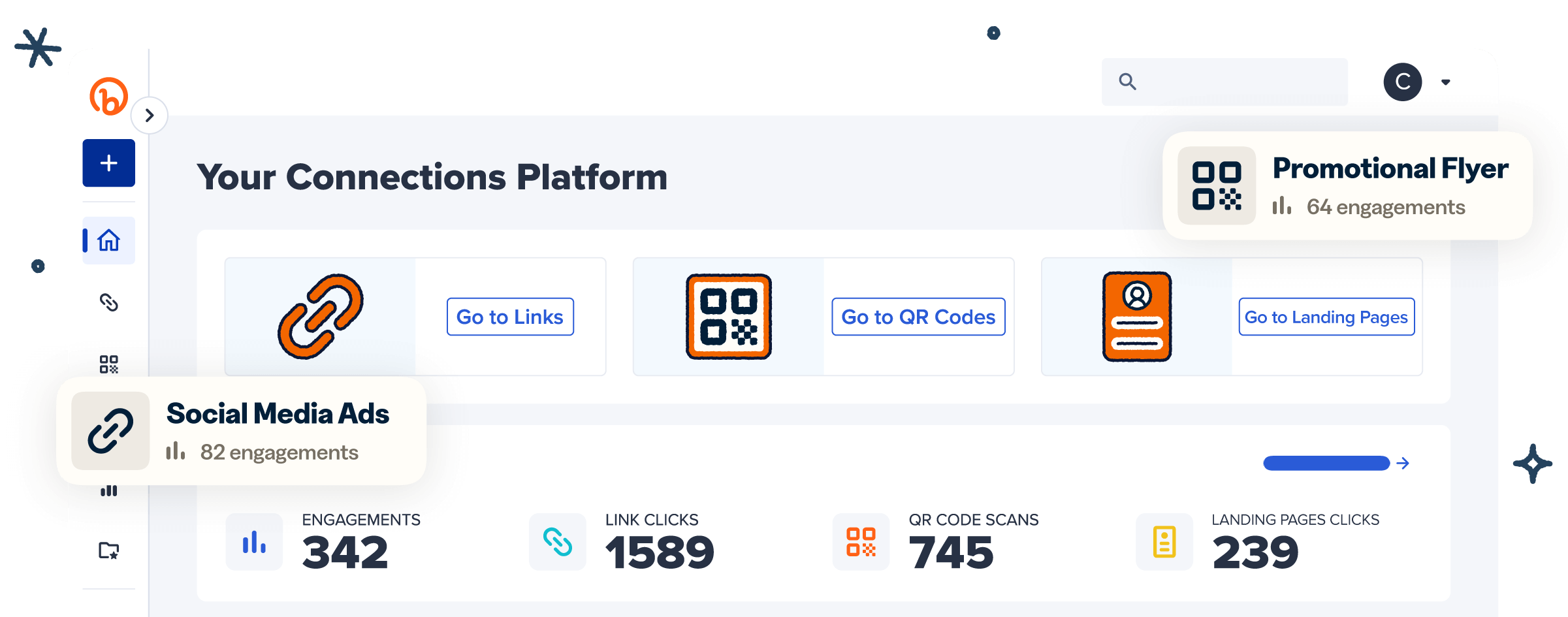
- With Bitly, teams can centralize link and QR Code management, maintain analytics continuity, and reduce link sprawl across campaigns.
Why short links and QR Codes are brand infrastructure
Short links and QR Codes don’t exist in isolation. Over time, they become woven into your marketing ecosystem, connecting users to landing pages, offers, resources, and digital experiences throughout the customer journey.
What starts as a single campaign asset can quickly spread across email campaigns, social bios, paid ads, PDFs, packaging, and long-forgotten printed materials. Those links and codes can continue circulating long after launch day, whether your team is monitoring them or not.
That’s why ownership matters. With free or generic link shorteners, you’re essentially renting real estate on someone else’s domain under someone else’s rules. And if that provider changes its terms, limits access, or shuts down entirely, the impact can extend across every touchpoint where those links still exist.
The domain name analogy marketers already understand
Think about how your team approaches domain names, website hosting, or email systems. You build on platforms your team controls and can migrate away from if needed.
The same logic applies to short links and QR Codes. Customers don’t see the redirect platform behind the scenes; they see the URL in front of them. Keeping that URL on your own domain helps reinforce recognition and trust in your brand.
The link accumulation problem
Every campaign your team has run over the last few years—emails, paid ads, Instagram bio links, event handouts, and packaging inserts—likely introduced new short links or QR Codes into the world.
How many of those links are still receiving traffic? Most teams never think about those assets again. But the redirects remain active long after launch, continuing to circulate through old content, printed materials, and shared resources.
Your link inventory is probably much larger than your current campaign list. And every active link in that inventory is something your team is still relying on someone else to maintain.
What it means to own a short link or QR Code
Link ownership isn’t something most marketers think about. But it boils down to two things: who controls the destination and who owns the domain.
When you own your links, you can update destinations without replacing published assets, keep your branding tied to every redirect, and avoid losing access to valuable historical data over time.
Destination control: Update, redirect, or retire on your terms
Destination control lets you update where a short link or QR Code sends people without replacing the link or code itself.
That flexibility matters because URLs change constantly. Pages move, products get updated, and offers expire. Instead of leaving customers with a broken destination, you can reroute traffic to the next relevant page while keeping the original link or code intact.
Domain control: Keep the brand equity in your own URL
The second piece of ownership is the domain your short link uses. Compare these two links:
- go.yourbrand.com/sale
- bit.ly/xK3p9z
The first version tells customers exactly who’s behind the content. The second only signals that a third-party shortener was used.
Using a branded short domain helps keep your brand identity attached to every redirect instead of handing that visibility to another platform. When customers see your name in the URL, the destination feels more recognizable, intentional, and consistent with the rest of your brand experience.
Following short URL best practices for branded links, like connecting your own custom domain, gives your team a single place to build and track links without sacrificing ownership.
Ownership versus renting space on someone else’s domain
When you use a generic redirect service, your links exist at the mercy of another platform’s policies and priorities. Sudden pricing changes, feature restrictions, or platform updates can immediately affect links that are already live across your campaigns.
And because you don’t own the domain, your options are limited once those links are widely distributed. A URL shared months or years ago only continues working as long as the provider continues supporting it.
Owning your link infrastructure keeps redirect control, branding, and analytics access with your team instead of tying them to a third-party platform.
How short links and QR Code redirects actually work
When someone clicks a short link or scans a QR Code, they don’t go straight to your website. They pass through a redirect layer first. That layer acts like a digital switchboard, processing the request, identifying the destination, and routing the visitor to the correct page in milliseconds.
The link or code your customer sees is just a pointer. The final destination depends on whichever platform controls that redirect layer. That’s why ownership matters. If a third-party provider changes its terms, restricts access, or experiences downtime, it can directly affect the customer experience tied to those links and QR Codes.
The link or code is not the same as the destination
This distinction is what makes Dynamic QR Codes and redirects so valuable. Because the customer-facing asset—the printed code or published link—is separate from the destination, you can update one without touching the other.
A Static QR Code or fixed short link has the destination baked directly into it. To change where it sends people, you have to replace the asset itself, whether that means reprinting a brochure, rebuilding an ad, or leaving customers with a dead link.
A dynamic redirect routes through an editable platform instead. When a destination changes, you simply update it in your platform, and every existing version of that link or code continues pointing to the new location.
Generic third-party domains versus branded short domains
The redirect layer also controls the exact URL your customer sees. A generic service places your link on its domain. A branded short domain keeps everything on yours.
- Generic: shortener.io/a7Kx3p
- Branded: go.yourbrand.com/summer-sale
The branded version turns your link into a recognizable brand asset instead of another generic redirect. Most enterprise link management platforms, including Bitly, let you connect your own custom domains, giving your team a centralized place to build and track links without handing over brand visibility to a third party.
The hidden risks of free and unowned tools
Free tools have a time and place. If you’re running a quick test or prototyping a campaign, a free shortener can get the job done. But there’s a big difference between testing an idea and relying on a free tool to support long-term marketing operations.
Service shutdowns, terms changes, and feature restrictions
Free link shorteners have a history of changing course. When the Google URL Shortener shut down, it spent years phasing out the service, showing warning pages and shifting deadlines before completely turning off links on August 25, 2025.
Even with years of notice, the shutdown created a major operational challenge for brands. Finding and replacing broken links buried in old emails, PDFs, and social posts takes significant time and coordination. And other platforms may change terms, restrict features, or introduce paywalls with far less warning.
When a third-party service changes its policies or shuts down entirely, the effects can spread quickly across active campaigns and customer touchpoints. Teams often discover the problem only after customers begin encountering broken destinations.
Even if a service stays online, a sudden paywall change or feature restriction can limit access to historical data and prevent your team from editing redirects.
Cost escalation, lock-in, and loss of recourse
Free tiers often become paid dependencies once links are widely distributed. By that point, switching costs are high. Those URLs are already sitting in customers’ inboxes, embedded in partner content, or printed on physical assets. Migrating away may require your team to locate and replace every instance, which becomes difficult to manage in the middle of active campaigns.
That’s how lock-in happens. A free tool can quickly become something your team has to keep paying for simply to avoid disrupting existing links and QR Codes.
Link rot, lost analytics, and broken customer journeys
Link rot happens when an active link suddenly leads nowhere. It can occur when a destination page moves, a URL changes, or a third-party service disables the redirect after an account closes.
Aside from frustrating customers, link rot creates reporting gaps and disrupts campaign measurement. Every click that reaches a dead link is a missed engagement opportunity, and links embedded in evergreen content can continue losing traffic over time without teams realizing it.
There’s also the risk of losing historical analytics access. If a platform changes its data retention policies or your team loses access to the account, valuable click and scan history tied to past campaigns may become difficult to recover.
Why printed QR Codes raise the stakes
Every risk we’ve covered so far becomes more serious once a QR Code hits the printing press. You can usually update or replace a digital link at the source, but you can’t recall a printed code once it’s been distributed.
The permanence trap on packaging, menus, signage, and direct mail
Printed QR Codes create different risks depending on where they appear, but they all share one challenge: once the asset is in circulation, updating the customer experience becomes far more complicated.
- Retail packaging: Product packaging may stay on shelves for months, with every unit carrying the same code. If that destination breaks halfway through the product lifecycle, the items keep selling even though the experience no longer works as intended.
- Restaurant menus: Whether a code points to a digital menu, a loyalty program, or a reservations page, a broken destination can force restaurants to reprint menus unexpectedly, adding new design, production, and shipping costs.
- Event signage: Large banners and event displays leave little room for error. If a QR Code fails during a trade show or keynote, there may be no practical way to replace the signage while attendees are actively trying to engage.
- Direct mail: Once a mailer reaches a recipient’s mailbox, there’s no recall process. The code either works when someone scans or the campaign risks losing engagement tied to that print investment.
Dynamic QR Codes help reduce that pressure. The printed code remains the same while the destination behind it can still be updated, allowing teams to adapt campaigns without replacing the physical asset itself.
Static versus Dynamic QR Codes
A Static QR Code has its destination encoded directly into the pattern. Once it’s printed, the destination is fixed. Creating a brand new code is the only way to send customers somewhere else.
A Dynamic QR Code routes through an editable redirect instead. The physical code never changes, but your team can update where it points from the associated dashboard whenever needed.
Bitly Codes are Dynamic by default. Depending on your plan, you can customize them with brand colors and logos while tracking scans alongside your Bitly Links in the same platform. Instead of juggling separate tools, teams can manage both digital and print campaigns from one centralized dashboard.
A simple model for calculating the cost of a broken QR Code
Here’s a simple framework teams can use to estimate the potential impact of a broken QR Code campaign.
Scenario A: Accepting the loss
Estimated impact = Initial print cost + projected revenue exposure
Projected revenue exposure = Expected scans x estimated conversion rate x average order value
Scenario B: Emergency replacement
Estimated impact = Initial print cost + emergency reprint costs + rushed design or production fees
For example, imagine your team prints 10,000 packaging inserts at USD 0.08 each and expects 5,000 scans over the product’s shelf life. If you estimate a 4% conversion rate and a USD 40 average order value using your own analytics platform, the potential revenue exposure tied to a broken QR Code could reach roughly USD 8,000.
Add the original print costs and emergency replacement expenses, and a failed destination can quickly become a costly operational problem.
Every campaign will have different margins and performance benchmarks, but running this exercise before launch can help teams better understand the long-term risks tied to printed codes.
Brand trust at the moment of click or scan
Owned links and QR Codes help create a more consistent brand experience every time a customer interacts with them.
A URL is often the final thing someone sees before deciding whether to click. A QR Code may be their first interaction with your brand in a physical environment. In both cases, recognizable branding and reliable redirects can help reinforce familiarity at the exact moment a customer decides whether to engage.
Branded short links as micro-touchpoints
Every click on a branded short link is a small interaction with your business. Over time, those repeated impressions can help reinforce recognition and brand recall.
Consider the impact of an email campaign sent to 200,000 subscribers. If your link reads go.yourbrand.com/new-arrivals, your brand identity appears in front of 200,000 people before they even reach the destination page. With a generic short link, that visibility shifts to the redirect platform instead.
Branded short links are low-effort, high-frequency touchpoints. They continue accumulating value across email campaigns, social posts, paid ads, and partner mentions over time.
Branded QR Codes as conversion assets
Bitly Codes let teams create custom QR Codes with logos, brand colors, and clear call-to-action (CTA) frames that tell customers where they’re going and why it’s worth scanning before they even pick up their phone.
Print codes that reflect your visual identity become an extension of your brand experience. Bringing your brand into the code itself can help reduce hesitation and reinforce familiarity at the moment of decision. That added consistency can be especially valuable for teams exploring creative ways to use Bitly for advertising across print and digital campaigns.
Channel-specific trust signals in email, social, paid, and print
The impact of a branded link varies by channel, but the core advantage—instant recognition—remains constant:
- In email: Branded domains help recipients verify the sender at a glance, while generic URLs may create hesitation for more security-conscious readers.
- On social: In crowded feeds, a readable domain can stand out more clearly and signal that the destination belongs to your brand.
- In paid media: Branded short links help reinforce brand consistency throughout advertising campaigns, keeping your name visible even before someone clicks.
- In print: A branded QR Code frame helps connect a physical asset to a recognizable digital experience, setting clearer expectations for what happens after the scan.
Channel performance will always vary, so teams should validate engagement patterns using their own analytics platforms. But across environments, recognizable branded touchpoints can help create a more consistent and familiar customer experience.
Control, analytics, and governance at scale
For teams managing multiple campaigns, regions, or business units, ownership creates a centralized system for organizing links, QR Codes, and customer interactions in one place.
Platforms like Bitly support that coordination with features such as team permissions, Single Sign-On (SSO), API access, and centralized analytics. Instead of managing disconnected links across different tools and teams, organizations can maintain clearer governance, more consistent reporting, and better control over how redirects are created and maintained at scale.
Redirect control for campaign updates, testing, and retirement
Owned redirects let your team update a campaign destination without changing the public-facing link itself. That flexibility matters throughout the full campaign lifecycle:
- While a campaign is live: Redirect control lets teams optimize in real time. You can swap in an updated landing page, route different audiences to tailored experiences, or A/B test page variations without generating a new URL.
- When plans change: If a partner updates its domain, a launch gets delayed, or a destination breaks mid-flight, your team can update the redirect immediately from the backend while keeping existing links intact.
- When a campaign ends: Redirects can be retired cleanly instead of leading customers to outdated promotions or dead pages. Teams can reroute lingering traffic to current resources, evergreen content, or active campaigns.
Crisis management when a destination breaks or needs to change
Every marketing team eventually runs into situations where a destination needs to change quickly. A launch gets delayed, a pricing error slips through, or a compliance update makes existing content unusable. It’s a routine challenge for teams managing campaigns at scale.
When your team controls the redirect layer, resolving the issue can take seconds. You update the destination in your dashboard, and every existing version of that link or code immediately points customers to the most current location.
Link hijacking, where a third party exploits an abandoned short URL to redirect traffic somewhere harmful, is a real but relatively uncommon risk. More often, teams are dealing with destinations that are outdated, incorrect, or broken without having the redirect control needed to fix them quickly.
Analytics ownership, data continuity, and compliance readiness
Clicks and scans generate valuable engagement data, including when customers interact with a link, which campaigns continue driving traffic over time, and where engagement is happening. Keeping that information centralized helps teams maintain clearer visibility across campaigns and channels.
When analytics live inside a third-party platform, access is still governed by that provider’s retention policies and account controls. Losing historical click or scan data can create reporting gaps and make long-term campaign analysis more difficult.
For global organizations, platform governance also intersects with privacy and compliance requirements. Frameworks like the General Data Protection Regulation (GDPR) and the California Consumer Privacy Act (CCPA) influence how customer data is stored and managed, which is why many teams evaluate vendors based on factors like data handling practices, access controls, and administrative oversight.
Preventing link sprawl across teams, tools, and campaigns
Link sprawl happens when different teams, regions, or agencies create links using separate tools and inconsistent naming conventions without a shared system. Over time, organizations end up with redirects that are difficult to audit and reporting that teams have to piece together manually.
Centralized link management through a platform like Bitly helps apply consistent naming structures, organize assets by campaign or channel, and keep links searchable over time. That creates cleaner reporting, clearer ownership, and a more manageable link ecosystem as campaigns scale.
How to move toward owned link and QR Code infrastructure
Moving to owned infrastructure can sound like a massive undertaking, but most of the work happens upfront. Once your foundation is in place, creating links and QR Codes fits naturally into your existing workflow.
The difference is that your team keeps control over the assets long after campaigns launch. Instead of relying on disconnected tools or third-party domains, you’re building on a system designed to preserve flexibility, branding, and analytics over time.
Audit your current short link and QR Code inventory
Start by building a clear inventory of your existing links and codes. Review these channels systematically to understand where your redirects currently live:
- Email campaigns: Audit master templates, automated drip sequences, and recurring newsletter formats for embedded short links.
- Social profiles: Map the links used in bios, link-in-bio landing pages, and pinned posts across active social platforms.
- Paid media: Review current, upcoming, and recently paused ad creatives for their destination URLs and redirects.
- Packaging and labels: Document every physical QR Code currently printed on product packaging or inventory materials.
- In-store collateral: Inventory the codes and short URLs used on menus, signage, point-of-sale displays, and event materials.
- Digital assets: Check PDFs, downloadable guides, whitepapers, and sales decks that may still contain legacy links in circulation.
As you build the inventory, document four details for every asset: the internal owner, the final destination, the domain it uses, and whether your team has analytics access. Be sure to flag anything already printed and note upcoming expiration dates so you can prioritize the highest-risk assets first.
Evaluate platforms for custom domains, Dynamic Codes, analytics, and team controls
When evaluating a link management platform, look for capabilities that support long-term ownership and flexibility:
- Custom branded domains: The ability to configure and manage your own branded short URLs.
- Dynamic QR Codes: Codes with editable destinations that can be updated after printing.
- Redirect control: A system for updating destinations without altering the public-facing link or code.
- Analytics and exports: Reporting tools that support historical data access, exports, and campaign-level organization.
- Team permissions: Access controls designed for organizations managing multiple teams, regions, or workflows.
- Integration and API access: Tools that connect link and QR Code workflows to your broader marketing stack.
- Single Sign-On (SSO): Centralized authentication and user management for larger organizations.
Bitly brings these capabilities together in one platform. Depending on your plan, teams can manage branded links and Bitly Codes alongside centralized analytics, campaign organization, and shared governance controls. That helps growing organizations reduce link sprawl, maintain reporting continuity, and keep campaigns easier to manage over time.
Migrate in stages without disrupting active campaigns
You don’t have to migrate everything at once. Start with the highest-risk assets:
- Printed materials currently in circulation
- Paid media campaigns with active spend
- Email templates tied to automated sequences
- Evergreen pages and resources with long shelf lives
As you move assets to a new platform, export historical analytics from the previous system while access is still available. Map old destinations to your new branded links, and test every redirect before it goes live.
Finally, document naming conventions, ownership standards, and redirect workflows so teams can manage links and QR Codes consistently moving forward.
Secure your brand’s future with owned short links and QR Codes
Short links and QR Codes may seem small, but over time, they become part of the infrastructure your marketing team depends on. Every redirect, printed code, and branded URL contributes to the customer experience long after a campaign launches, which is why ownership, flexibility, and visibility matter.
Bitly helps teams bring branded links, Dynamic QR Codes, Bitly Analytics, and redirect management together in one centralized platform. Depending on your plan, teams can manage campaigns with custom domains, editable destinations, shared governance controls, and reporting designed to keep links organized and measurable across channels.
Ready to take ownership of your links and QR Codes? Explore Bitly’s pricing plans and find the setup that fits your team.
FAQs
What does it mean to own a short link or QR Code?
Owning a short link or QR Code means you control both the destination and the domain. You can update, redirect, or retire the destination without changing the link or printed code. With a branded short domain, the URL builds your brand equity instead of someone else’s.
Why are free link shorteners and QR Code generators risky for marketers?
Free tools can change terms, restrict features, raise costs, or shut down with limited recourse. When that happens, active links can break across emails, social posts, packaging, signage, and older campaigns. That’s a lot of brand trust riding on borrowed infrastructure.
How do branded short links improve trust?
A branded short link shows people who is behind the click before they engage. Compare go.yourbrand.com/sale with a generic URL, and the difference in recognition becomes pretty clear. At scale, every click becomes a small but consistent brand touchpoint.
Why do printed QR Codes make ownership more important?
Once a QR Code appears on packaging, menus, direct mail, or event signage, you cannot simply unpublish it. Dynamic QR Codes help because the printed code stays the same while the destination behind it can still change. That flexibility helps protect print investment when pages move, campaigns evolve, or offers expire.
How does Bitly help teams manage owned link and QR Code infrastructure?
Bitly lets teams create branded short links and Bitly Codes with centralized analytics and redirect control. Teams can organize assets by campaign, track clicks and scans, and manage links from one trusted system. That means less link sprawl, cleaner reporting, and more flexibility when campaigns need to pivot quickly.