
Online consumer behavior has drastically shifted toward a faster, even more nonlinear, AI-driven journey, where people search, scroll, and shop across multiple platforms and media all at once. Where a billboard once led to a store and then a purchase, today’s path loops through zero-click search and in-feed shopping well before anyone reaches a checkout, and tracking that looping journey while removing friction has become marketers’ top priority.
A single social post today might carry a caption link, a swipe-up, a product tag, and three more link options buried in a bio page, scattered across posts, stories, DMs, and video content. Each one is a small bet that someone will follow it somewhere worth going.
That fragmentation is no longer a minor inconvenience. As customer journeys span more platforms, channels, and touchpoints, tracking where clicks come from and where they lead has become core marketing infrastructure.
To understand how well the industry is adapting to that shift, we surveyed more than 1,500 consumers, marketers, and creators. And what we found is a clear gap: consumers know exactly what makes them trust and click a link, while the marketers and creators sending those links have no clear view of where their traffic actually goes or how their content performs once it lands.
Key Findings
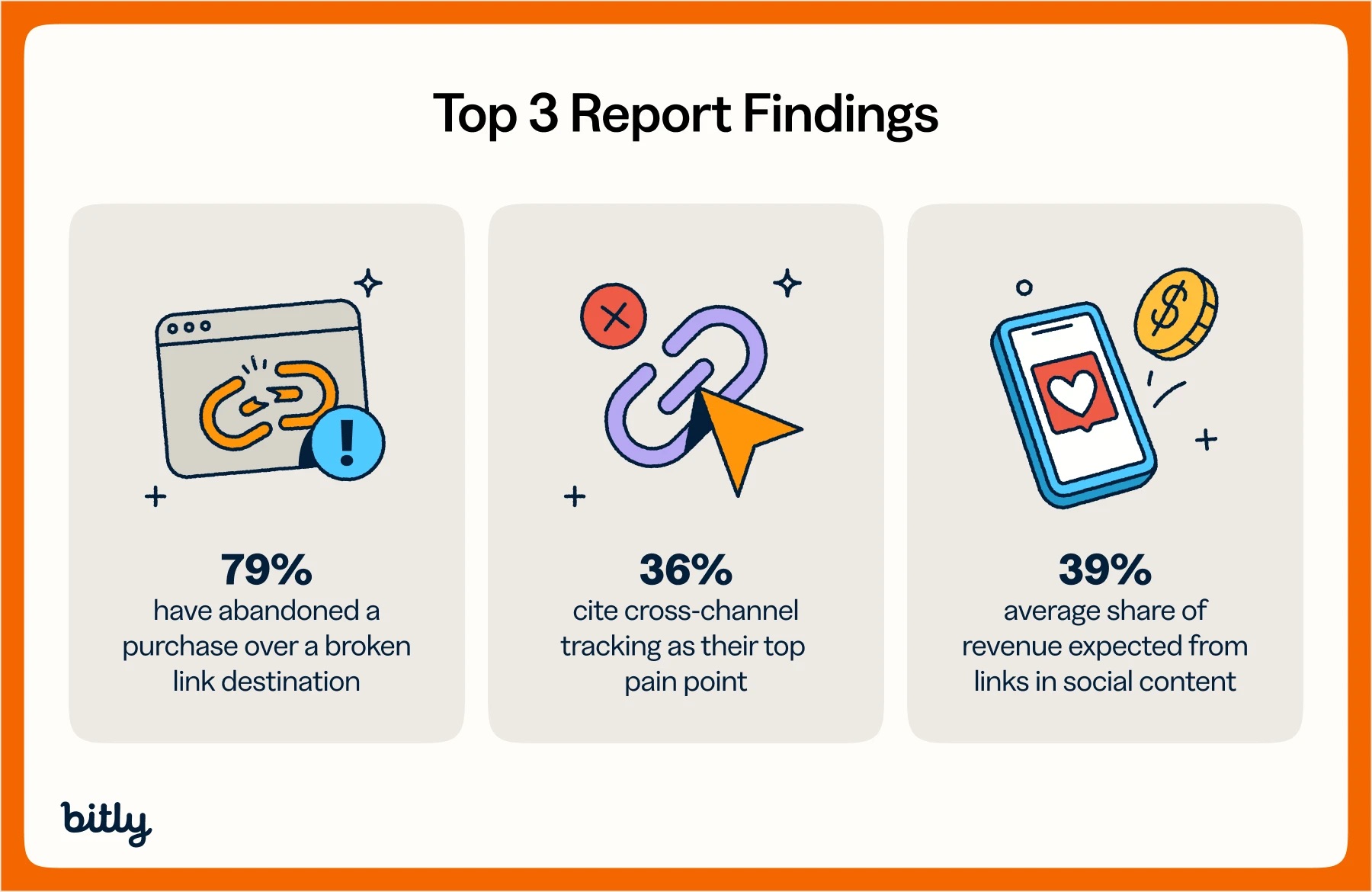
- 79% of consumers have abandoned an action because a social link led to a generic homepage instead of the specific product they clicked for.
- 36% cite cross-channel tracking as their biggest challenge in measuring traffic across posts, bios, stories, DMs, and paid.
- Marketers and creators expect links in social profiles and content to drive an average of 39% of their revenue over the next 12 months.
- 93% of consumers avoid clicking certain links on purpose, just to keep their algorithm from serving them more of that content; 43% say they do this always or often.
- LinkedIn (19%), YouTube (17%), Instagram (17%), and Reddit (17%) are the platforms consumers trust most when deciding whether to click a link.
- 1 in 3 marketers and creators (34%) admit their own social video links usually route to a generic homepage.
- Generational trust splits sharply by platform: Gen Z’s top pick is Instagram at 33%, while Millennials favor Reddit at 21%.
Why do consumers abandon an action after clicking a link?
Not every link earns the click it gets. Plenty lose the customer the moment they land on the destination, and the reasons why are more specific than just a « bad experience. »
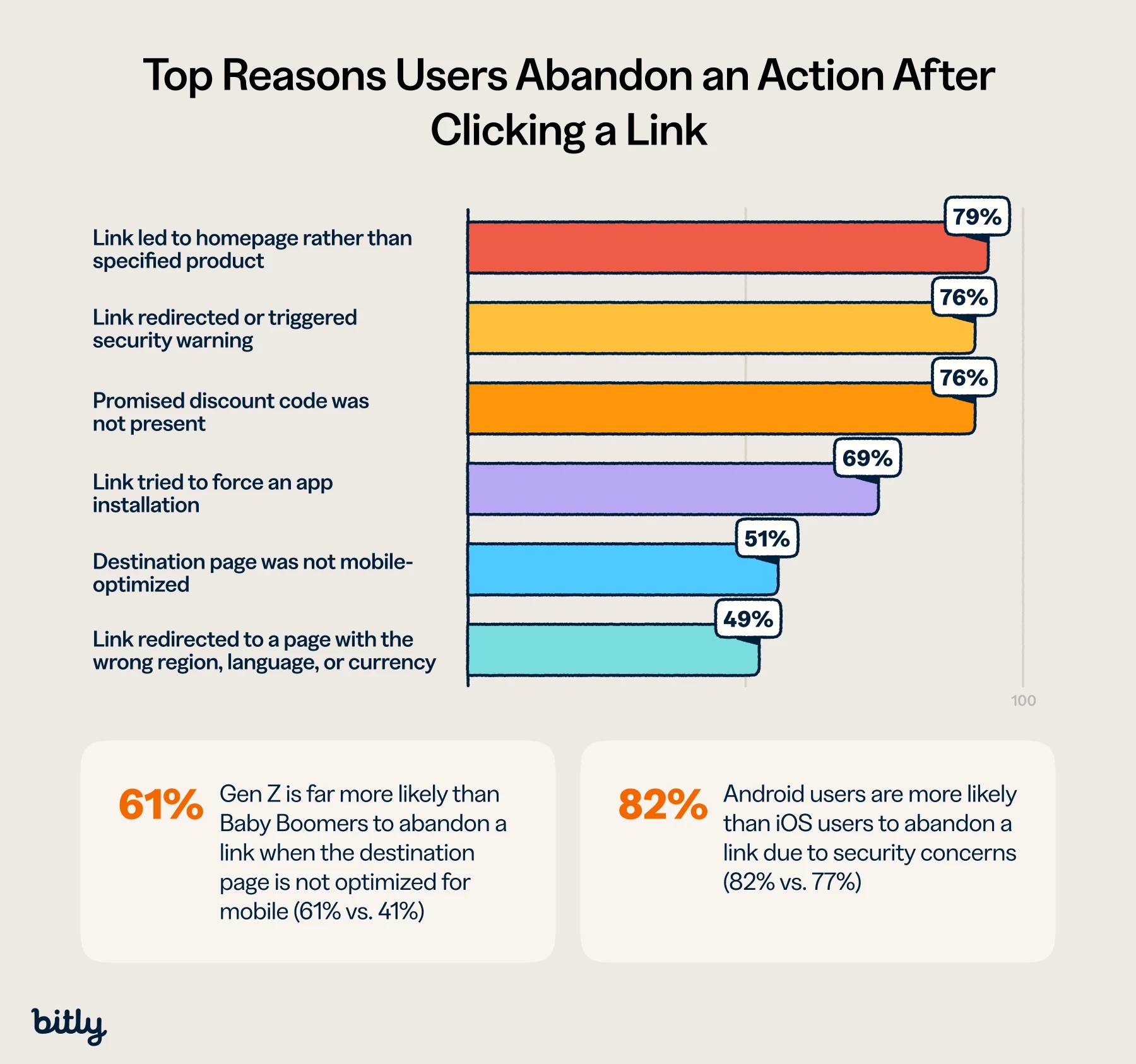
Landing on a generic homepage instead of the specific product featured in the post is the single biggest reason people abandon a page, cited by 79% of consumers. Close behind at 76% is a tie between a security-related friction, where excessive redirects or a browser security warning drive away consumers, and the missing discount or promo code that was promised in the post. Next in the list: a link tried to force an app installation or redirected to an app store at 69%, a page that isn’t built for mobile sits at 51%, and finally, the wrong region, language, or currency at 49%. Those last three reasons sit at the bottom of the abandonment trigger list overall, but even the « smaller » issues can still cost a brand half its audience.
Beyond what triggers abandonment, who’s abandoning a link matters just as much. Generational differences in behavior shape which of these issues are the greatest area of friction. A non-mobile-optimized page barely registers as an issue for Baby Boomers, at 41% abandonment, but it becomes a dealbreaker for Millennials and Gen Z, both around 61-62%, a 20-point swing driven almost entirely by how people expect a phone screen to behave. That same generational split shows up by device, too: iOS users will abandon links not optimized for mobile, more often than Android users do (57% vs. 47%), while Android users are the ones more wary of security warnings (82% vs. 77% for iOS).
Every one of these triggers traces back to the same root problem—a link that doesn’t go where consumers expect it to go. A link-in-bio page that routes straight to the featured product closes most of that gap before it opens. So does a destination that’s been checked for security issues before a customer ever taps it. If you’re wondering whether a link-in-bio setup is worth building into your social strategy, it’s the difference between a click that converts and one that doesn’t.
What makes a link worth clicking?
If an unexpected link destination or experience pushes people away, certain signals do the opposite—they build enough confidence for people to click through without hesitation.
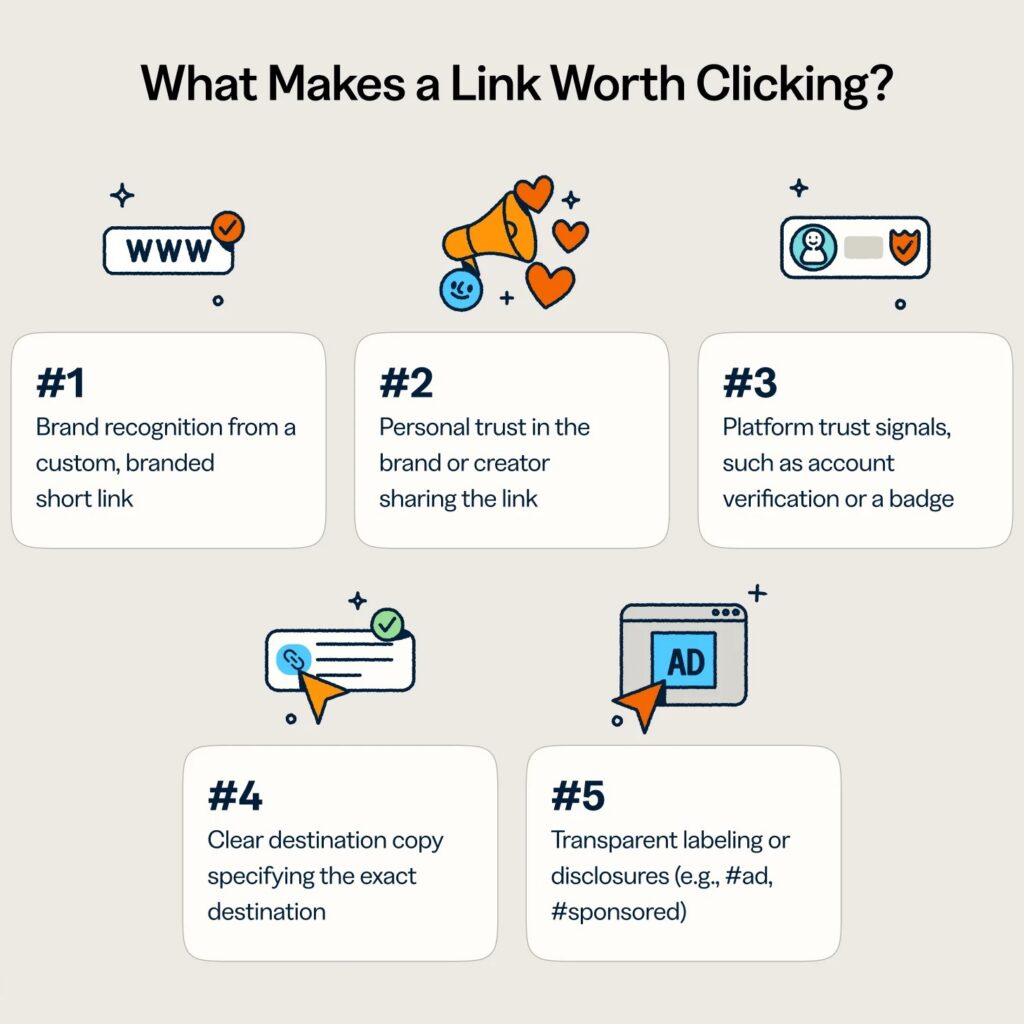
The top driver for encouraging clicks is signaling credibility and trust in a brand, but what actually makes a brand feel credible at a glance? For nearly half of consumers, it’s simply recognizing the name. Brand recognition from a custom branded short link tops the findings at 48%, ahead of any other single factor. Personal trust in the brand or creator sharing the link follows close behind at 44% overall, though that number splits by generation. Gen Z leans on personal trust the most, at 50%, while Gen X leans on it the least, at 38%. Clear destination copy that spells out exactly where a link leads matters to 43% of people, a reminder that vague link text still costs clicks even when everything else checks out. Transparent labeling, things like #ad or #sponsored, follows a similar generational pattern to personal trust, mattering most to Gen Z at 39% and least to Gen X at 31%.
As clicks get more deliberate and less automatic, the brands and creators who look recognizable and clearly labeled are the ones still earning them. A branded short link does double duty here. It signals legitimacy the moment someone sees it, and it tends to convert better once they click. According to Bitly’s own platform data, branded links see a 2.3x lift in clicks over unbranded ones, which lines up exactly with what this data shows: people click what they recognize.
What causes consumers to pause before clicking on a link?
Trust doesn’t fail all at once. Before someone abandons a page entirely, there’s usually a moment of hesitation, and that moment has its own set of triggers.
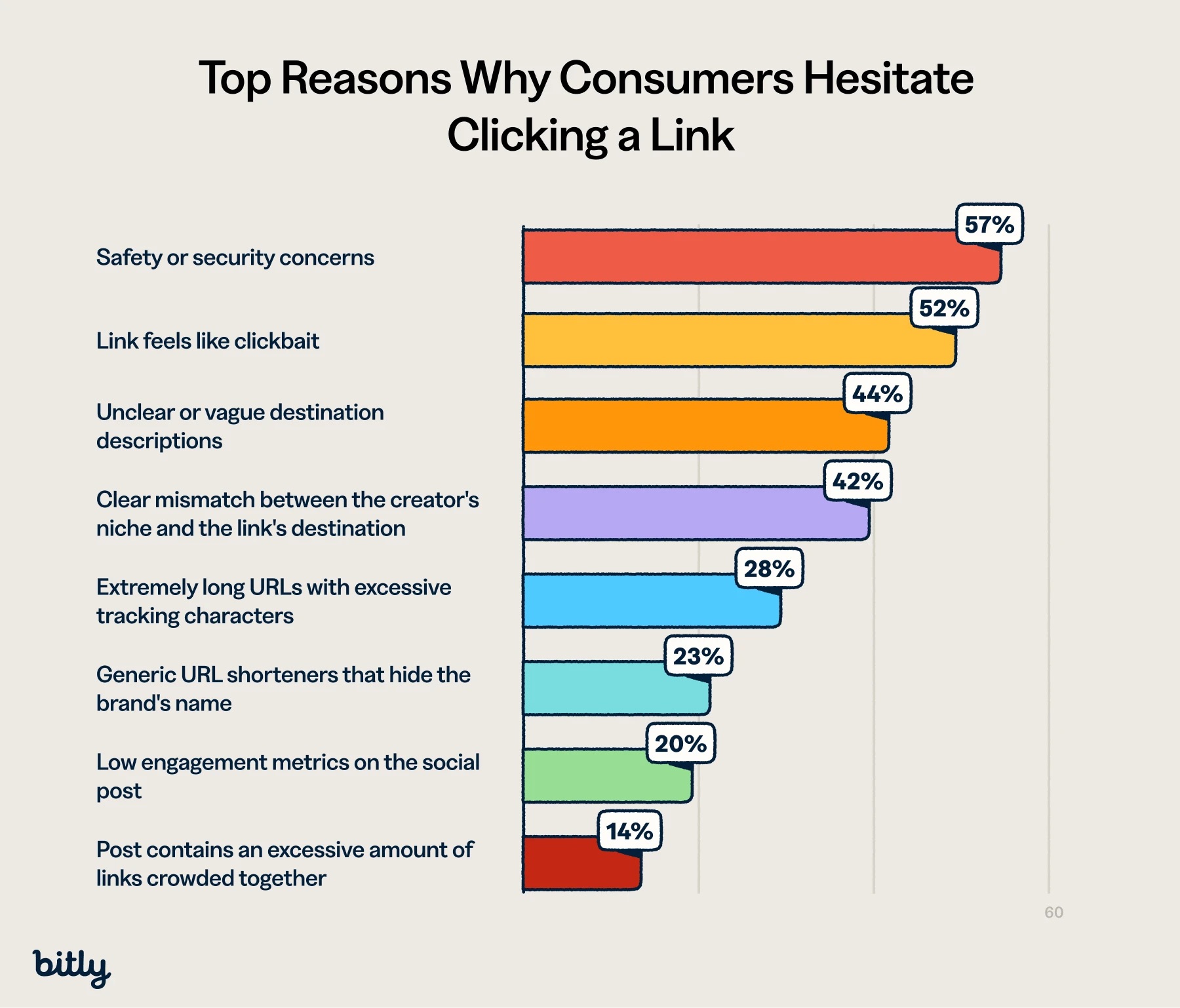
Concerns about the safety or security of the URL top the list at 57%, ahead of everything else on it. The link feeling like clickbait comes in at 52%, and unclear or vague destination descriptions sit at 44%. A mismatch between a creator’s usual content and where the link actually leads gives 42% of people pause. Further down, long URLs packed with tracking characters bother 28% of people, generic shorteners that hide the brand’s name bother 23%, low engagement on the post itself factors in for 20%, and a post crowded with too many links at once affects just 14%.
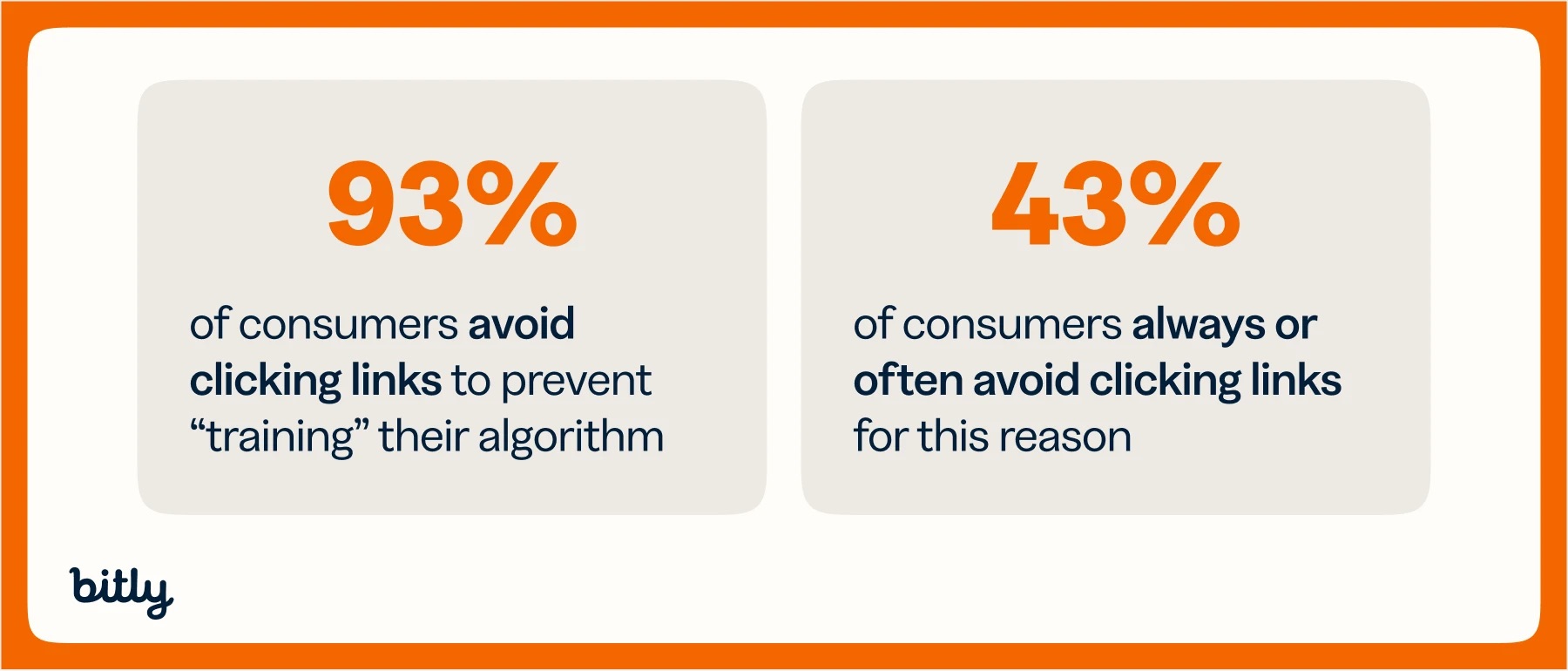
Beyond hesitating over safety and clickbait, plenty of people are avoiding links for a reason that has nothing to do with the link itself: protecting their own algorithm. With 93% of consumers avoiding clicking links to prevent “training” their algorithm, that behavior isn’t evenly spread across ages either. Gen Z and Millennials are the most likely to skip a link on purpose for this reason, both landing around 45%. Low engagement metrics carry more weight for younger audiences, too: 32% of Gen Z say low likes or comments make them distrust a link, compared with 23% of Millennials, 18% of Gen X, and just 7% of Baby Boomers.
Security concerns and vague branding show up as two of the biggest hesitation points, and neither one is really about the content of the link. Both come down to whether the destination looks like something worth trusting before a person even gets there. A link that’s been checked against a security database closes the first gap, and a recognizable, branded domain closes the second, since a generic shortener hiding the brand name is doing the opposite of what confidence requires.
Do consumers trust brands or creators more when clicking different types of links?
How much people trust a link often depends less on where it leads and more on who’s sharing it.
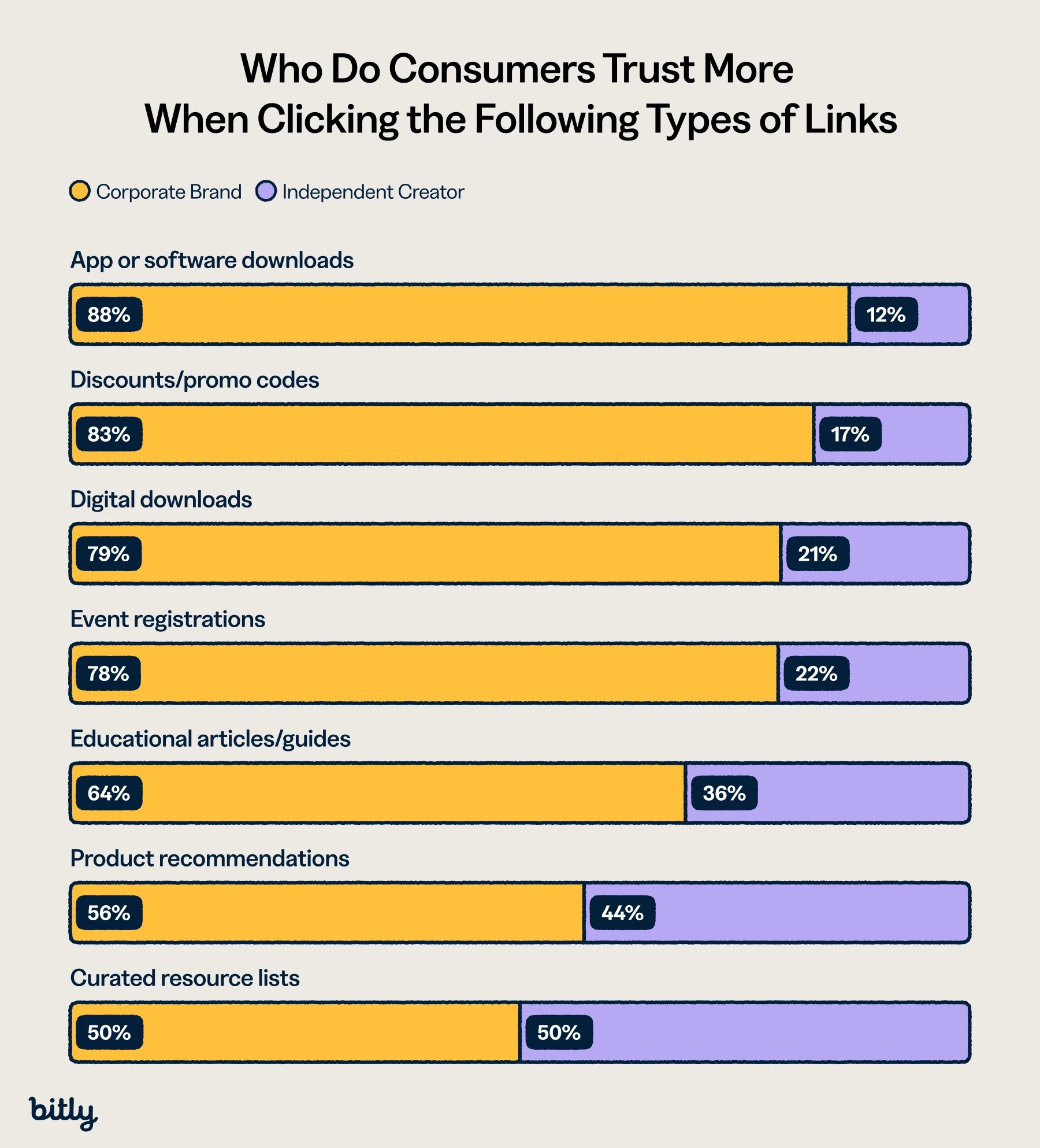
Corporate brands win out over independent creators across every single content type in the survey, and nowhere more decisively than app or software downloads, where brands hold 88% of trust against just 12% for creators. Curated resource lists tell a different story, landing at an even 50/50 split, the only category where creators pull even. That same category also marks the extremes for creators overall: curated lists are where creator trust peaks at 50%, and app downloads are where it bottoms out at 12%, the widest swing of any content type.
The pattern says something worth sitting with. People trust a brand to handle a transaction, but they’ll trust a creator just as much, sometimes more, to point them toward something worth their time. That distinction matters for how a link gets built and measured. A UTM tag that differentiates brand-owned traffic from creator-shared traffic isn’t just a reporting nicety here, it’s the only way to see which kind of trust is actually converting.
Which platforms do consumers trust most?
The top four platforms consumers named as most trusted are separated by just two percentage points. LinkedIn edges out the field at 19%, while YouTube, Instagram, and Reddit tie for second at 17% each.
The Single Platform Consumers Trust Most When Clicking a Link, by Generation
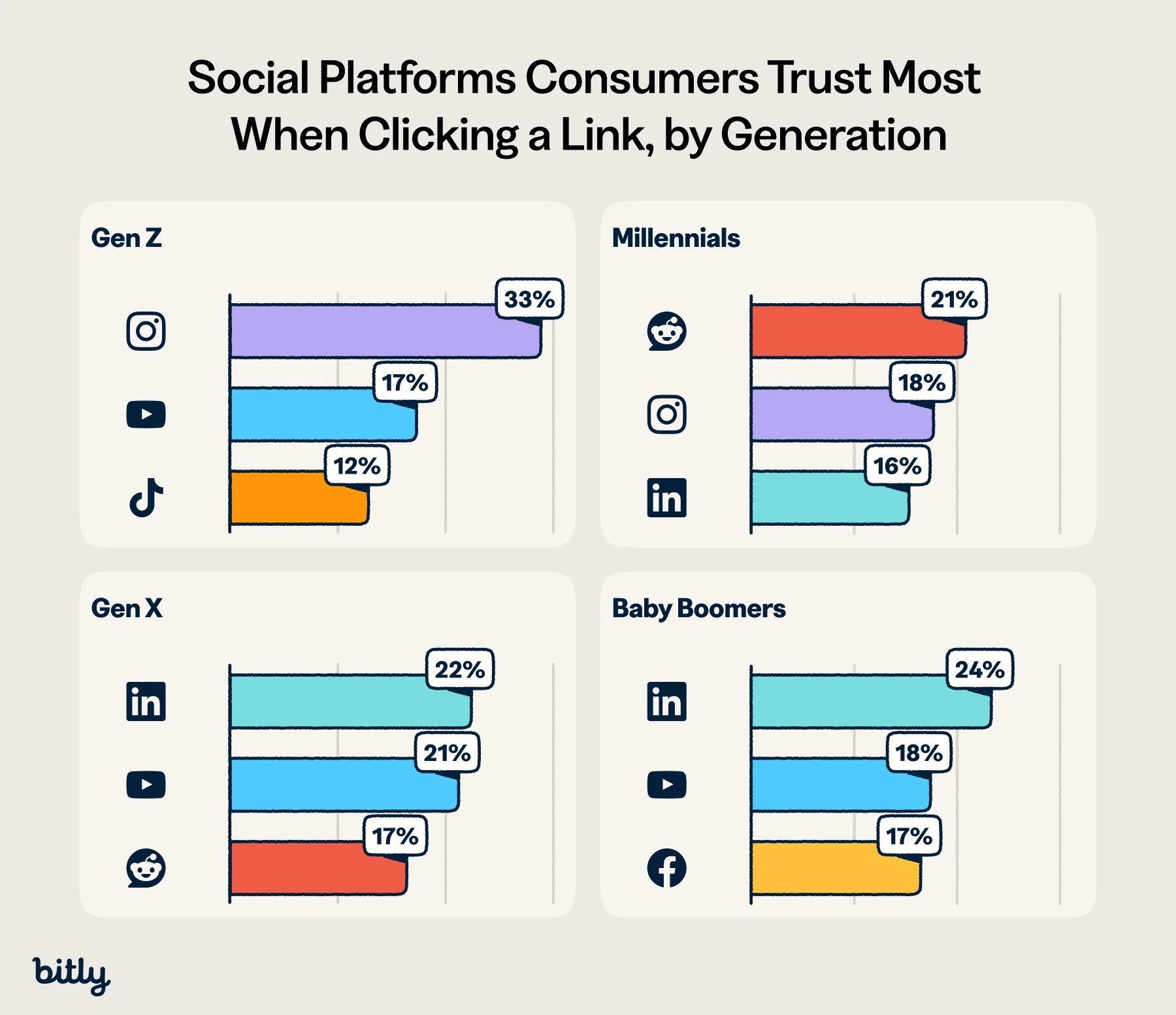
That overall ranking hides some sharp generational splits. Instagram is Gen Z’s clear favorite, trusted most by 33% of that generation, more than double the 18% of Millennials who say the same. LinkedIn moves in the opposite direction, climbing steadily with age until it becomes the top choice for both Gen X (22%) and Baby Boomers (24%). TikTok follows the same pattern as LinkedIn, just inverted, dropping at every single generational step from 12% among Gen Z down to 2% among Baby Boomers. Reddit, meanwhile, belongs to Millennials, who trust it more than any other generation does at 21%.
No single platform earns default trust across every audience. A brand or creator whose top channel is Instagram is speaking to a very different audience than one leaning on LinkedIn, and betting on one platform’s native analytics means losing sight of whatever’s happening everywhere else. A unified, cross-platform view of link performance isn’t a nice-to-have here, it’s the only way to actually see which platform is earning your audience’s trust instead of guessing.
What are the top tracking and attribution challenges?
When the consumer journey spans multiple platforms, device types, websites, and media, audiences aren’t willing to work hard to complete a task. People want to find what they’re looking for, where they expect to find it, without a maze of redirects in between. Marketers and creators face a harder version of that same expectation from the other side, left asking where their traffic actually came from, since it shows up in their analytics with no clear paper trail back to the post, story, or DM that generated it.
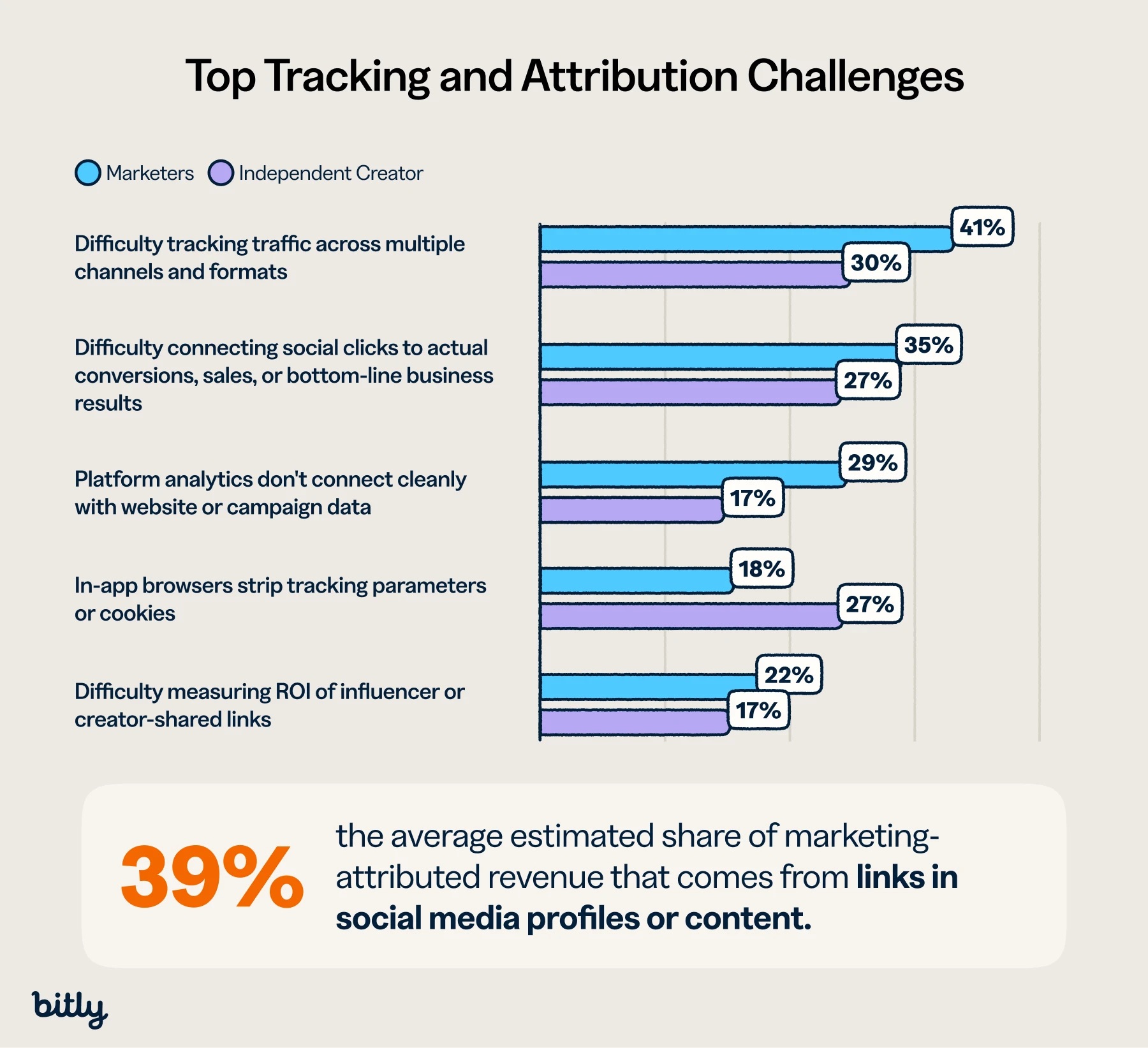
Difficulty tracking traffic across multiple channels and formats is the single biggest challenge overall, cited by 36% of respondents, and it’s the top pain point for both groups individually, at 41% for marketers and 30% for creators. Marketers report a second, distinct struggle: connecting platform analytics to website or campaign data trips up 29% of them, compared with just 17% of creators, a 12-point gap. Creators face their own version of that same disconnect from the other direction. In-app browsers stripping tracking parameters or cookies affects 27% of creators, versus 18% of marketers.
Both groups are describing the same underlying gap from opposite sides. Marketers can see what happens on their own site but lose track of a click’s origin the moment traffic crosses platforms. Creators lose that same visibility even earlier, inside the app itself, before a click ever reaches a destination they control. Either way, the result is the same blind spot: activity that’s clearly happening, numbers nobody can fully account for. A single link and analytics layer that survives the trip across channels and in-app browsers closes both versions of that gap at once, instead of asking marketers and creators to patch it from two different angles.
Where do marketers and creators send consumers?
So where does all that social traffic actually go? The answer depends on who’s sending it, and it doesn’t always match what a consumer expects.
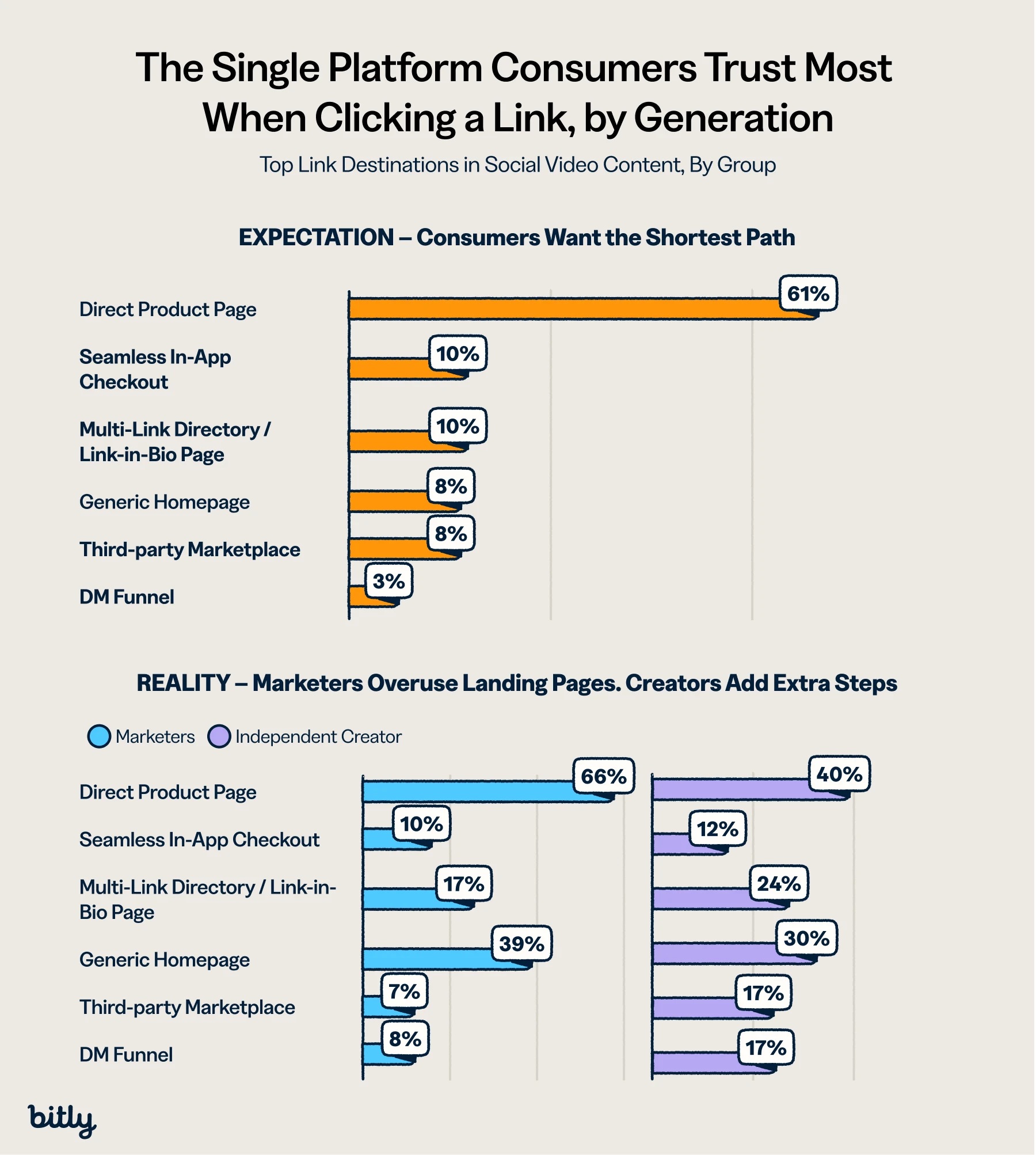
Marketers send the most traffic straight to a direct product page, at 66%, while creators do the same at a lower rate of 40%. Generic homepage is the second most common landing spot for both groups, claiming 39% of marketer traffic and 30% of creator traffic. Creators lean harder into two destinations marketers mostly skip. A multi-link directory or link-in-bio page picks up 24% of creator traffic against 17% for marketers, and third-party marketplaces pull in 17% of creator traffic compared with just 7% for marketers.
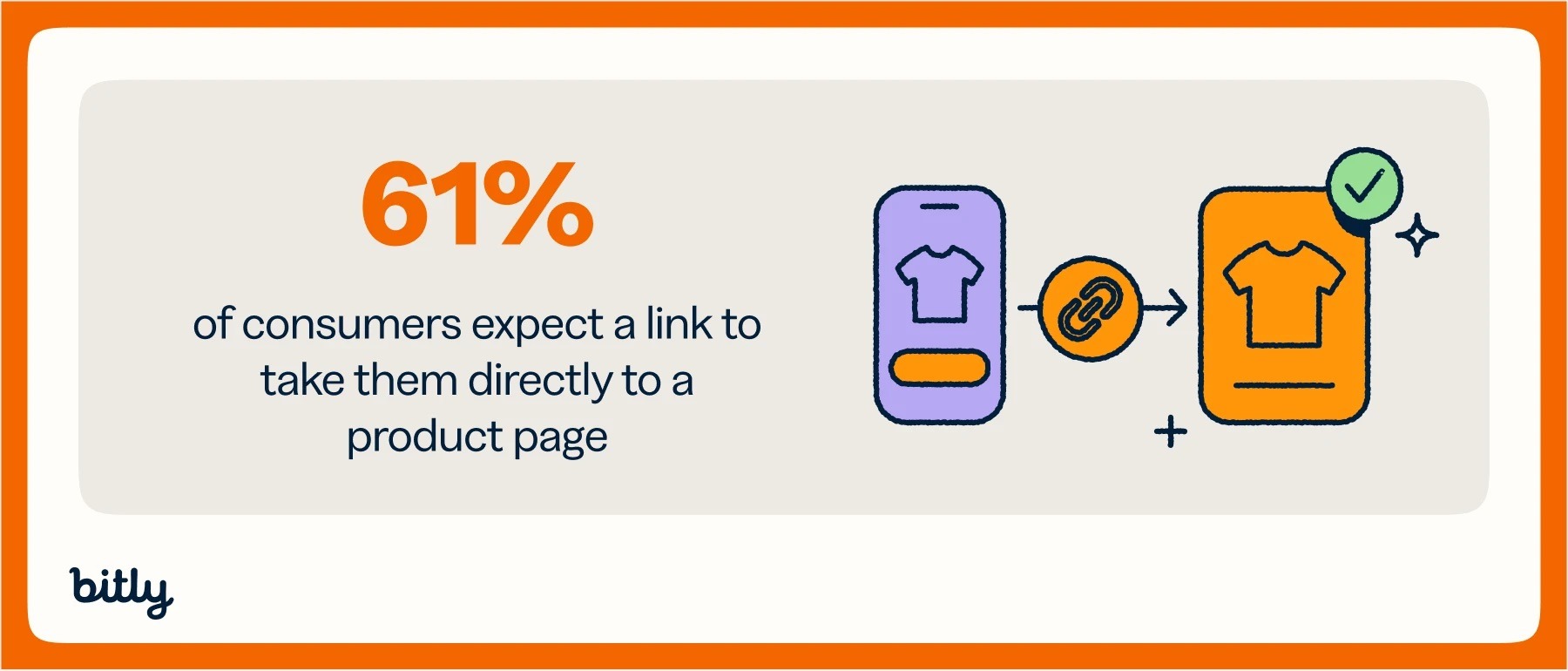
What actually matters here isn’t how marketers and creators compare to each other, but how far both fall from what consumers expect. Consumers expect a direct product page far more consistently than either group delivers one, and every point of traffic that lands on a generic homepage instead is a point of friction nobody planned for. Mobile deep linking and a link-in-bio page built to route straight to the featured item close that gap on both sides. Creators get a directory page that behaves like a shortcut instead of a detour, and marketers get a way to send video traffic directly into the product experience consumers were already expecting.
The most common post-click best practices used by marketers and creators
Data on link performance isn’t scarce. What’s harder to pin down is which numbers marketers and creators can actually trust to make a decision.
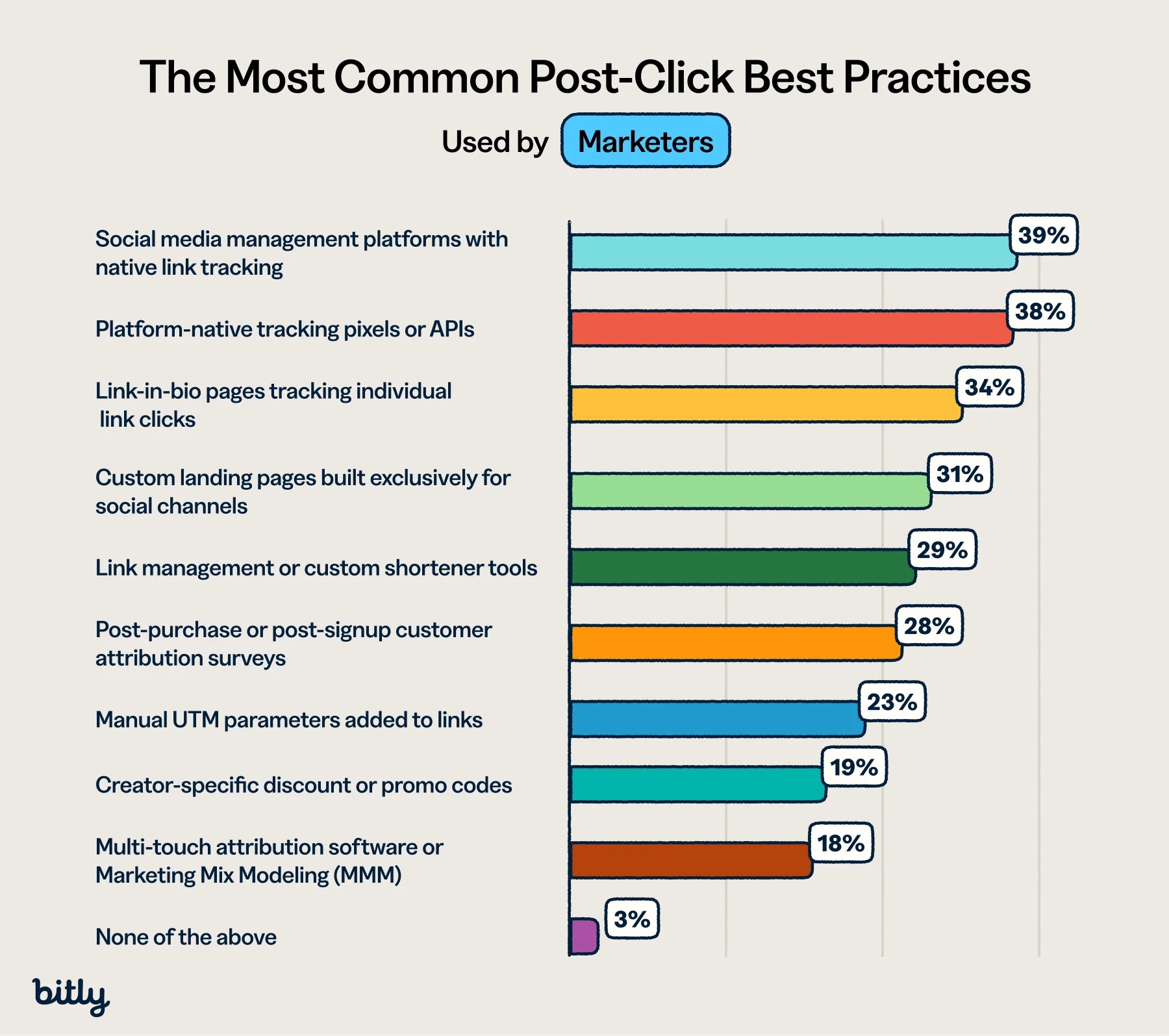
Social media management platforms with native link tracking lead the way for marketers, at 39%. Whereas creators favor something else entirely.
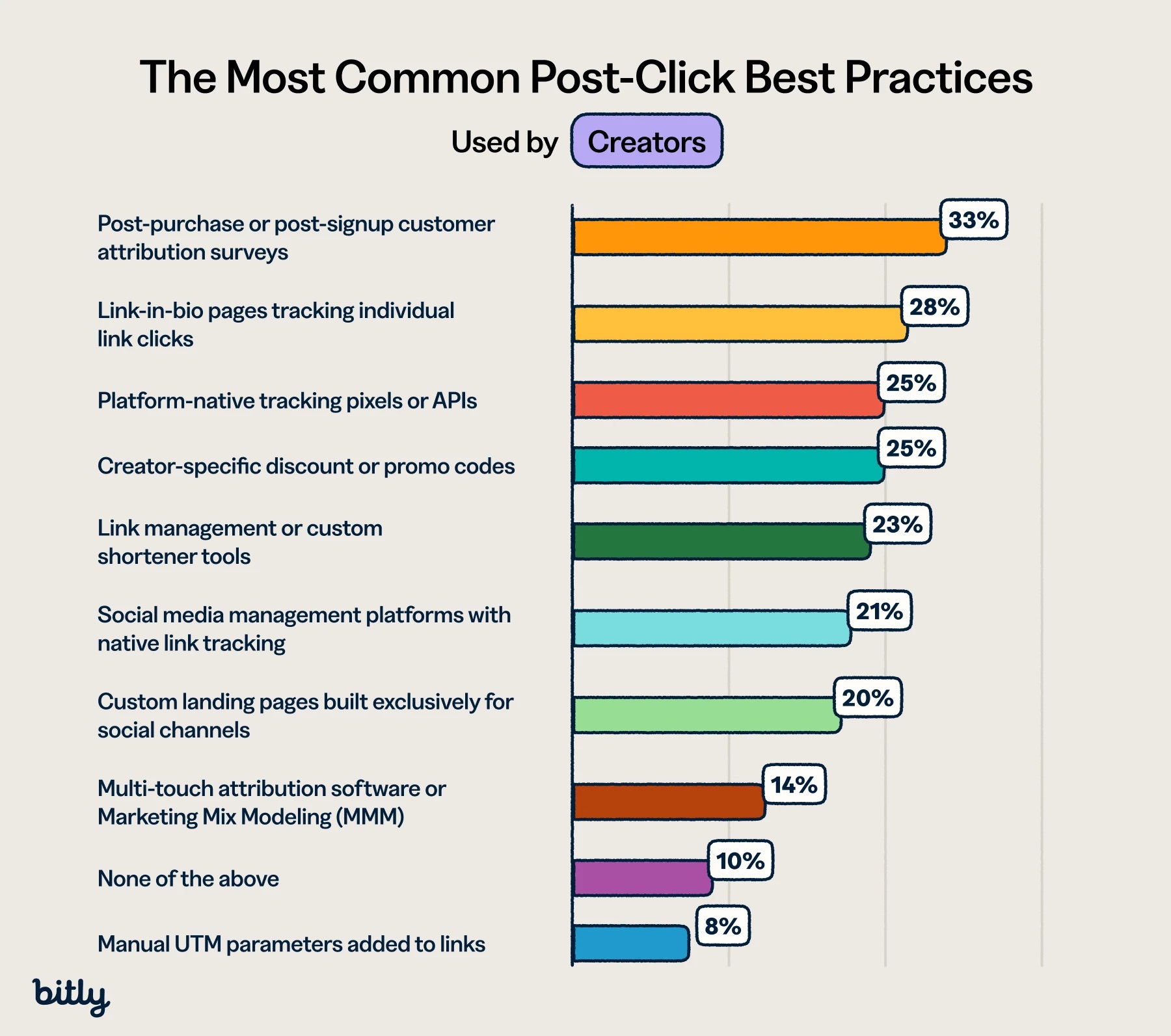
Post-purchase or post-signup attribution surveys and asking customers directly how they found a product, top their list at 33%. That disagreement over what’s trustworthy shows up clearly in two ways. Marketers lean on manual UTM parameters nearly three times as often as creators do, 23% against 8%, and only a small share of either group, 10% of creators and 3% of marketers, aren’t measuring their links at all.
No single approach dominates. Adoption spreads thin across UTMs, platform-native tools, link-in-bio pages, and shortener tools, with most methods landing somewhere around 30% or lower even among their biggest consumer base. The problem isn’t that marketers and creators are bad at analyzing data, but that the tooling itself is scattered, forcing anyone tracking a link to stitch together partial visibility from three or four different sources instead of one. A link management tool that folds shortening, UTM building, and click tracking into a single workflow removes the guesswork baked into manually tagging every link, and it turns those scattered fractions of adoption into one number worth trusting.
Mastering expectations after the click
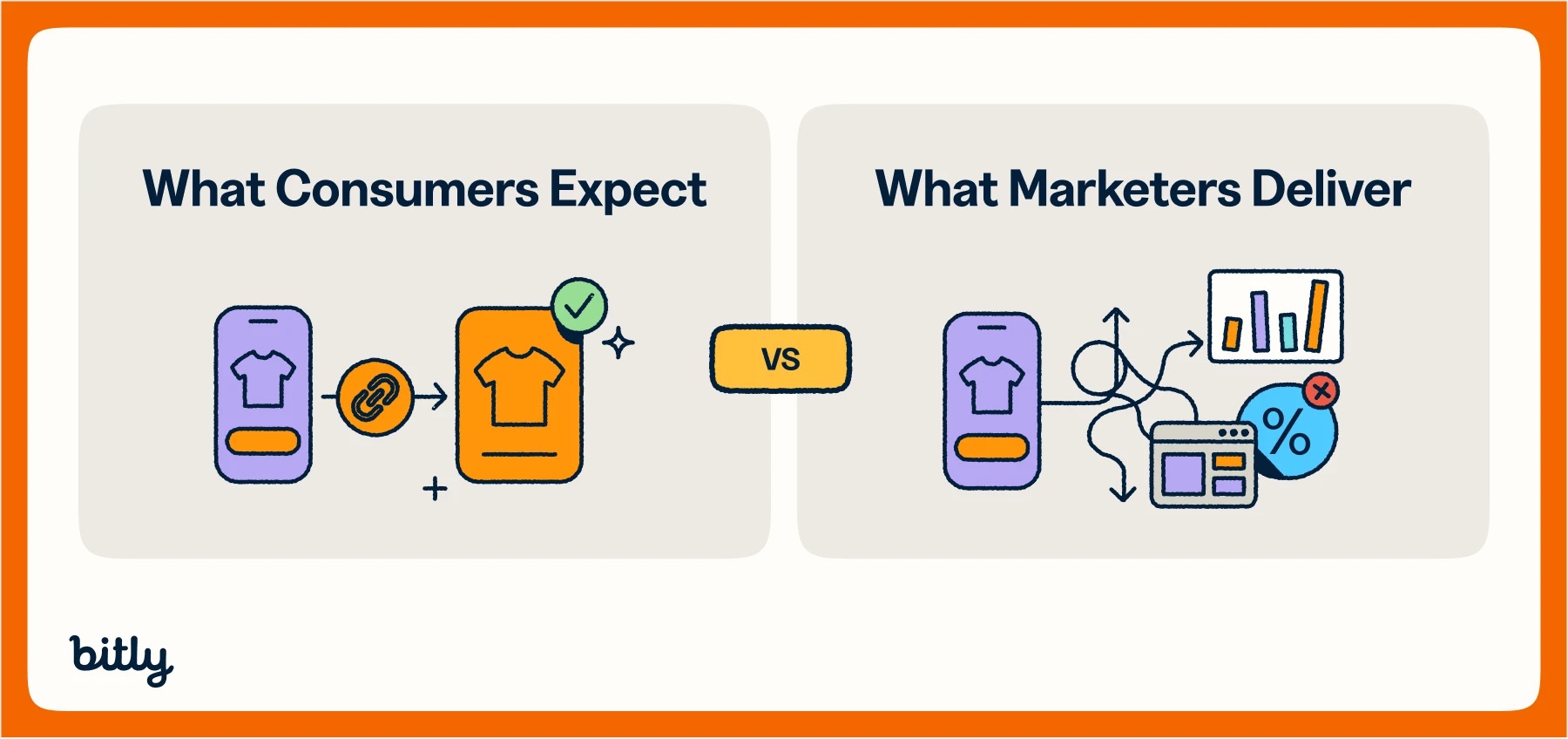
Every finding in this report traces back to one gap. Consumers want a direct route to what they’re actually looking for, delivered by a source they recognize and trust. Marketers and creators, meanwhile, send consumers through a fragmented, unpredictable experience, then try to attribute where traffic went after the fact. Both sides land on different versions of the same frustration, and narrowing the divide depends entirely on giving marketers and creators the visibility and control to route accurately, label clearly, and protect the click.
That’s where the pieces from this report connect. Using tools that make it easy to create recognizable, trusted branded links, and share them wherever consumers expect to find them, is how marketers and creators close this gap. A branded, custom domain builds the recognition that makes someone comfortable clicking in the first place. More than 3M customers rely on Bitly to connect with their audiences, from global enterprises to growing businesses, including two-thirds of the Fortune 500, and links with a custom domain see a 2.3x lift in clicks over unbranded ones. A link to a product landing page that can be redirected after a post goes live keeps a broken destination from costing a sale, trust and safety features protect the click itself, and a single, unified view of analytics finally shows marketers and creators what’s actually working.
The link isn’t the shortcut anymore. It’s the whole relationship, compressed into a single tap, and this report is proof that treating it as anything less costs more than we ever realized.
Frequently Asked Questions
The top reason is a mismatch between expectation and destination. 79% of consumers have abandoned an action because a link led to a generic homepage instead of the specific product featured in the post. Security friction and missing promo codes follow close behind, each cited by 76% of consumers.
Recognition matters most. A custom, branded short link is the top driver of click confidence, cited by 48% of consumers, followed by personal trust in the brand or creator sharing it, at 44%. Clear destination copy and transparent labeling, like #ad or #sponsored, round out the top factors.
Brands, in most cases. Consumers trust corporate brands more than independent creators across every content type surveyed, and the gap is widest for app or software downloads: 88% trust a brand’s link there, compared to just 12% who trust a creator’s. The one exception is curated resource lists, like a roundup of favorite products, where trust splits evenly between brands and creators at 50/50.
Cross-channel tracking. 36% of respondents overall cite difficulty tracking traffic across posts, bios, stories, DMs, and paid as their top pain point, making it the single biggest attribution challenge for both marketers and creators.
Link shorteners and link-in-bio tools give marketers and creators a single point of visibility by pulling click data into one place instead of having scattered data across platforms. 34% of marketers already rely on link management or custom shortener tools, and 29% use link-in-bio pages that track individual clicks, both of which make it possible to see which post, platform, or creator actually drove a conversion.
Yes, you should use link-in-bio and link shorteners for your social links. Here’s why: a branded short link builds the recognition that gets someone to click in the first place, and a link-in-bio page that can be corrected after a post goes live keeps a broken destination from costing a sale. Together, they close the two biggest gaps in this report: the trust gap that keeps people from clicking, and the routing gap that makes them abandon a page once they do.
Methodology
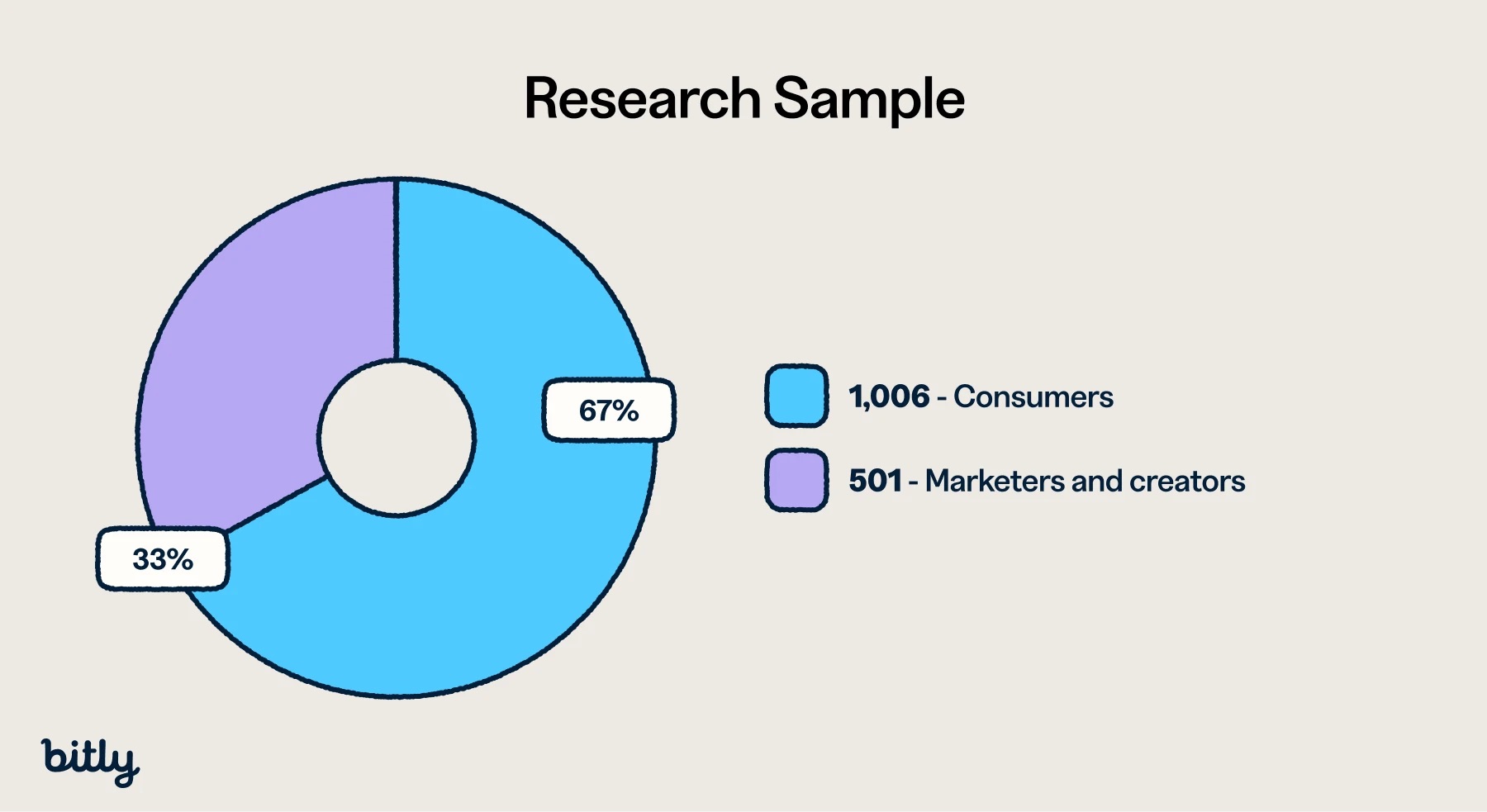
Bitly conducted an online, independent market survey of 1,006 US consumers and 501 US marketers and creators. Responses were collected between July 27 and August 5, 2026.
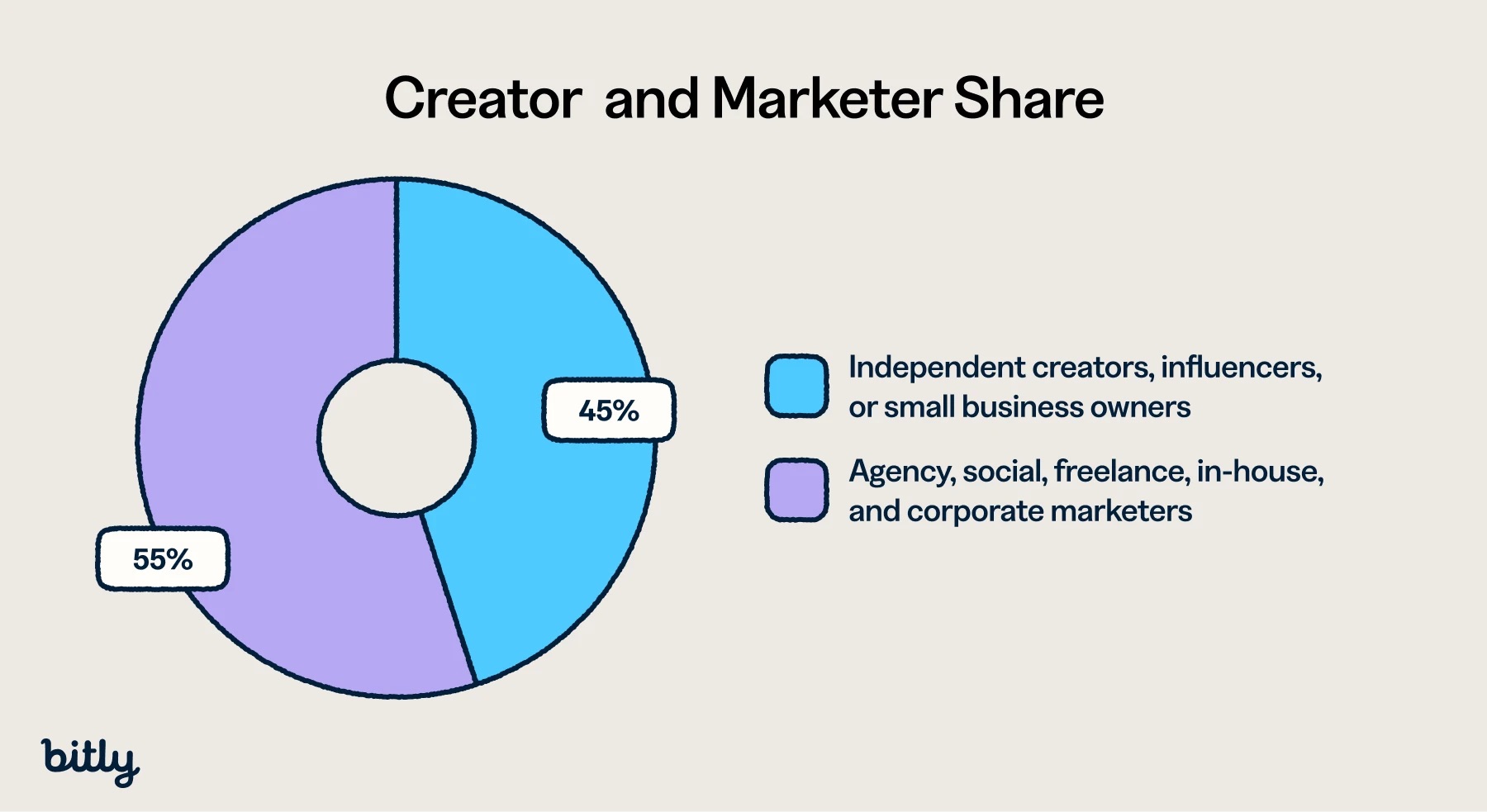
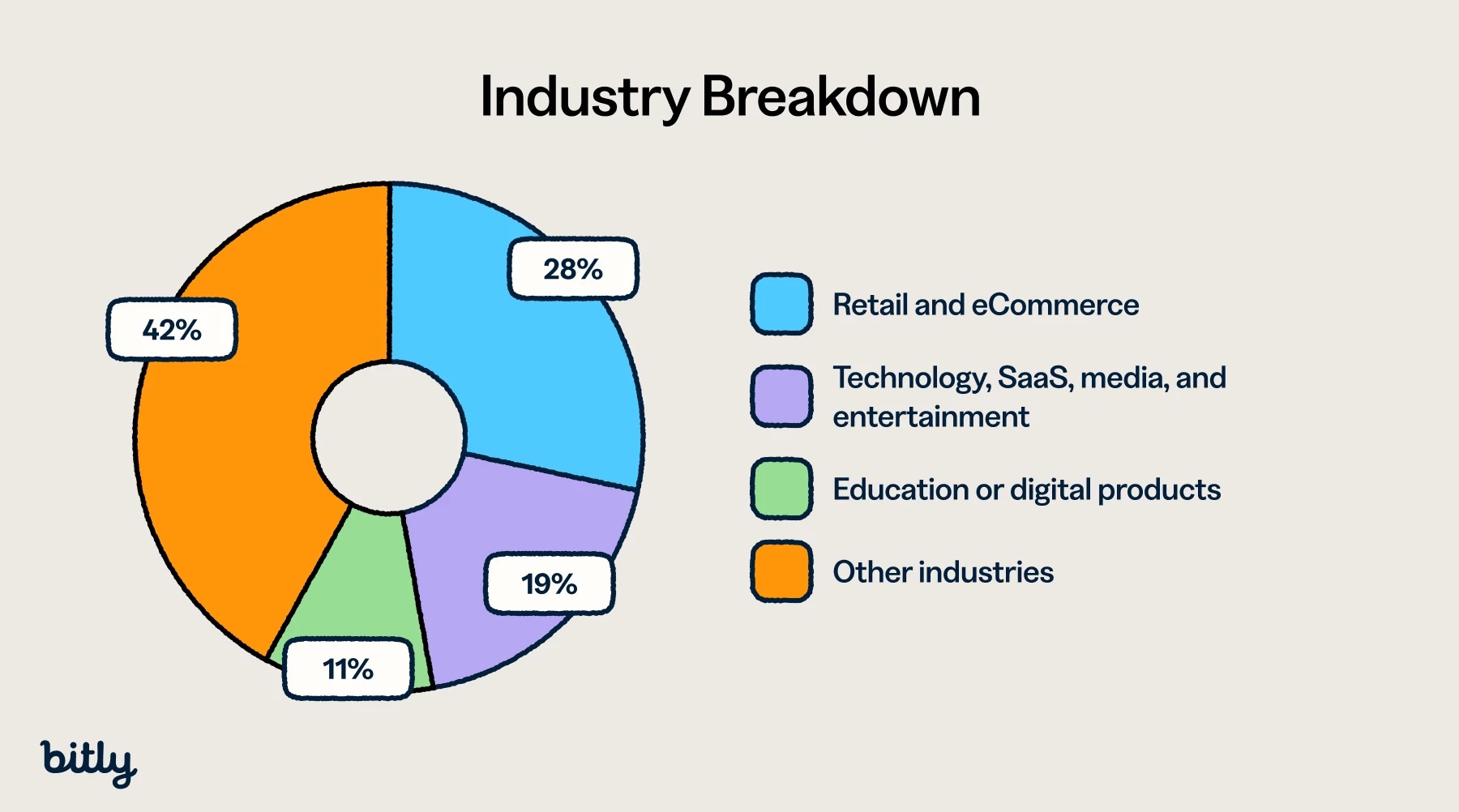
Marketer and creator respondents split fairly evenly by role. Forty-five percent identified as independent content creators, influencers, or small business owners managing their own social media, while 55% identified as agency marketers, social media managers, freelance marketing contractors, or in-house brand and corporate marketers. Respondents came from a range of industries, most commonly retail and eCommerce (28%), followed by technology, SaaS, media, and entertainment (19%) and education or digital products (11%).
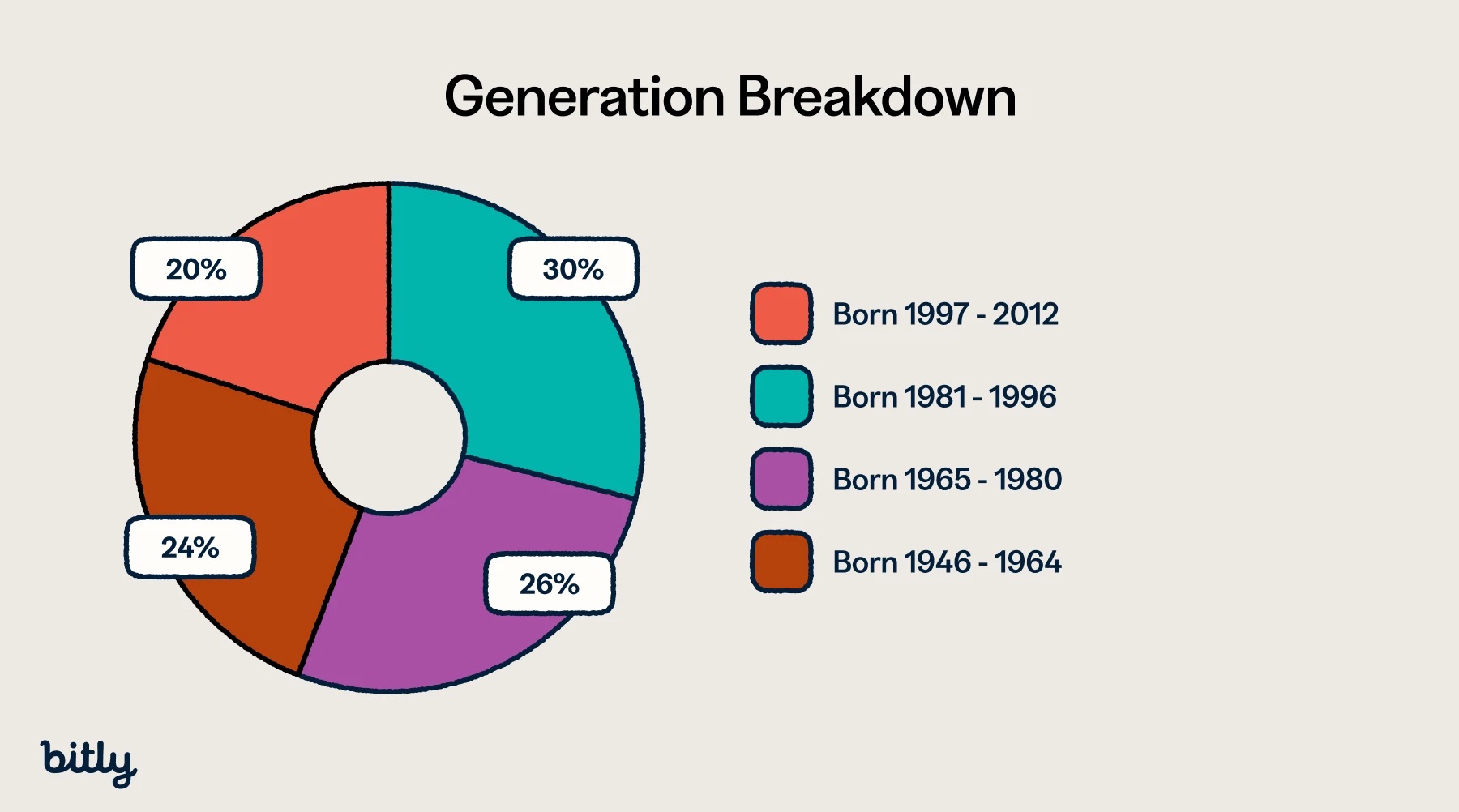
Consumer respondents spanned four generations. The largest share, 30%, were born between 1981 and 1996, followed by those born between 1965 and 1980 (26%), 1946 and 1964 (24%), and 1997 and 2012 (20%). Gender was nearly evenly split, with 50% identifying as male and 49% as female, and the remaining 1% identifying as non-binary or preferring not to say.
Fair Use Statement
The findings in this report may be reused for noncommercial purposes with proper attribution back to this page. When citing data or graphics from this report, please link to this original page so readers can access the full methodology and context behind the findings.