Car shopping doesn’t happen in one place anymore. A customer might discover a vehicle through social media, revisit the listing later on another device, send a quick text with a question, and still wait days before visiting your dealership. The interest is there, but keeping those moments visible across channels is a different challenge entirely.
Short links help create more continuity throughout that journey. In automotive retail, they make it easier to understand where shoppers come from, how they move between touchpoints, and which campaigns keep them engaged along the way.
Branded links, Dynamic QR Codes, and Bitly Analytics bring those interactions into clearer focus. They can help build trust before the first click and give marketing teams better visibility into engagement across social media, SMS, email, print, and in-person experiences—without adding more channel chaos.
Below, we’ll look at where short links and QR Codes fit into the car buyer journey and how they can help dealerships turn scattered interactions into measurable customer engagement.
Note: The brands and examples discussed below were found during our online research for this article.
Key takeaways
- Short links in car retail can help connect a fragmented buyer journey by making clicks from social media, email, SMS, and in-person visits easier to track.
- Branded short links may build more trust than generic short URLs when shoppers evaluate high-stakes purchases like vehicles through text messages, email, and shared links.
- Dynamic QR Codes paired with short links can support fast-moving inventory by directing shoppers to current listings without forcing dealerships to reprint lot signage.
- Bitly Analytics can help automotive marketers compare clicks and scans across physical and digital touchpoints, making campaign engagement easier to evaluate before and after the sale.
- Short links in car retail can support post-purchase engagement through service reminders, loyalty offers, referral campaigns, and other follow-up communication.
The car buyer journey is fragmented by design
The car buyer journey looks simple on paper: see a vehicle, contact the dealership, make a purchase. In reality, it’s a long series of small decisions spread across platforms, devices, and conversations.
A shopper might save a vehicle link, send it to a partner, reopen it later from a text thread, and compare it against listings from an ad or marketplace app. By the time they finally contact your dealership, they’ve already created dozens of touchpoints along the way.
As campaigns expand across more channels, dealership teams need a better way to understand how shoppers move through the buying process, not just where the final click happened.
Why do automotive buyers research across so many channels before deciding
Buying a car takes more consideration than most purchases, so shoppers rarely rely on a single source before making a decision. In fact, roughly 60% of car buyers rely on external sources when they start researching.
They read customer reviews, compare trim levels across different tabs, and watch walkaround videos on social platforms like TikTok and Instagram. Many revisit listings multiple times before reaching out to a salesperson.
That research behavior creates a long trail of engagement before a buyer ever fills out a form or schedules a test drive. A shopper may discover a vehicle through a video ad, revisit it later through a vanity URL saved from a text message, then scan a QR Code on the lot to compare pricing or financing details in person.
Short links help dealership teams make better sense of those interactions. Rather than treating every click or scan as unrelated activity, branded links and QR Codes help show how buyers move from early research to stronger purchase intent.
The attribution gap that dealership marketers face every day
Dealership digital marketing teams aren’t lacking data, but every platform reports performance differently. Email platforms track opens and clicks, paid social measures engagement, SMS tools report replies, and print campaigns often live in a separate dashboard altogether.
Meanwhile, buyers move between these touchpoints without thinking twice, but the reporting behind them stays fragmented. Most of that activity never appears together in a unified view.
Offline interactions make attribution even harder. QR Codes on window stickers, service counters, direct mail, or showroom kiosks can drive meaningful engagement, but those scans are easy to overlook when reporting stays disconnected. Short links help bring those offline and digital interactions into the same reporting picture.
What short links actually do in an automotive marketing context
Short links do a lot more than make URLs look cleaner. They help dealerships share inventory pages more easily, build trust with branded links, and track how shoppers interact with campaigns, texts, QR scans, and vehicle pages.
That flexibility matters because dealership campaigns move quickly. Inventory rotates, incentives expire, and featured offers shift from week to week. Automotive teams need links they can update without rebuilding every ad, email, SMS, or printed handout tied to a campaign.
The same goes for measurement. Teams need a way to track engagement across ads, SMS campaigns, QR Code scans, inventory pages, and printed materials without stitching reports together manually.
Instead of treating links and QR Codes as separate tools, dealerships can manage both within the same workflow. Bitly Links and Bitly Codes work together to support sharing, scanning, destination updates, and engagement tracking across channels.
Branded short links versus generic URL shorteners: Why the difference matters in car sales
In car sales, even the link can influence whether someone clicks. Shoppers are cautious, especially with new vehicle prices up 3.5% from a year ago. Unfamiliar links can create hesitation before a shopper ever reaches your inventory page.
Generic short links don’t help much because they hide the destination and give little indication of who sent them.
Branded short links keep your dealership name visible from the start, making the destination feel more recognizable before anyone clicks. When shoppers see the dealership name directly in the URL, the link feels more like a continuation of the buying experience than a random redirect.
How Dynamic QR Codes solve the inventory turnover problem
Dynamic QR Codes solve a common dealership problem: printed materials stop matching current inventory quickly. A window sticker might point to a vehicle that’s already sold, or a mailer might promote an offer that’s no longer active.
With Dynamic QR Codes, the printed code stays the same while the destination can be updated as inventory, pricing, or incentives shift. That means dealerships don’t have to reprint signage every time a listing changes or a promotion expires.
This flexibility is one reason QR Codes have become a practical way to connect physical materials with current digital experiences. It helps keep lot signage, direct mail, and in-store materials aligned with what shoppers actually see online.
Short links across the full car-buying lifecycle
Car buying starts with online research, continues through dealership visits and test drives, and extends well beyond the sale through service reminders, loyalty offers, and follow-up communication. Short links can support every stage of that journey, but many dealerships only use them at the beginning, where measurement is easiest.
Below, we’ll look at how to use short links across the customer journey, from early vehicle research through post-purchase retention, while helping dealership teams track interactions throughout the full lifecycle.
Awareness and consideration: Connecting social, email, and SMS campaigns to measurable clicks
Most shoppers don’t experience dealership marketing as isolated campaigns. A walkaround video for a new SUV, an email about financing options, and an SMS about updated pricing can all influence the same purchase decision, even when reporting treats them separately.
Branded short links help create consistent measurement across those touchpoints. When UTMs are used properly, teams can compare how social media, email, and SMS contribute to engagement through the buying process.
That’s especially useful for model launches, inventory alerts, certified pre-owned campaigns, and regional offers where timing drives shopper interest. Teams can use the same link structure across campaigns to better track vehicle detail page visits, financing activity, and test drive interest over time.
On the lot: QR Codes on window stickers and signage that always point to current listings
A customer scans a window sticker or nearby signage expecting current vehicle details, trade-in estimates, payment calculators, or available incentives designed for mobile viewing.
Dynamic QR Codes in automotive retail make that easier by allowing dealerships to update destinations instead of locking every code to a single page. Inventory, pricing, or promos can change without requiring new signage or printed materials.
That flexibility matters when vehicles sell quickly or offers change mid-cycle. A scan on the lot can take shoppers directly to updated inventory details, limited-time incentives, or a test drive booking page without sending them through outdated listings or expired promotions.
Test drivebooking: Turning short link clicks into scheduled appointments
Test drives are often the point where casual browsing turns into real shopper intent. For dealership teams, moving someone from vehicle research to a scheduled visit creates a much clearer signal of purchase interest than a standard inventory page click.
Short links help simplify that transition. Rather than sending shoppers through a general inventory page, they can go directly into a booking flow with a clear call-to-action (CTA) to select a model, choose a time, and confirm availability in a few steps. Tagged links can also help teams identify which campaigns, QR Codes, or follow-up messages are driving the most booking activity.
That shift becomes more meaningful in reporting. A click on a vehicle listing may signal early interest, while a scheduled test drive reflects a shopper actively preparing for a dealership visit. Those appointments can later align with financing conversations, trade-in discussions, and post-purchase engagement.
Post-purchase engagement: Service reminders, loyalty programs, and referral campaigns
Post-purchase engagement continues long after a shopper drives off the lot. That’s when car dealers shift toward service reminders, loyalty offers, recall notices, and referral programs that keep customers returning over time.
Short links make those messages easier to act on. A service reminder can take someone directly to a booking page, while a recall notice can point to clear next steps. Loyalty and referral offers can also be shared through SMS or email without adding friction for customers.
Branded links reinforce trust after the sale. In a text from a dealership, a recognizable link feels familiar and safe to tap, especially when it leads to service appointments, support resources, or account information.
Why branded short links build trust at high-stakes moments
Buying a vehicle isn’t a low-stakes decision. It’s a major purchase, and shoppers naturally pause more before opening a link or tapping through to inventory.
Trust matters in two ways here. It influences whether someone clicks at all, especially in SMS threads, forwarded emails, or shared vehicle listings where the URL is often the only clue about where the link leads. It also shapes how your dealership brand comes across once that link moves beyond the original campaign.
Branded short links help on both fronts. They put the dealership name upfront so customers know where they’re going, and they keep that brand identity intact when links get shared privately or passed along. Generic URLs don’t offer that same reassurance, which can create hesitation in high-stakes moments.
The click psychology of a dealership domain versus a generic short URL
In a text message, a dealership-owned short domain creates a different impression than a generic short URL. For example, dealername.co/suv clearly ties back to the brand, while a random string from a generic shortener gives little context about where the link leads.
A shopper sees the link before anything else. In a split second, they’re deciding whether it feels trustworthy enough to open for pricing details, inventory information, or vehicle photos.
When your dealership name appears directly in the URL, shoppers immediately recognize where the link leads. That familiarity carries into the click itself, making the next step feel more direct and intentional instead of uncertain.
Protecting brand identity across SMS, email, and dark social sharing
Dealership links rarely stay confined to the original campaign. Vehicle listings get copied into group chats, forwarded through email threads, and shared privately between family members comparing options. As those links move across channels, the surrounding context often disappears.
Branded domains help keep that identity consistent. The dealership name stays visible whether the link appears in an SMS thread, forwarded email, or copied message, so shoppers still recognize where it came from—even after it’s been shared multiple times.
There’s a practical benefit for dealer groups, too. Custom domains create consistency across locations, while approval rules and link management tools help teams update or retire destinations as inventory and campaigns change.
Measuring what actually drives vehicle sales with Bitly Analytics
Dealership marketing goes beyond clicks. Teams ultimately want to understand which campaigns are generating deeper engagement, stronger purchase intent, and more dealership activity over time.
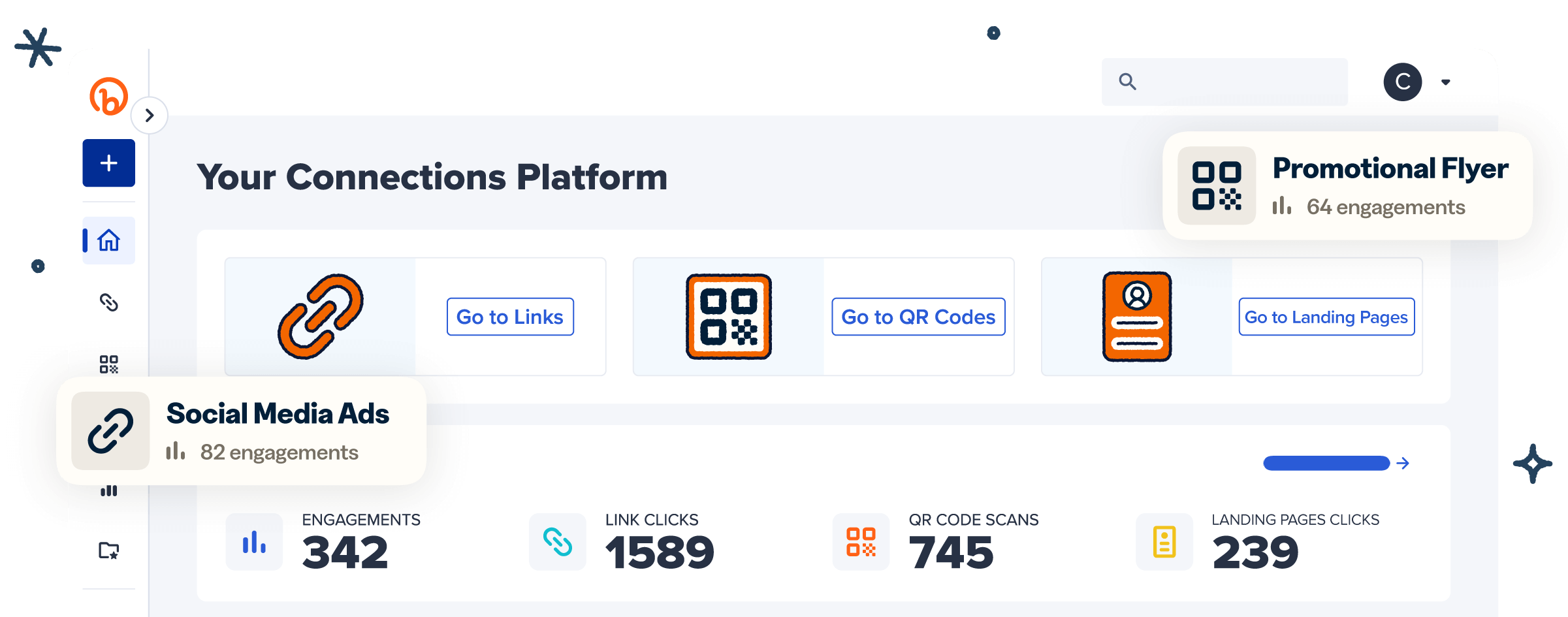
Bitly Analytics helps bring links, QR Codes, and landing pages into one view. Instead of jumping between disconnected reports, teams can compare how shoppers interact with inventory campaigns across social media, SMS, email, QR scans, and vehicle detail pages.
That visibility can shape day-to-day decisions. Marketing teams may shift budget toward campaigns generating stronger engagement for a specific model, while low-performing regional campaigns get adjusted or retimed.
It also makes reporting conversations more productive. Paid media partners, dealership teams, and leadership can work from a shared view of campaign performance instead of evaluating each channel in isolation.
Unifying click data from physical and digital touchpoints in one dashboard
Bitly Analytics brings clicks and scans from physical and digital campaigns into a single dashboard. QR Code scans from showroom signage can sit alongside engagement from SMS, email, social media, and inventory campaigns, helping dealership teams compare activity across channels in one place.
Native platform reporting rarely connects those interactions. Email platforms show opens and clicks, social platforms measure engagement, and QR scans often live separately from the rest of the campaign reporting. What gets lost is how those interactions build interest over time instead of appearing as disconnected data points.
Connecting short link performance to CRM records and sales outcomes
Short link performance becomes more useful when campaign tags and UTM parameters connect Bitly Link activity with customer relationship management (CRM) reporting. That can help teams compare engagement from model launch campaigns, QR Code scans on the lot, lead forms, and test drive requests alongside existing lead source data.
That alignment gives dealership teams more context around which campaigns are moving consumers forward, not just generating early clicks.
For enterprise teams, API access can send link data into existing CRM and reporting systems, reducing manual work and helping teams connect campaign activity with active opportunities and sales outcomes.
Key metrics automotive marketing teams should track beyond click counts
Unique clicks and scans help separate repeat interest from new shoppers. One truck campaign might drive steady engagement from Milwaukee, while an SUV offer sees lighter interest across nearby cities.
Device and timing patterns add context. Mobile activity in the evening may align more closely with QR Code scans on the lot, while daytime desktop traffic can reflect longer inventory research sessions before a dealership visit.
The most useful patterns often appear when engagement trends are compared across campaigns. A regional offer may generate stronger interaction with service content, while a model launch drives more showroom appointments. Social media, email, and SMS campaigns can also reveal different engagement patterns depending on timing, audience, and vehicle type.
Scaling short link strategy across multi-location dealer groups
A single dealership can manage short links manually. But across multiple rooftops, keeping campaigns, permissions, and inventory updates aligned gets more complicated fast.
Dealer groups need branded links that stay consistent across locations, along with clear permissions for who can create and edit them. They also need reporting that stays organized as inventory changes and campaigns shift week to week.
Bitly Links and Bitly Codes help create that structure without slowing down local teams. Individual stores can keep running location-specific campaigns while leadership maintains visibility across the broader dealer group.
Team permissions and branded domain consistency across locations
Multi-location dealer groups need stronger oversight over how links are created, shared, and managed across locations. Team permissions help control who can create or edit links while still giving local marketers flexibility to run day-to-day campaigns.
With Single Sign-On (SSO), teams don’t have to manage separate tools or logins. A shared branded domain also keeps links consistent, whether they support a regional offer or a single-location promotion.
Location-level folders and standardized naming rules help keep reporting organized. Teams can group campaigns by store or region, making it easier for leadership to compare performance without sorting through mismatched formats, inconsistent naming conventions, or duplicate tracking setups.
Bulk QR Code creation and API access for large inventory sets
QR Codes become harder to manage when vehicle listings change daily across larger dealer groups running several campaigns at once.
Bulk QR Code creation helps teams create large batches tied to vehicle listings, regional offers, or seasonal campaigns without creating codes one at a time. Destinations can then be updated as pricing, availability, or incentives change.
For enterprise teams, API access helps automate those updates across locations. Bitly also supports QR tracking and custom domains, helping dealerships keep campaigns organized and branded experiences consistent as operations scale.
Short links are the connective tissue your car-buying journey is missing
Dealership marketing works better when shoppers can move naturally from one touchpoint to the next without losing momentum. From vehicle research and QR Code scans to test drives, service reminders, and referral offers, every interaction adds context to the broader car-buying journey.
Short links help connect those interactions into a more measurable experience. Instead of managing disconnected campaigns and reports, dealership teams can use Bitly Links, Bitly Codes, and Bitly Analytics alongside other marketing tools for car dealerships to better understand engagement across the full customer lifecycle.
Ready to create a more connected car-buying experience? Explore Bitly plans to help dealerships teams manage links, QR Codes, and engagement at scale.
FAQs
How can car dealerships use QR Codes on vehicle window stickers to connect shoppers to digital listings?
Dynamic QR Codes on window stickers can send shoppers to current vehicle pages, financing options, or test drive forms while they’re on the lot. With Bitly Codes, dealerships can update the destination after printing and track scans in Bitly Analytics as inventory and offers change.
What is a vanity URL and how does it build trust in automotive marketing?
A vanity URL uses your dealership’s domain, which may help shoppers recognize the link as legitimate before they click from SMS, email, or social media platforms. That trust matters in car retail, where buyers often compare links across channels and hesitate when a generic short URL looks unfamiliar.
How do short links help dealerships track which marketing channels drive test drive bookings?
Short links paired with UTM parameters create a measurable path from social posts, email, SMS, and ads to booking pages and inventory campaigns. Bitly Analytics can show clicks by channel, device, and location, helping teams compare engagement alongside CRM records and lead source reporting.
How can short links improve the post-purchase customer experience at a car dealership?
Short links can support service reminders, loyalty offers, referral programs, and owner resources after the sale closes. Because car buyers often revisit and share information across messages and devices, consistent branded links can help dealerships stay recognizable and easy to engage with over time.
What analytics should dealerships track to connect short link clicks to actual vehicle sales?
Look beyond click counts to scans, unique engagement, device mix, geography, and time patterns across both physical and digital touchpoints. The strongest setup combines Bitly Analytics data with campaign tags, lead forms, and CRM reporting to help teams understand which campaigns are generating stronger engagement and sales activity over time.