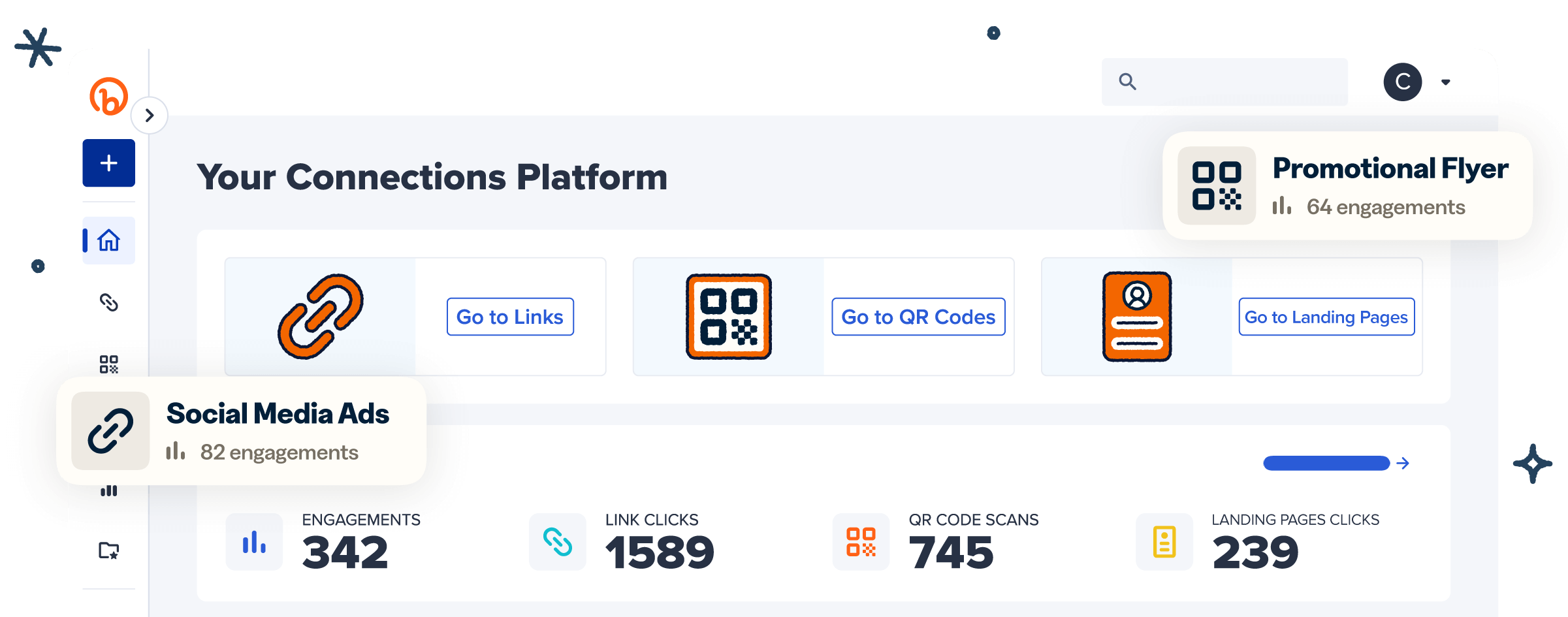

Bitly e QR.io sono aziende diverse con offerte di prodotti diverse, quindi non dovresti considerarle come due versioni dello stesso strumento. QR.io punta tutto sulla creazione di QR Code. Bitly adotta un approccio più ampio, combinando QR Codes con link brevi, link personalizzati, pagine di destinazione e analisi centralizzate all’interno dell’ecosistema Bitly.
Se il tuo team vuole creare esperienze QR tracciabili, entrambe le piattaforme vanno bene. Se poi vuoi anche una gestione dei link più efficace e un flusso di lavoro più ampio per le campagne, il divario si allarga rapidamente. Bitly ha traccia in tempo reale di clic, visualizzazioni, referrer, posizioni e informazioni sui dispositivi, ma per avere una visione completa delle conversioni a valle e del comportamento sul sito avrai comunque bisogno di strumenti di analisi esterni, di un pixel di tracciamento o di integrazioni con il tuo stack tecnologico esistente. Questo articolo mette a confronto Bitly e QR.io dal punto di vista di un potenziale utente.
Ricorda: i brand e gli esempi che trovi di seguito sono stati trovati durante le ricerche online per questo articolo.
Punti chiave:
- Sia Bitly che QR.io consentono di creare QR Code, ma Bitly integra questa funzionalità con link brevi, link personalizzati, pagine di destinazione e analisi cross-channel in un’unica piattaforma.
- QR.io potrebbe essere la soluzione ideale per i team che cercano soprattutto QR Codes personalizzabili e modificabili, senza bisogno di una gestione più ampia dei link.
- Bitly può essere la soluzione ideale per i team che gestiscono attività sia online che offline e che desiderano avere una visione d’insieme centralizzata di link e QR Codes.
- Nessuna delle due piattaforme sostituisce completamente l’analisi delle conversioni a valle.
Bitly e QR.io in breve
QR.io punta tutto sulla creazione e la personalizzazione dei codici QR. Bitly trasforma i QR Code in una componente di un sistema di coinvolgimento più ampio che comprende anche l’accorciatore di link, i domini personalizzati, le pagine di destinazione e l’analisi avanzata dei dati.
| Categoria | Bitly | QR.io |
| Tipi di QR Code | QR Code Dinamici e personalizzabili all’interno dei Bitly Code | QR Code Dinamici e statici |
| Accorciatore di link | Funzionalità principali del prodotto | Il posizionamento pubblico si concentra sui flussi di lavoro QR |
| Link brandizzati | Sì, con domini personalizzati e link con il tuo marchio | Non è un elemento distintivo fondamentale |
| Analytics | Clic e visualizzazioni, oltre a dati relativi a referrer, posizione, dispositivo e data | Statistiche sulle visualizzazioni con dati su quando e dove; le pagine pubbliche supportano anche l’integrazione con Google Analytics |
| Pagine di destinazione | Bitly Pages: ottimizzate per dispositivi mobili e senza codice | Pagine di destinazione personalizzate per i link QR |
| API e integrazioni | API aperta e decine di integrazioni senza codice | L’accesso all’API e la creazione in blocco sono indicati nelle pagine dei prezzi |
| Formato dei prezzi | Piani gratuiti, a prezzo fisso e un’opzione personalizzata per le aziende | Prova gratuita a tempo limitato e servizi in abbonamento |
| La scelta migliore | Squadre che desiderano QR Codes, link, branding e una maggiore visibilità della campagna | I team che vogliono un flusso di lavoro incentrato sui codici QR |
Questa panoramica mostra le pagine dei prodotti attualmente visibili al pubblico di entrambe le aziende. Bitly offre attualmente un pacchetto che include QR Codes, link, analisi dei dati e pagine, mentre QR.io punta sulla creazione e la personalizzazione dei QR Codes, sulle pagine di destinazione, sulle statistiche di scansione e sull’accesso alle API.
Cosa hanno in comune questi due strumenti
Entrambe le piattaforme ti permettono di creare QR Codes in formati come PNG o SVG e di gestire i dati tramite tabelle CSV per le esigenze di marketing più comuni, tra cui biglietti da visita, packaging, segnaletica, post sui social e campagne di marketing in presenza. Entrambe supportano anche flussi di lavoro dinamici che ti permettono di aggiornare l’URL di destinazione dopo aver stampato il codice.
Questa flessibilità è fondamentale quando le campagne procedono a ritmo serrato o quando si apportano modifiche creative all’ultimo minuto. È proprio nelle funzionalità relative al codice stesso che le piattaforme iniziano a differenziarsi. Bitly offre funzionalità di gestione dei link e analisi più approfondite, mentre QR.io si concentra sulla generazione e la personalizzazione dei QR Code.
In che modo Bitly e QR.io si differenziano in base ai casi d’uso e alle funzionalità
Vediamo come ogni piattaforma gestisce i diversi elementi che compongono una moderna campagna di marketing omnicanale:
Creazione, modifica e personalizzazione dei QR Code
QR.io punta decisamente sulla creazione di codici QR. Le sue pagine pubbliche promuovono QR Code Dinamici e QR Code Statici per funzioni come l’accesso al Wi-Fi, destinazioni dinamiche modificabili e pagine di destinazione personalizzate. Offre anche opzioni di personalizzazione del codice, come colori, forme alternative degli occhi e loghi. Queste funzionalità lo rendono interessante quando il tuo team cerca una grande flessibilità con i codici QR e non dà priorità a operazioni più ampie sui link.
Bitly ti offre anche QR Codes personalizzati tracciabili, ma li integra in un flusso di lavoro più ampio. Puoi associare un codice a un URL breve di Bitly Links, indirizzare gli utenti verso una destinazione Bitly Pages e controllare le prestazioni della scansione dal medesimo pannello di controllo che usi per monitorare i clic sui link brevi. Se hai bisogno di un ripasso su come la possibilità di modificare i contenuti possa cambiare le carte in tavola, la nostra analisi sui QR Code statici e Dinamici ti offre un utile quadro di riferimento per pianificare le tue campagne.
Accorciatore di link e flussi di lavoro relativi ai link brandizzati
L’accorciatore di link è uno dei fattori che più chiaramente distinguono le due piattaforme. Bitly si è costruita una solida reputazione come potente accorciatore di URL e come ecosistema di gestione dei link, quindi i link brevi e personalizzati con il proprio marchio sono il cuore della piattaforma. Bitly offre reindirizzamenti dei link modificabili, domini personalizzati, seconde metà personalizzate e flussi di lavoro per link brandizzati in diversi piani a pagamento. Questa impostazione aiuta i professionisti del marketing a mantenere la coerenza dei nomi su e-mail, SMS, social media, pubblicità a pagamento e stampa. Se la fiducia nel marchio è importante nel tuo percorso di navigazione, la nostra analisi sul confronto tra link di marca e link generici si inserisce perfettamente in questa discussione.
QR.io non si propone come una piattaforma completa per la gestione dei link allo stesso modo. Le sue pagine pubbliche si concentrano sulle destinazioni QR, sulle esperienze QR modificabili e sulla personalizzazione specifica per i QR. Quindi, se il tuo flusso di lavoro parte da link brevi e domini personalizzati, Bitly ti offre una base di partenza più naturale. Se il tuo flusso di lavoro inizia e finisce con la creazione di codici QR, QR.io potrebbe essere la soluzione più semplice.
Approfondimento su analisi e reportistica
Bitly ti offre una visione più ampia di link, QR Codes e pagine. La nostra suite di analisi mette in evidenza i clic e le visualizzazioni nel tempo, oltre ai referrer, ai dati sulla posizione e alle informazioni sui dispositivi. Questa panoramica offre ai team di marketing un ottimo strumento per confrontare i punti di contatto, individuare ciò che attira l’attenzione e ottimizzare le loro strategie. Altre piattaforme potrebbero calcolare l’attività in modo diverso e spesso si basano su script o tracker legati alle pagine, il che è importante quando si confrontano i dati di Bitly con quelli degli strumenti di analisi web. Il nostro confronto tra le statistiche di Bitly e quelle native dei social approfondisce questa discrepanza.
QR.io rende pubbliche le statistiche relative alle scansioni, come il numero di scansioni ricevute, quando vengono effettuate e da dove provengono. Inoltre, supporta l’integrazione con Google Analytics. Questa configurazione può funzionare bene per i team che si concentrano sui codici QR e vogliono ottenere dati sulle campagne senza dover adottare una piattaforma di link più ampia. Tuttavia, nessuna delle due aziende dovrebbe essere la tua unica fonte di riferimento per quanto riguarda il comportamento a valle; ecco perché abbiamo creato il marketplace di Bitly e lo abbiamo arricchito con soluzioni no-code che si integrano direttamente con il tuo stack CRM esistente.
Pagine di destinazione, branding, API e scalabilità del team
Bitly offre qui una scelta più ampia. Bitly Pages ti permette di creare pagine di destinazione ottimizzate per dispositivi mobili senza bisogno di scrivere codice, utilizzando semplici modelli, mentre le funzionalità di livello aziendale includono l’accesso alle API, le autorizzazioni per i team, l’autenticazione unica (SSO) SAML e decine di integrazioni con strumenti popolari. Se più colleghi creano risorse, redigono rapporti sui risultati o gestiscono la governance, Bitly ti offre maggiore flessibilità per espanderti senza dover passare da uno strumento all’altro.
QR.io offre anche pagine di destinazione personalizzate e accesso alle API, e nella sua pagina dei prezzi trovi informazioni sulla creazione in blocco e sul supporto per cinque membri del team. Questo copre una serie completa di esigenze legate ai codici QR. Ma la storia pubblica di QR.io rimane più limitata. È pensato per i team che vogliono lanciare e gestire rapidamente esperienze QR, non per quelli che cercano una soluzione completa per la gestione dei link, l’automazione, le pagine, le analisi e la collaborazione su larga scala tra diversi stack.
Prezzi, piani e a quali team si adatta ciascuna piattaforma
Al momento della stesura di questo articolo, Bitly offre un piano gratuito, un piano Core a 10 $ al mese con fatturazione annuale, un piano Growth a 29 $ all’anno con fatturazione mensile o 35 $ con fatturazione mensile, un piano Premium a 199 $ all’anno con fatturazione mensile o 300 $ con fatturazione mensile, oltre a tariffe personalizzate per le aziende. I livelli inferiori prevedono un limite mensile per i link, i QR Code e le pagine di destinazione, mentre quelli superiori offrono un volume maggiore e report più dettagliati. Il piano Growth include link con il tuo marchio e un dominio personalizzato in omaggio. La versione Premium offre più spazio di archiviazione, oltre a una cronologia dei dati più estesa e report più dettagliati sulla posizione e sui dispositivi.
QR.io offre una prova gratuita di 7 giorni, seguita da un abbonamento mensile da 35 $ o da un abbonamento annuale da 350 $ che include QR Codes illimitati, scansioni illimitate, QR Codes Dinamici e statici, pagine di destinazione personalizzate, statistiche sulle scansioni, accesso all’API, creazione in blocco e assistenza per cinque membri del team. Questa struttura dei prezzi sembra più semplice e può risultare interessante per le piccole imprese o i team ridotti che cercano un valore prevedibile incentrato sui codici QR, senza dover confrontare diverse livelli di funzionalità o pagare per funzioni avanzate che potrebbero non utilizzare.
Allora, chi dovrebbe guardare dove? Se sei un piccolo team che cerca soprattutto QR Codes modificabili per menu, volantini, segnaletica o confezioni, QR.io fa proprio al caso tuo. Un team di marketing che gestisce campagne sia offline che online e ha bisogno di link brevi, domini personalizzati, QR Codes, pagine di destinazione e un sistema di reportistica unificato, probabilmente opterà per Bitly. Un’organizzazione più grande che ha bisogno di autorizzazioni, integrazioni, scalabilità delle API o governance troverà probabilmente maggiori opportunità nella soluzione aziendale di Bitly.
Come scegliere tra Bitly e QR.io
Poniti alcune domande pratiche. Hai bisogno soprattutto di QR Codes, o ti servono anche link brevi e link personalizzati con il tuo marchio? Vuoi aggiornare le destinazioni dopo la stampa? Vuoi un unico posto dove controllare i clic e le visualizzazioni su più canali? Ci sono più colleghi che devono gestire le risorse o i report? Hai bisogno di pagine di destinazione, dell’accesso alle API o di un’integrazione più ampia? Le tue risposte di solito ti indicano la piattaforma giusta più velocemente di qualsiasi lista di caratteristiche.
Scegli QR.io se la semplicità dei codici QR è in cima alla tua lista. Scegli Bitly quando vuoi integrare i QR Code in un flusso di lavoro più ampio per link, branding e analisi centralizzate. Scegli di nuovo Bitly quando la crescita del team, la governance o il reporting multicanale contano più di uno strumento limitato incentrato esclusivamente sui codici QR. La scelta migliore dipende meno da chi offre più funzioni e più da come lavora effettivamente il tuo team.
Scegli la piattaforma più adatta al tuo flusso di lavoro
Bitly e QR.io possono sembrare simili, ma hanno funzioni diverse. QR.io si occupa della creazione e della personalizzazione di QR Code, oltre che di esperienze interattive con i QR Code. Bitly trasforma i QR Code in una componente di un sistema più ampio che comprende link brevi, link personalizzati, pagine e report centralizzati sull’engagement.
Se il tuo team ha bisogno di un’unica piattaforma che colleghi le scansioni offline ai clic online e mantenga un’immagine coordinata su entrambi i canali, Bitly ti offre una visione più ampia. Se il tuo team cerca uno strumento incentrato sui codici QR e un processo di acquisto più semplice, QR.io potrebbe essere la soluzione più adatta.
Per scoprire come i piani di Bitly si adattano ai tuoi obiettivi, dai un’occhiata alla nostra pagina dei prezzi oggi stesso.
Domande frequenti
QR.io offre un servizio di accorciatore di link come Bitly?
L’offerta di QR.io si concentra sui QR Code, inclusi quelli Dinamici e Statici, sulla personalizzazione e sul monitoraggio. Bitly è più affermata come piattaforma di gestione dei link grazie ai Bitly Link, ai link personalizzati e agli strumenti per le campagne, quindi le due piattaforme non hanno lo stesso posizionamento per quanto riguarda i flussi di lavoro relativi ai link.
Qual è la piattaforma migliore per le campagne di marketing tracciabili?
Dipende da cosa devi misurare. Bitly è pensato per centralizzare i dati relativi all’interazione con link e codici QR in tutte le campagne, mentre QR.io punta sul monitoraggio dei codici QR e sulla possibilità di modificare le destinazioni dei codici QR. Se hai bisogno anche di link personalizzati, pagine di destinazione e una maggiore visibilità per le tue campagne, Bitly potrebbe essere la soluzione più adatta a te.
Sia Bitly che QR.io possono creare QR Code Dinamici?
Sì. Entrambe le piattaforme fanno riferimento pubblicamente alle funzionalità dei QR Code Dinamici. La differenza sta nei flussi di lavoro correlati: QR.io si concentra sulla creazione e la personalizzazione dei QR Code, mentre Bitly integra la funzionalità dei QR Code Dinamici in una piattaforma più ampia dedicata a link, pagine, analisi dei dati e gestione delle campagne.
Qual è la soluzione migliore per le piccole imprese: Bitly o QR.io?
Entrambe le piattaforme potrebbero andare bene per una piccola impresa, a seconda delle priorità. Un’azienda che si occupa principalmente della generazione di QR Codes potrebbe preferire uno strumento incentrato sui QR Codes, mentre un team che desidera anche link personalizzati, pagine di destinazione e analisi più approfondite potrebbe trarre maggiori vantaggi dall’approccio più ampio della piattaforma Bitly.