Most organizations still deploy QR Codes as campaign accessories: tools attached to packaging, print collateral, event signage, or promotional materials. But that view misses their larger role. QR Codes are customer lifecycle infrastructure, creating measurable connections between physical touchpoints and digital actions across the customer journey.
The technology itself doesn’t change between acquisition, onboarding, support, retention, or re-engagement. What changes is the customer’s intent, the destination experience, and the measurement strategy behind each interaction. When teams treat every QR Code as an isolated tactic, they miss the opportunity to understand how customers move between channels and stages over time.
That’s the visibility gap many organizations overlook. Fragmented QR deployments may generate scans, but they rarely produce a connected view of customer behavior. Organizations that treat QR Codes as part of a unified system gain a clearer understanding of how customers discover, engage with, convert, and return to their brand.
Note: The brands and examples discussed below were found during our online research for this article.
Key takeaways
- QR Codes serve different strategic purposes at different stages of the customer lifecycle. The technology is identical, but the intent, destination, and measurement strategy must match the customer’s needs in that moment.
- Treating print and digital as separate channels creates data blind spots. A unified platform provides a more complete view of customer interactions across touchpoints.
- Physical touchpoints like product packaging and direct mail are often overlooked measurement opportunities, even though a single QR Code can support multiple lifecycle goals at once.
- Dynamic redirect capability separates scalable lifecycle strategies from one-off campaigns, allowing teams to update destinations without replacing printed materials or distributed assets.
- Branded short domains are more than a cosmetic upgrade. They help reinforce trust, support deliverability, and create a more consistent customer experience across channels.
Where most QR Code strategies go wrong
The most common failure in QR Code strategy is how organizations define the role of the technology in the first place, rather than how they execute it.
Many marketing teams still treat QR Codes as campaign add-ons: useful in isolated moments, but disconnected from the broader customer journey. This is especially common with QR Codes used in retail, where success is often measured by scan volume alone instead of how those interactions influence engagement, loyalty, or future purchases.
That mindset limits what the technology can deliver. A code tied only to a single promotion or channel may generate scans, but it doesn’t create continuity across the broader experience. The result is fragmented attribution, disconnected data, and an incomplete understanding of how customers engage across channels.
A strategic approach treats QR Codes differently. Each interaction becomes a branded, trackable, and testable connection point that helps organizations learn more about customer behavior over time, offering post-experience feedback loops that strengthen retention and inform loyalty decisions.
Rather than serving as temporary campaign assets, QR Codes become infrastructure that supports attribution, customer insights, and cross-channel measurement throughout the customer lifecycle.
Same technology, completely different jobs
The strategic shift isn’t in the QR Code itself. It’s in how it’s used at different stages of the customer lifecycle. What drives performance is whether the experience behind the scan matches the customer’s intent in that moment.
A code on product packaging might direct a new customer to set up instructions, collect post-purchase feedback, or encourage loyalty program enrollment. The scan experience is similar in each case, but the objective is entirely different.
The same principle applies throughout the customer lifecycle. The call-to-action (CTA), destination, and measurement strategy should all align with what the customer needs at that stage.
When those elements work together, QR Codes become a tool for guiding customers from one stage of the relationship to the next.
Acquisition: Earning the first click
At the acquisition stage, QR Codes serve a single purpose: turning attention into measurable action from someone who doesn’t yet have an established relationship with your brand. Trying to accomplish too many objectives at once can dilute both the experience and the results.
In hospitality, this might mean a prospective guest scanning a code to explore room availability, amenities, or nearby attractions. QR Codes for ecommerce, retail, and travel often serve a similar role, moving someone from packaging, direct mail, or out-of-home advertising into a first interaction with a product, service, or destination. The channel may change, but the goal remains the same.
At this stage, marketers are measuring early engagement signals, such as where scans originate, which touchpoints drive interest, and how people interact after scanning. Without those signals, awareness remains difficult to evaluate and impossible to connect to what happens next in onboarding, engagement, or conversion.
Activation and engagement: Deepening the relationship
Value is most often lost at this stage. Acquisition creates exposure, but activation determines whether that exposure converts into sustained engagement. The QR Code’s role shifts from capturing attention to encouraging deeper participation.
In software and technology companies, this may involve moving from sign-up into onboarding, product education, or feature adoption. In healthcare or retail, it may include account activation, educational resources, or loyalty program participation.
The mechanics differ, but the objective is consistent: convert initial interest into sustained interaction.
The main requirement is measurement continuity. Activation signals must map back to acquisition sources to identify which channels generate engaged customers, not just scan volume. Without that linkage, organizations optimize for attention rather than quality, obscuring downstream performance.
Retention and advocacy: Keeping the loop closed
Retention is one of the most underdeveloped areas of many QR Code strategies, despite having the greatest impact on customer lifetime value. Once engagement is established, the goal shifts from earning a conversion to encouraging repeat interactions, loyalty, and advocacy.
In hospitality, a post-stay scan can bring together loyalty enrollment, referrals, and re-engagement into a single experience tied to the guest journey. In retail or fitness environments, QR Codes for customer service can support broader retention efforts by connecting customers to rewards programs, membership benefits, subscription management, and ongoing support resources.
A single physical touchpoint can support multiple lifecycle goals at once. One scan can strengthen retention, encourage referrals, and create opportunities for future engagement without adding friction to the customer experience. At this stage, QR Codes stop capturing isolated interactions and start helping brands maintain ongoing relationships with their customers.
Physical touchpoints are the biggest missed measurement opportunity
The biggest measurement gap in many lifecycle strategies occurs when customer intent originates in the physical world. While digital interactions are often tracked in detail, offline touchpoints remain far more difficult to connect to downstream engagement and business outcomes. QR Codes help bridge that gap by turning physical interactions into measurable customer actions.
Packaging, direct mail, point-of-sale displays, and in-location signage all create opportunities for customer interaction, yet they’re often treated as unmeasurable impressions. In reality, these touchpoints can provide valuable insight into customer interest and behavior.
A single QR Code on product packaging can support multiple lifecycle goals at once, from setup tutorials and rewards enrollment to warranty registration. The same principle applies across physical touchpoints. Whether someone scans a QR Code on a household product, a shelf display, or a mailed insert, that interaction represents measurable intent that can be connected to the broader customer lifecycle.
Print and digital are one journey, not two channels
Customers don’t think in channels. They move between physical and digital experiences as part of a single journey. When organizations treat print and digital as separate responsibilities, they create disconnected experiences and make it harder to understand how customers engage across touchpoints.
A stronger approach treats print and digital as part of the same customer experience. Instead of managing each channel in isolation, teams can connect interactions across the lifecycle and build a clearer picture of customer behavior.
Making that possible requires three key elements:
- First, a single platform with unified data helps connect interactions across channels, reducing the need to piece together insights from multiple tools.
- Second, brand consistency reinforces trust and recognition, whether a customer encounters your brand on packaging, in a text message, or on a landing page.
- Finally, dynamic redirect capability allows a single QR Code or short link to adapt as customer needs, campaigns, or destinations change over time.
Branded domains are infrastructure, not aesthetics
Often treated as a cosmetic upgrade, branded short domains actually play an important role in deliverability, trust, and brand recognition. In channels like SMS and direct mail, where attention is limited and skepticism is high, the link itself becomes part of the customer experience.
Generic shortened URLs from free tools can create trust and deliverability challenges, generate lower click-through rates, and fail to reinforce the brand at the moment trust is being established. With customers being more cautious about what they click due to phishing attempts and other cybersecurity concerns, unbranded links may create unnecessary hesitation.
Branded domains help solve that problem by making every interaction clearly associated with your organization. That consistency matters across the customer lifecycle. Each touchpoint where the brand appears in the link reinforces recognition, builds confidence, and reduces friction as customers move from awareness to engagement and, ultimately, conversion.
Dynamic redirects separate lifecycle systems from one-off campaigns
Static links and Static QR Codes are difficult to scale across the customer lifecycle. Once they’re printed or distributed, they’re fixed. They can’t adapt to changes in offers, messaging, destinations, or customer needs without creating a disconnect between the physical asset and the digital experience behind it.
With Static QR Codes and links, the ability to maintain ongoing communication through the same entry point quickly breaks down. Every update requires a new code, a new link, or a new campaign, making it harder to create a connected customer experience over time.
That rigidity creates real problems. A seasonal promotion sent to thousands of households may continue driving traffic long after the offer has expired. A product launch QR Code printed on packaging or signage can become outdated when the landing page changes. In both cases, the physical asset remains in circulation while the digital experience evolves.
This is what separates a lifecycle strategy from a one-off campaign. Dynamic redirects allow teams to update destinations without replacing the original code or link, helping every physical touchpoint stay aligned with current customer needs, campaigns, and business goals.
Cross-channel attribution is the competitive advantage teams leave on the table
Teams often regard attribution as a reporting function, but its real value is helping them understand where to invest next. It helps reveal which channels attract customers, which touchpoints drive engagement, and how people move between interactions over time.
Is a pet insurance sign-up happening more often than people engage with the prep checklist link, the in-office QR Code, or the post-visit SMS? That comparison across touchpoints is where the strategic value emerges. The goal isn’t simply to measure performance in isolation, but to understand how different interactions contribute to customer actions.
Many organizations never gain this level of visibility because their data lives in separate systems. When tools aren’t connected, attribution becomes fragmented, and teams are left piecing together information from multiple sources.
As a result, some of the most valuable insights about customer behavior and channel performance never make it into decision-making.
Four requirements define a lifecycle-ready link strategy
Four non-negotiable requirements define lifecycle-ready link strategy: branded for trust, trackable for visibility, dynamic for scalability, and strategic across the full customer lifecycle.
The campaigns that get this right share a pattern. Ask yourself:
- Is the link branded to reinforce trust at the moment of interaction?
- Is it trackable in a way that connects each touchpoint back to acquisition and conversion outcomes?
- Can it be updated dynamically without breaking physical or digital distribution?
- Does it function as part of a connected lifecycle system rather than a one-off campaign asset?
If the answer to any of these questions is no, there’s likely a gap between how customers experience your brand and how your team measures that experience.
The strongest lifecycle strategies don’t treat QR Codes and links as campaign tools. They treat them as infrastructure that connects customer interactions across channels and stages.
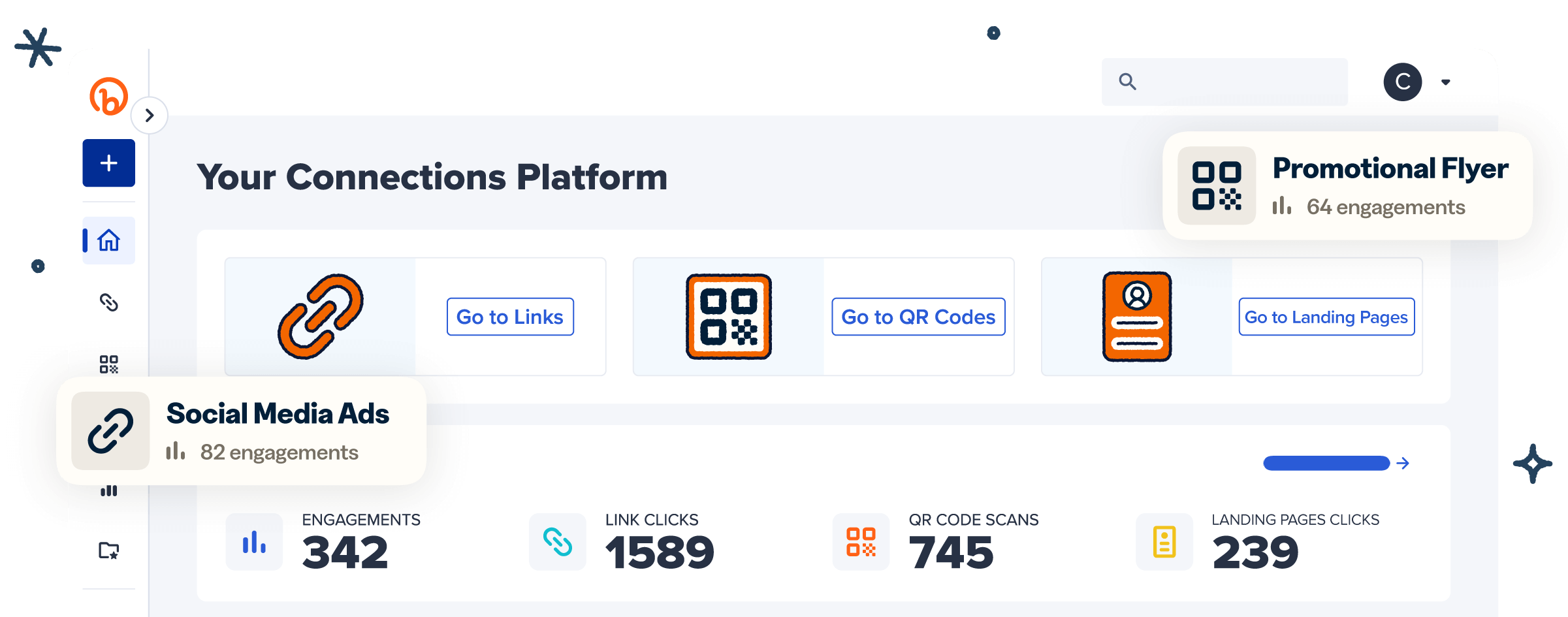
Bitly brings branded Bitly Links, Bitly Codes, and Bitly Analytics together in one place, making it easier to create connected experiences and understand what drives engagement over time.
Explore Bitly plans to get a solution that supports branded links, Dynamic QR Codes, and a more connected view of the customer lifecycle.
FAQs
Are QR Codes actually strategic lifecycle tools, or just convenient campaign add-ons?
Most teams treat QR Codes as afterthoughts tacked onto campaigns, but that framing undersells them significantly. When branded, trackable, and dynamic, they function as connective infrastructure across every customer stage, from first awareness through advocacy. The technology is identical at each stage; what changes is the intent, destination, and measurement behind it.
Can a single QR Code realistically serve multiple lifecycle stages at once?
Yes, and physical touchpoints like product unboxing make this especially powerful. One QR Code inside a package can simultaneously handle setup tutorials, rewards enrollment, warranty registration, and email sign-up for future drops. Each action is measurable separately, so you can see exactly which lifecycle jobs that single scan is completing.
Is treating print and digital as separate channels really a problem if both are performing well individually?
This is a genuinely contested point, but siloed performance masks the full customer journey. If your QR Codes and short links live in different tools with separate data sets, you’re stitching together exports instead of seeing one unified view. Cross-channel attribution becomes much more difficult when QR Codes, short links, and customer data live in separate systems.
Do branded short domains actually affect deliverability, or is that mostly a brand aesthetics argument?
Deliverability is an important consideration, particularly in SMS and direct mail channels. Generic shortened URLs from free tools can create deliverability challenges, reduce click-through rates, and fail to reinforce brand trust at the moment you’re trying to establish it. Branded short domains carry your identity into every channel where the link appears, which matters more than most teams realize.
Why do dynamic redirects matter specifically for lifecycle marketing, beyond general campaign flexibility?
Static QR Codes and links get printed on boxes, embedded in mailers, and shared across marketing channels, and once they’re out in the world, you can’t recall them. Dynamic redirects let you repoint a destination, support a new campaign, or redirect a seasonal offer without changing the code or link itself. That single capability is what separates a lifecycle strategy that scales from one that gets discarded at the end of every quarter.