
Marketing data often lives in silos. You have your email metrics in one dashboard, sales figures in another, and SMS engagement rates floating somewhere in between. When you treat SMS as an island, you miss the bigger picture of how your customers interact with your brand. To truly scale, you must connect the dots.
Integration tools bridge these gaps. By linking your SMS platform with your CRM, eCommerce system, and analytics tools, you turn scattered data points into a cohesive customer journey. You stop guessing which messages drive revenue and start seeing exactly how a text message leads to a purchase.
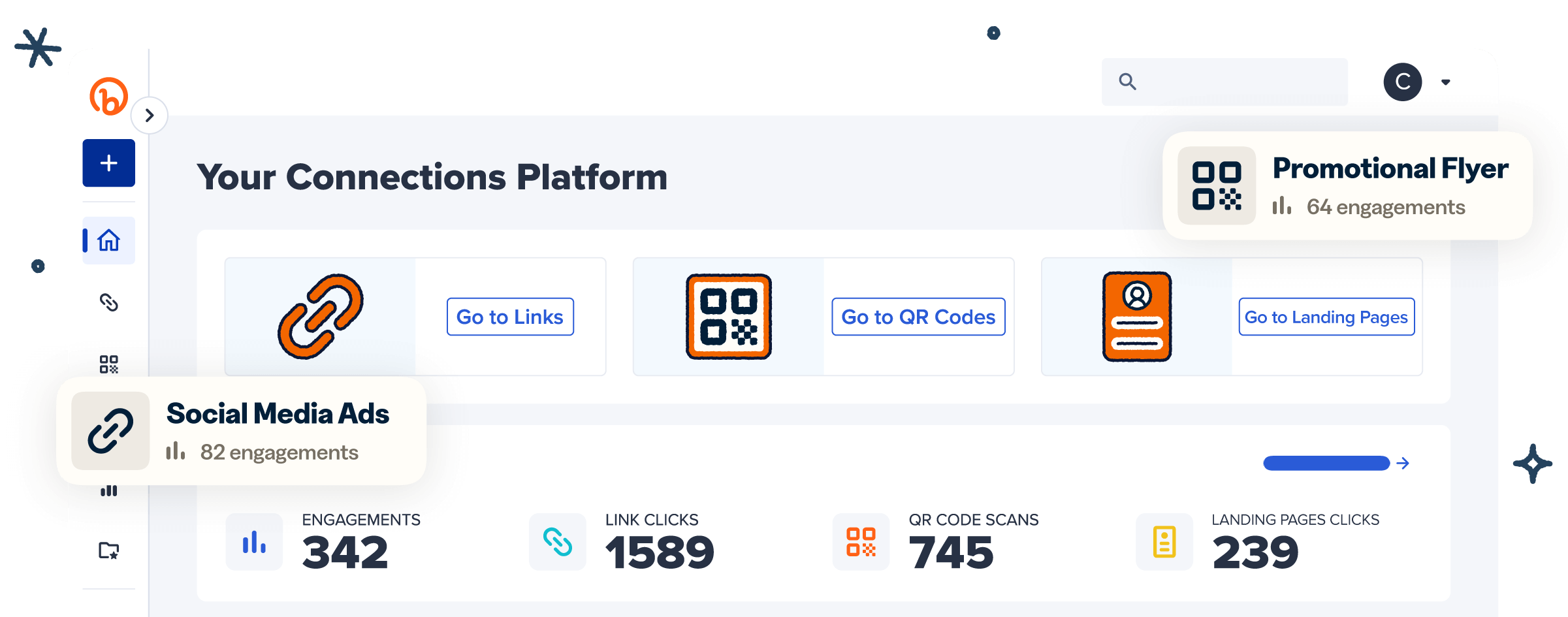
This isn’t just about convenience. It is about managing a short link library for multi-region campaigns. When you integrate your stack, you gain the ability to trigger automated workflows based on real-time behavior, personalize content at scale, and track every click with precision. This article explains how Bitly can play a crucial role here, allowing you to shorten links, track engagement, and unify your data across every channel.
Note: The brands and examples discussed below were found during our online research for this article.
Why SMS integrations matter
SMS marketing often delivers impressive immediate results, but it becomes significantly more powerful when you plug it into your broader marketing ecosystem. Integrations allow your tools to „talk“ to each other, which transforms SMS from a simple broadcast channel into a responsive, data-driven engine.
- Unified data and clearer attribution: When you keep SMS data separate, you lose visibility into the full customer journey. A customer might click a link in a text, browse your site on a tablet, and finally purchase on a desktop three days later. Without integration, you might attribute that sale to „direct traffic“ rather than your successful SMS campaign. By connecting your platforms, you bring this data together. You can see how bulk SMS complements email, social media, and organic search.
- Powerful automation: Manual work limits your ability to scale. You cannot personally text every customer who abandons a cart or celebrates a birthday. Integrations overcome this shortcoming by letting your systems handle the heavy lifting. You can set up workflows where specific customer actions automatically trigger relevant SMS messages. For example, if a VIP customer opens an email but does not click, your system can automatically send a follow-up text with a special offer.
- Better ROI measurement: You need to know if your spend yields results. Integrations connect your delivery costs directly to revenue outcomes. Instead of just looking at open rates, delivery stats, response rates, or affiliate link shortener throughput, you can track clicks, conversion rates, and the true ROI of SMS marketing.
Types of SMS integrations
Most modern SMS marketing platforms connect to other software through application programming interfaces (APIs) or native „plug-and-play“ integrations. These connections provide functionality for data to flow securely between systems in real-time for a wide variety of use cases. Understanding the different categories of integrations helps you build a stack that covers all your business needs.
CRM and customer data integrations
Your Customer Relationship Management (CRM) system holds the keys to personalization. Integrating your SMS platform with tools like Salesforce, HubSpot, or Zoho allows you to use rich customer data to tailor your messages. You no longer send generic „blast“ texts to your entire contact list. Instead, you segment your audience based on their purchase history, location, or loyalty status.
For instance, you might filter your contact lists to find customers who haven’t purchased in six months. You can then improve your marketing efforts by sending a re-engagement text specifically to that group. When a customer replies to a text, the integration logs that interaction back into their CRM profile. This setup ensures your support and sales teams always see the full conversation history. You also ensure better compliance by automatically syncing opt-in and opt-out preferences across databases, keeping your brand aligned with privacy regulations.
Adding Bitly to this mix enhances the data further. When you use links generated via our URL Shortener within these CRM-triggered messages, you can append UTM tracking parameters that feed click data right back into your customer profiles. You gain a granular view of which segments engage most frequently.
e-Commerce and transactional integrations
For retail and direct-to-consumer brands, connecting SMS with eCommerce platforms like Shopify, WooCommerce, or BigCommerce is essential. These integrations enable the transactional messages that customers expect, including order confirmations, shipping updates, and delivery notifications. Transactional SMS messages boast incredibly high open rates because they contain timely, useful information.
Beyond supporting basic updates, these integrations drive revenue through smart triggers. You can set up an „abandoned cart“ workflow that sends a text reminder 30 minutes after a shopper leaves your site without buying. Including a discount code or a link to their cart can often recover the sale. You can also use these tools to announce new products to your most loyal buyers before letting the general public know.
When you integrate Bitly with your eCommerce SMS setup, you can shorten the long, messy product links generated by your store. Bitly branded links look more professional and trustworthy, which can improve click-through rates. More importantly, Bitly data allows your CMS to track conversions from those specific links, helping you verify if your SMS receipts or promotional texts actually drive sales.
Analytics and reporting integrations
While your SMS platform provides basic reports, it likely lacks the depth of a dedicated analytics tool. Integrating with platforms like Google Analytics, Adobe Analytics, or Google Data Studio helps you quantify campaign effectiveness alongside your other channels.
When you use Bitly short links in SMS marketing, you get real-time data on clicks, location (city/country), and device type. You can feed this data into your broader reporting dashboards to build a comprehensive view of performance. This approach helps you identify trends, such as which day of the week generates the most engagement or which geographic regions respond best to mobile offers.
Marketing automation integrations
Marketing automation platforms like Marketo, Twilio, and ActiveCampaign, or automation tools like Zapier, can act as the conductor for your marketing orchestra. They coordinate actions across email, social media, and SMS marketing software. Integrating your text message marketing with these tools allows you to build complex, multi-step customer journeys.
For example, you could create a workflow for onboarding new software users. Day 1 might involve a welcome email. If they don’t log in by Day 3, the system triggers a helpful SMS tip. If they click the link in the SMS, the system adds a „highly engaged“ tag to their profile and notifies your sales team to offer a coupon. This seamless handoff ensures you reach customers at the right time on the channel they prefer. Automation ensures consistency, so every customer receives the same high-quality experience without manual intervention.
How Bitly supports your SMS stack
Bitly is more than just a link shortener; it is one of the best link trackers for enhancing the rest of your SMS stack. As the bridge between your message and your destination, Bitly captures critical engagement data that you might otherwise lose.
Track engagement with every click
When you send an SMS or MMS, you have limited space. You need every character to count. Bitly allows you to turn long, unwieldy URLs into concise, scannable links. We also provide detailed analytics for every link you create. This allows for detailed SMS tracking, where you can see exactly how many people clicked, what days they clicked, and where.
This data allows you to optimize your campaigns in real-time. If you see a spike in clicks from mobile devices in a specific region, you might adjust your next message to feature local offers. You can also A/B test different calls to action (CTAs) by using two different Bitly Links offering varied pricing structures and seeing which one performs better. This insight helps you refine your copy and improve your click-through rates over time.
Connect your CRM for richer reporting
Bitly integrates with many leading marketing platforms, allowing you to pull link engagement data directly into your system of record. When you generate unique Bitly Links for different customer segments, you can pass that click data back to your CRM using one of the dozens of pre-built integrations in our marketplace or a custom solution crafted using our open API.
You might discover that a specific segment of customers prefers clicking links on the weekend, while another group engages on Thursdays. With this knowledge, you can adapt your marketing strategy and schedule texts to arrive exactly when your audience is most likely to act. You move beyond aggregate data and start understanding individual customer engagement preferences. This setup leads to the smarter segmentation and more personalized customer support follow-ups that have become a hallmark of the best SMS marketing for CPRG brands.
Maintain campaign consistency across channels
Trust is vital in both email marketing and SMS marketing campaigns. Customers are wary of clicking strange-looking links on their phones. Bitly allows you to use branded links (like yourbrand.co/offer), which reinforces your brand identity and increases trust. When a customer sees a link that matches your brand name, they can feel more comfortable clicking it.
Bitly also helps you maintain SMS marketing best practices when developing tracking parameters. You can set up UTM parameters within the Bitly platform or pass them through from your other tools. This flexibility ensures that when the data lands in Google Analytics, it follows a consistent structure. You won’t have to clean up messy data or guess which campaign a click came from. Whether you share a link via SMS, email, or social media, Bitly keeps your branding and your data clean and consistent.
Best practices for implementing SMS integrations
Connecting your tools requires a strategic approach. Rushing into integrations without a plan can lead to messy data or broken workflows. Follow these steps to ensure a smooth implementation.
- Map your marketing tech stack: Start by auditing your current tools. List every platform you use for marketing, sales, and support. Identify where data currently lives and where it needs to go. Determine which tools contain your „source of truth“ for customer data. This map will guide your integration strategy.
- Choose integrations that solve specific problems: Do not integrate just for the sake of it. Focus on connections that close data gaps or save time. If your team spends hours manually exporting contact lists, prioritize a CRM integration. If you struggle to prove ROI, prioritize an analytics integration.
- Enforce privacy and compliance: SMS providers require strict adherence to mass texting regulations like TCPA and GDPR. Ensure your integrations respect user consent. If a subscriber opts out via text, your integration must immediately update your CRM and email lists to stop future messages. Prioritize tools that handle opt-in management automatically to reduce legal risk.
- Test connections with small groups: Before you launch a massive campaign, test your workflows. Create a test segment containing only your internal team. Trigger the automation and verify that the message arrives, the link works, and the data appears correctly in your Bitly Analytics dashboard. Catching errors early prevents customer confusion.
- Monitor and optimize: Integrations are not a „set it and forget it“ project. Regularly review your error logs and performance reports. Analyze the new data you are collecting. Are your automated workflows performing as expected? Use the insights to tweak your messaging, timing, and segmentation.
Future of SMS integrations
The landscape of SMS marketing tools continues to evolve rapidly. We are moving toward a future where Artificial Intelligence (AI) drives even deeper integration. Soon, AI-powered tools will likely analyze real-time data from your CRM and eCommerce platforms to draft and send personalized SMS replies without human input. We also expect to see tighter „omnichannel orchestration,“ where a platform can seamlessly switch a conversation from SMS to WhatsApp to email based on where in your multi-channel environment the customer is most active at that moment.
Bitly continues to evolve alongside these trends, providing the connectivity layer that innovative marketers need. As platforms become more complex, the need for a reliable, trackable link between them becomes even more critical.
Build smarter SMS campaigns through integration
Successful SMS marketing relies on more than just catchy copy. It requires a connected ecosystem where messages, links, and data flow freely between your tools. By integrating your SMS platform with your CRM, analytics, and eCommerce systems, you unlock the ability to automate workflows, personalize customer experiences, and prove your ROI.
Bitly acts as the all-in-one solution holding this system together. It connects your engagement data to your broader business goals, giving you the visibility you need to optimize every campaign. Don’t let your SMS data sit in a silo. Connect your tools, track your results, and start building smarter, more effective campaigns today.
Ready to get more from your SMS marketing? Sign in to Bitly today to start tracking and optimizing your campaigns.