
From product packaging to in-store signage, QR Codes now appear across nearly every marketing channel. As adoption grows, so does the challenge of understanding what’s actually working.
The data is there, but it’s often scattered across individual codes, disconnected reports, and manually updated spreadsheets. What starts as a manageable tracking process can quickly become difficult to maintain as campaigns expand across locations, channels, and teams.
A QR Code performance dashboard centralizes that reporting. Instead of piecing together scan counts from multiple sources, marketers can monitor campaigns in real time, compare results across placements, and identify trends before opportunities are missed.
Here’s what a QR Code performance dashboard should show and why the right reporting infrastructure matters at scale.
Note: The brands and examples discussed below were found during our online research for this article.
Key takeaways
- A QR Code performance dashboard can replace spreadsheet reporting with live visibility across campaigns, placements, and individual codes.
- Without Dynamic QR Codes, a QR Code performance dashboard can’t reliably capture the scan data needed for ongoing measurement and optimization.
- The most useful QR Code performance dashboard shows scan trends over time, geographic performance, device breakdowns, and other metrics that support real campaign decisions.
- Strong dashboard reporting lets teams compare campaign-level results, then drill into individual codes to identify what’s working and what needs attention.
- When your QR Code reporting also includes link clicks and page engagement, marketers can better understand the full cross-channel customer journey instead of isolated scan counts.
The spreadsheet problem no one talks about
Manual exports, copied scan counts, and outdated spreadsheets create more work than most teams expect. What starts as a simple tracking system can quickly become difficult to manage as your QR Code strategy grows.
The challenge isn’t creating the code. It’s keeping performance data organized across campaigns, channels, and placements. When QR Codes appear on print materials, signage, packaging, social posts, and other marketing assets, teams often end up pulling scan data from multiple sources and combining it manually.
That process takes time, introduces opportunities for reporting errors, and makes it harder to spot performance trends as they happen. Without a centralized view, valuable insights can stay buried in spreadsheets long after a campaign has launched.
Why Dynamic QR Codes are the prerequisite for any dashboard
Without Dynamic QR Codes, there’s no reliable way to centralize scan reporting across campaigns. Dynamic QR Codes use a redirect layer to route scanners to the destination URL, which is what enables scan tracking, dashboard reporting, and destination updates without reprinting assets.
Static QR Codes, on the other hand, send scanners directly to the final URL, so they offer far less visibility once campaigns are live. They also can’t be edited after publication, which means destination changes require teams to replace the code entirely instead of updating the existing experience.
What a QR Code performance dashboard should actually show
A strong QR Code performance dashboard gives teams two things: aggregate campaign visibility and individual code-level reporting. Instead of checking codes one by one, marketers can monitor performance across campaigns while still drilling into specific placements when needed.
For example, the Bitly Analytics dashboard lets enterprise teams track hundreds of QR Codes at both the campaign and individual code level. Here are the key features to look for when evaluating a QR Code performance dashboard.
Aggregate scan volume across all codes and campaigns
Your dashboard shouldn’t just report scans for individual QR Codes. It should provide aggregate visibility across campaigns, placements, and groups of codes so teams can monitor overall performance more efficiently.
Some engagement patterns aren’t obvious at the individual code level, but become much clearer when viewed across an entire campaign. Campaign tagging helps keep reporting structured as QR Code programs expand across channels and markets.
It’s also important to distinguish between unique scans and total scans. If the same person scans a code three times, that counts as one unique scan and three total scans. Both metrics provide useful context for understanding audience behavior and overall campaign reach.
Scan trends over time
Time-based scan reporting helps teams track how campaign interest changes over time. Instead of looking at total scans alone, marketers can identify launch spikes, sustained engagement, and early signs that a placement is losing momentum.
Trend data can also reveal when engagement drops after a promotion ends, a creative becomes less effective, or placements stop attracting attention over time. Monitoring these trends makes it easier to adjust campaign timing, refresh content, and shift spend before engagement starts to drop off.
Geographic performance by region and city
Geographic scan reporting helps teams compare engagement across stores, regions, and campaign locations. In Bitly’s QR Code dashboard, marketers can view approximate city-level scan data to better understand where campaigns are gaining traction.
Teams can use this data to identify which retail locations are generating the most engagement, where direct mail campaigns are performing best, or which regions may need different messaging or placements. Over time, location-based reporting can help marketers make more informed campaign decisions at both the regional and local levels.
Regional behavior trends can also influence how audiences interact with QR Codes. Research on how consumers use QR Codes across markets found especially strong adoption and usability sentiment in places like China, India, Hong Kong, and Singapore. For international brands, those patterns can help shape localization and campaign planning decisions.
Device and OS breakdown
Your dashboard should also show which devices and operating systems people use to scan your QR Codes. That data can help teams identify audience behavior trends and uncover technical problems that may affect engagement.
For example, if Android users are interacting with a campaign far more often than iOS users, there could be an issue with your landing page formatting or in-app deep linking on iOS. Device-level reporting helps teams spot and resolve those problems before they impact campaign performance more broadly.
Campaign-level visibility vs. individual code drill-down
Marketers need the ability to monitor both overall campaign performance and individual QR Code activity. A strong performance dashboard should support both workflows without forcing teams to switch between disconnected reports.
This becomes especially important in omnichannel campaigns that use codes across multiple placements and advertising formats.
For example, brands experimenting with different approaches to ads with QR Codes may use separate assets across direct mailers, shelf signage, and event badges as part of the same product rollout. Campaign-level reporting helps them compare engagement trends across the broader initiative and measure performance against previous campaigns.
At the same time, teams need the ability to drill down into individual QR Code metrics. When marketers can view scan volume and engagement data at the code level, it becomes easier to identify weak placements and make adjustments while a campaign is still active.
The cross-channel gap: Why QR Code data in isolation is incomplete
Campaign-level reporting still only tells part of the story. Scan data alone doesn’t explain what happens after someone scans, which can leave teams with an incomplete view of overall engagement.
This is especially important for cross-channel initiatives tied to packaging, in-store displays, and CTV ad QR Code experiences, where the scan is only the beginning of the customer journey.
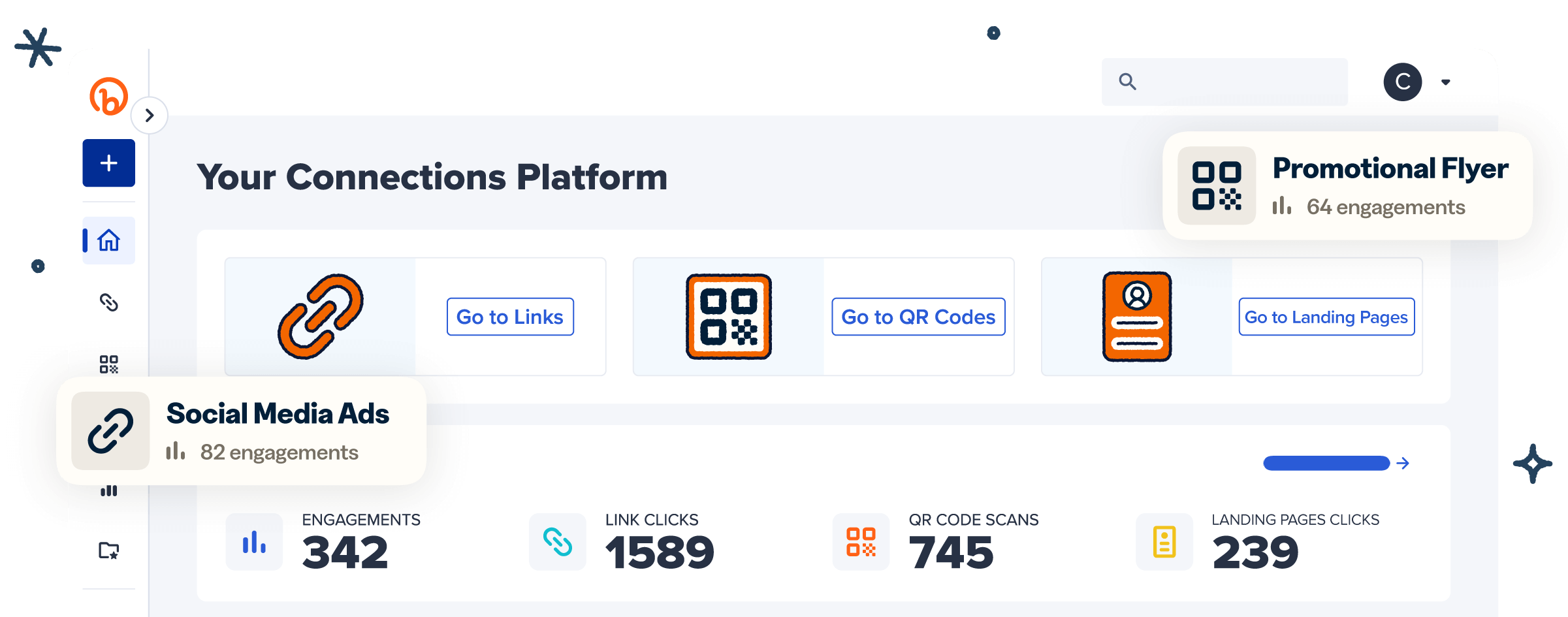
With Bitly Analytics, teams can track engagement across Bitly Links, Bitly Pages, and Bitly Codes in one place to see how audiences move between offline and digital touchpoints.
That broader view helps marketers optimize campaigns beyond scan volume and make more informed decisions about customer activity throughout the sales funnel.
The measurement accountability gap your dashboard should close
QR Code scans are useful, but scan counts don’t fully explain how campaigns influence larger business outcomes. Without centralized reporting, scan activity often stays disconnected from overall performance measurement.
A unified dashboard makes attribution more practical because teams can view QR Code engagement alongside other marketing activity instead of piecing reports together manually.
For example, teams can use Bitly Analytics to track scans on a product packaging QR Code that directs users to a dedicated Bitly Page, then monitor engagement with the links inside that experience. Marketers can also add UTM parameters to destination URLs to support more detailed reporting in third-party platforms like Google Analytics.
Together, those data points help teams see how QR Code engagement contributes to broader campaign activity and customer interactions over time.
Your QR Code data is only as useful as the dashboard holding it
As QR Code campaigns expand across channels, placements, and teams, reporting can quickly become difficult to manage manually. A centralized dashboard gives marketers a clearer view of performance, surfaces engagement trends earlier, and makes it easier to connect scan activity with larger marketing efforts.
With Bitly, teams can manage QR Codes, short links, and landing pages within one analytics experience. Bitly Analytics supports both campaign-level visibility and individual code reporting, helping marketers monitor scans, location data, device trends, and audience interaction from one place.
Get started with Bitly today to build QR Code campaigns with clearer reporting, faster insights, and visibility designed for scale.
FAQs
What metrics should a QR Code performance dashboard show?
A useful QR Code performance dashboard should show total scans, unique scans, trends over time, location data, device data, and side-by-side code comparisons. Those metrics can help teams spot placement winners quickly and diagnose weak creative, timing, or regional performance before a campaign goes stale.
What is the difference between Static and Dynamic QR Codes for dashboard tracking?
Dynamic QR Codes route scans through a tracked redirect, which makes dashboard reporting possible and lets teams update destinations without reprinting. Static QR Codes send people directly to the final URL, so they can’t support the same level of reporting visibility.
Can you track QR Code scans by location?
Yes, most Dynamic QR Code platforms can show approximate scan geography by country, region, and often city, using IP-based location signals. That reporting can help retail, field, and event teams compare placements across markets, although city-level accuracy is directional rather than exact.
Why does campaign-level visibility matter in a QR Code performance dashboard?
Campaign-level reporting shows total performance across every code, so teams can understand broader engagement trends without manually combining scan data from multiple placements. From there, drill-down views help marketers compare individual codes, isolate underperforming placements, and make faster campaign decisions.
Why should QR Code data live with link and landing page analytics?
When scans live in a separate tool, it becomes harder to understand how QR Codes fit into the broader customer journey alongside short links and Bitly Pages. Bitly brings scans, clicks, and page activity into one dashboard, giving teams a more complete view of how audiences interact across physical and digital touchpoints.