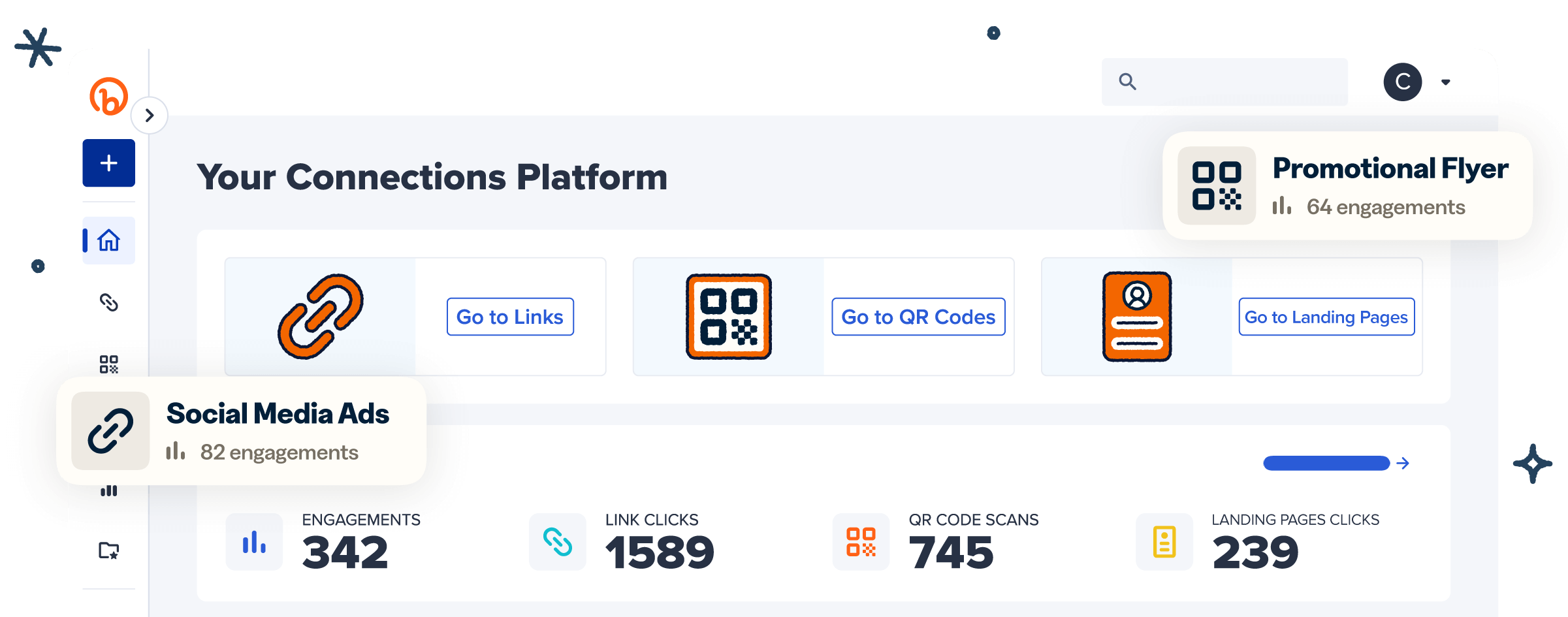

Modern teams have plenty of campaign tools to manage their marketing campaigns. The tricky part? Choosing the one that matches how your team actually plans, launches, tracks, and optimizes campaigns.
Bitly and CampaignTrackly both help marketers create tracking links, acting as more than just a simple URL shortener, but they serve different campaign workflows. Bitly brings links, QR Codes, landing pages, and link analytics together in one ecosystem. CampaignTrackly centers on campaign URL creation, UTM governance, and metadata consistency for teams that rely heavily on GA4, Adobe, and structured taxonomy rules.
So the real question does not stop at “Which tool builds tracked URLs?” You need to ask whether your team needs a metadata governance engine, a broader digital engagement platform, or a little of both.
Note: The brands and examples discussed below were found during our online research for this article.
Key takeaways
- Bitly and CampaignTrackly both support campaign tracking, but from different angles: Bitly focuses on branded, trackable digital engagement across links, QR Codes, and landing pages; CampaignTrackly focuses on governed campaign URL creation and metadata consistency.
- CampaignTrackly may suit teams that need a stronger structure around UTM tracking module naming conventions, taxonomy enforcement, and metadata workflows tied to GA4 or Adobe.
- Bitly is a stronger fit for marketers who want to manage links, QR Codes, landing pages, and engagement analytics on a single platform.
- The decision is not just about building tracked links; it is about whether the team needs a metadata governance tool or a broader platform for connected customer experiences.
- Pricing, analytics depth, collaboration, and workflow needs should all be evaluated together.
Bitly vs CampaignTrackly at a glance
Here’s the quick comparison before we dig into the details.
| Feature | Bitly | CampaignTrackly |
| Primary use case | Branded links, QR Codes, landing pages, and engagement analytics | Campaign URL creation, UTM governance, and metadata standardization |
| Link shortening | Yes | Yes |
| Branded links | Yes | Yes |
| UTM creation | Yes | Yes |
| UTM governance | Supports campaign tracking needs | Strong focus on rules, taxonomies, naming, and metadata controls |
| Dynamic QR Codes | Yes | Includes QR Code functionality in platform messaging |
| Static QR Codes | Yes, depending on the plan | Includes QR Code functionality in platform messaging |
| Landing pages | Bitly Pages | Not the primary platform focus |
| Analytics visibility | Clicks, scans, devices, locations, and campaign engagement, depending on the plan | Metadata quality and attribution readiness for external reporting tools |
| Integrations | Marketing, social, analytics, CRM, and enterprise workflows | GA4, Adobe, Salesforce, Workfront, ESPs, and metadata systems |
| Team collaboration | Shared asset management, permissions, SSO, and API options | Templates, taxonomies, access controls, and approval-oriented workflows |
| Best-fit business type | Teams that need connected branded engagement across channels | Teams that need structured campaign metadata governance |
Bitly gives marketers a broader, all-in-one toolkit for campaign engagement. CampaignTrackly provides marketers with a more robust framework for tracking inputs.
Campaign tracking and link creation workflows
Both platforms help you create trackable links, but they organize the work around different priorities.
Bitly helps teams shorten links as a versatile link shortener, create branded links, edit destinations, and connect those links to QR Codes, landing pages, and campaign analytics. That integration matters when your campaign does not live in one channel. A single promotion might run across paid social, email, SMS, print, in-store displays, and event signage. Bitly helps you manage and streamline those digital touchpoints within a single, connected workflow, rather than treating each link as a standalone asset.
Branded links also help teams build trust before the click. A generic short link can look random, especially when customers encounter it in social posts, ads, or offline materials. A branded link can reinforce recognition and make the next step feel more familiar. If your team wants a deeper look at that trust factor, our guide to branded vs generic links explains how link appearance can influence audience confidence.
CampaignTrackly takes a more structured approach to link creation. Its workflow focuses on templates, presets, bulk URL workflows, taxonomy controls, and rules that guide how teams name campaigns and apply UTM parameters. That structure helps teams reduce messy UTM data before campaigns launch.
For example, a larger team might need everyone to use the same source, medium, campaign, content, and term conventions. CampaignTrackly can help enforce required fields, casing, separators, naming patterns, and approved values. That kind of structure can save analysts from having to clean up inconsistent campaign data later.
The practical distinction comes down to flexibility versus governance. Bitly suits marketers who want a flexible link-management platform and branded engagement tools. CampaignTrackly fits teams that need strict control over campaign naming systems and metadata hygiene.
Where CampaignTrackly’s governance model stands out
Campaign governance may sound technical, but the goal remains simple: Keep campaign data clean and consistent across teams.
CampaignTrackly’s governance model can help teams establish approved naming structures, apply standardized taxonomies, and automate the reduction of mismatched UTM values through consistent UTM tagging. When many people create campaign URLs, small differences can quickly create reporting headaches. One person might use “paid-social,” another might use “paidsocial,” and another might use “Paid Social.” Analytics platforms may treat those values differently, which can fragment reports.
CampaignTrackly helps teams prevent that problem before links go live. That strength matters most for organizations with complex reporting needs, strict campaign taxonomies, or multiple teams feeding data into Google Analytics (GA4) or Adobe.
Smaller teams may not need that much structure. If your team prioritizes branded links, QR Codes, landing pages, and fast campaign launches, you may care more about ease, speed, and cross-channel engagement than deep metadata enforcement.
Analytics, attribution visibility, and reporting
After a link goes live, marketers need to understand what happens next. Bitly gives teams visibility into engagement with short links and QR Codes. Marketers can track clicks, scans, locations (city/country), devices, referrers, and campaign-level performance. Those insights help teams compare placements, spot high-performing assets, and optimize future campaigns or retargeting efforts.
For instance, a marketer can compare QR Code scans from event signage with short-link clicks from social media. A retail team can see whether in-store displays drive more engagement than product packaging. A nonprofit can compare email, direct mail, and social outreach from one dashboard.
Bitly does not replace full analytics platforms. Our platform tracks engagement around links and QR Codes. It does not track conversions, purchases, form fills, or on-page behavior on its own. Teams that need downstream conversion reporting should connect Bitly data with analytics platforms, CRM tools, or ecommerce systems using our open API or the dozens of no-code integrations in the Bitly Marketplace.
That flexibility makes Bitly especially useful for top-level visibility into engagement. It helps teams understand which links, QR Codes, and channels drive action before deeper conversion reporting starts elsewhere. Our comparison of Bitly Analytics vs native social analytics explains how centralized link data can complement platform-specific reporting.
CampaignTrackly focuses less on engagement dashboards and more on attribution readiness. It helps teams ensure they enter campaign tracking inputs into analytics tools cleanly. That can include UTM consistency, missing-parameter checks, metadata distribution, and standardized campaign values across connected systems.
Here’s the reader-friendly takeaway: Bitly helps marketers see engagement across links and QR Codes in one place. CampaignTrackly helps marketers keep the campaign metadata clean before reporting happens elsewhere.
What marketers should evaluate in reporting tools
Before you choose, map each tool to the reporting problem your team needs to solve.
Ask whether you need to quickly understand engagement with links and QR Codes. If so, Bitly offers strong value by centralizing performance signals across campaign assets.
Ask whether you need to compare campaign placements across channels. Bitly can help teams evaluate scans, clicks, device trends, and location patterns in a single view.
Ask whether your team struggles with inconsistent UTM values. CampaignTrackly may help more if messy naming conventions create reporting gaps inside GA4 or Adobe.
Ask whether you need engagement reporting, metadata governance, or both. Many teams need clean tracking inputs and clear engagement data, but one need usually creates more friction than the other.
QR Codes, landing pages, and connected digital experiences
QR Code handling illustrates one of the clearest differences between Bitly and CampaignTrackly.
Bitly puts a powerful QR Code generator at the center of connected customer experiences. Teams can create customizable QR Codes with colors, logos, patterns, corners, and frames. Depending on the plan, marketers can use Dynamic or Static QR Codes, manage destinations, and connect scans with campaign analytics.
That flexibility matters across real-world and digital campaigns. A restaurant can place a QR Code on table tents. A retailer can add one to their product packaging. An event team can use codes across signage, badges, and printed programs. A paid social team can connect short links, landing pages, and QR Codes around the same campaign.
Bitly Pages add another layer. Marketers can create mobile-friendly landing pages that give audiences a clear next step after a click or scan. That helps teams guide people from offline moments into curated digital journeys without building a full webpage for every campaign.
CampaignTrackly includes QR Code and short URL functionality in its platform messaging, but its primary positioning still centers on campaign URL building and metadata governance. That does not mean CampaignTrackly lacks QR Code functionality. It means Bitly places more emphasis on connected digital experiences built around links, QR Codes, and post-click destinations.
If your team uses QR Codes often, our guide to Static vs Dynamic QR Codes can help you decide which format fits each campaign. Dynamic QR Codes can support editable destinations and ongoing optimization, while Static QR Codes can suit simple, fixed use cases.
Why connected experiences matter beyond the tracked link
A tracked link helps your team measure traffic, but campaign performance depends on what happens after the click or scan.
Bitly helps teams manage the next step. You can use branded links to build trust, QR Codes to bridge offline and digital channels, and Bitly Pages to create mobile-friendly destinations. You can also manage campaign assets from a centralized platform, which helps teams stay organized as campaigns grow.
That connected workflow matters when customers move across channels. Someone might see a QR Code on packaging, click a branded link in a follow-up email, and visit a landing page from social. Bitly helps marketers connect those moments into a more cohesive customer journey.
CampaignTrackly supports the UTM tracking foundation behind campaigns. Bitly supports the customer-facing assets that help those campaigns earn engagement.
Integrations, team workflows, and scalability
Both platforms can support larger teams, but they scale different parts of the campaign operation.
Bitly helps teams scale brand engagement assets, such as branded short links. Marketers can manage short links, QR Codes, and landing pages across teams. Enterprise features can include Single Sign-On (SSO), permissions, API access, and high-volume support. Those capabilities help teams maintain control while more people create and share campaign assets.
CampaignTrackly helps teams scale metadata consistency. It supports metadata distribution to systems such as Salesforce, Workfront, ESPs, and analytics environments. It also supports governance rules, access controls, taxonomies, templates, and Adobe-oriented workflows for larger organizations.
Your team structure can point you toward the right fit:
- If many stakeholders create campaign URLs and your analytics team constantly cleans inconsistent UTM data, CampaignTrackly can help streamline your workflow.
- If your team needs a single place to manage branded links, QR Codes, landing pages, and engagement visibility, Bitly may be a better fit.
- If your campaigns rely heavily on GA4, Adobe, Salesforce, or Workfront, CampaignTrackly’s metadata workflows may carry more weight.
- If your campaigns span social media, offline placements, mobile experiences, and branded links, Bitly’s connected asset management may create more day-to-day value.
Pricing and overall fit
Tiers can change, so teams should verify the current plan details before making a choice. Still, the plan structure can reveal how each platform defines its core value.
Bitly offers a plan ladder that supports different levels of link management, QR Code creation, landing pages, analytics, branded links, and team features. Marketers can start with a smaller plan and move up as they need more links, more QR Codes, more analytics visibility, custom domains, permissions, or enterprise controls.
CampaignTrackly presents plans around its UTM builder, including URL Builder Pro, URL Builder Plus Excel Add-in for spreadsheet users, and URL Builder Enterprise. That structure reinforces its focus on campaign URL creation, metadata workflows, and governance for teams that need more control over tracking conventions.
Compare pricing alongside scope. A lower entry point may reflect a narrower workflow focus. A higher-tier plan may include more comprehensive tools that replace several disconnected workflows.
For Bitly, teams should look closely at QR Code availability, branded link needs, analytics depth, landing page volume, collaboration features, and domain options. For CampaignTrackly, teams should evaluate templates, governance controls, metadata rules, Excel workflows, integrations, and enterprise support.
The best value does not always come from the cheapest plan. It comes from the platform that reduces friction in the workflow your team runs every week.
How to choose between Bitly and CampaignTrackly
Choose Bitly if your team wants one platform for links, QR Codes, landing pages, and centralized engagement analytics. Bitly fits marketers who care about branded digital experiences, cross-channel visibility, and easy asset management.
Bitly also makes sense when your campaigns span digital and offline channels. If your team runs events, retail promotions, social campaigns, email outreach, SMS programs, or product packaging campaigns, Bitly can help you connect those touchpoints.
Choose CampaignTrackly if your biggest challenge involves UTM naming consistency, campaign metadata enforcement, or structured tracking workflows tied to GA4 or Adobe. CampaignTrackly fits teams that need stronger standardization across large operations. CampaignTrackly may also make sense when many people create campaign URLs, and your analytics team needs tighter rules before campaigns launch.
Think of the decision this way: Bitly helps you manage the branded engagement layer. CampaignTrackly helps you manage the campaign metadata layer.
Choose the platform that matches how your team works
Bitly and CampaignTrackly both support campaign tracking, but they solve different problems.
CampaignTrackly gives teams a specialized system for governed campaign URL creation, UTM consistency, and metadata workflows. Bitly gives teams a broader platform that connects links, QR Codes, landing pages, and analytics into a single, branded customer journey.
Your team should choose the platform that fits how you plan, launch, and measure campaigns, not the tool with the longest feature list. If your top priority involves clean campaign metadata, CampaignTrackly deserves a close look. If your team wants to turn every link, scan, and landing page into a trackable, branded experience, Bitly brings them together.
Ready to get the most out of your next omnichannel campaign? Sign up for a Bitly account now and begin building customer engagement today.
FAQs
What is the main difference between Bitly and CampaignTrackly?
Bitly is a broader connections platform that helps teams manage Bitly Links, Bitly Codes, Bitly Pages, and engagement analytics in one place. CampaignTrackly is more focused on campaign URL creation, UTM governance, metadata consistency, and attribution-ready workflows for marketing teams.
Is CampaignTrackly better for UTM management?
CampaignTrackly may be a better fit for teams that need stronger control over naming conventions, required fields, taxonomies, and campaign metadata quality. Bitly supports trackable links and campaign measurement, but its broader value comes from combining links, QR Codes, landing pages, and analytics.
Does Bitly support QR Codes and landing pages?
Yes. Bitly supports Bitly Codes and Bitly Pages alongside Bitly Links, which makes it useful for marketers who want to connect scans, clicks, and post-click experiences in one workflow. That can be especially helpful for campaigns that span print, mobile, and digital channels.
Can Bitly track conversions the same way analytics platforms do?
No. Bitly tracks clicks, scans, locations, devices, and related engagement data, but it does not track conversions, purchases, form fills, or on-page behavior on its own. Teams that need downstream conversion reporting should pair Bitly with analytics platforms, CRM tools, or ecommerce systems.
Which platform is better for larger marketing teams?
That depends on what the team needs to scale. Bitly is a stronger fit for teams that want centralized management of links, QR Codes, landing pages, and branded engagement. CampaignTrackly may be a stronger fit for teams that need formal campaign metadata governance across multiple users and systems.