
Digital marketing teams juggle a dozen channels, hundreds of links, and a mountain of metrics. Manually tracking marketing campaigns across social media, email outreach, QR Codes, and Google Ads is time-consuming, inefficient, and prone to human error. You know the drill: Copying and pasting links into a spreadsheet, manually building UTM parameters, and spending hours trying to stitch together data for a single report.
What if you could automate that entire process? Bitly can help put your campaign tracking on autopilot, unifying your data and helping your team focus on strategy, not spreadsheets. This post explores how our built-in UTM builder and deep integrations with your CRM and marketing platforms can automate data capture. We’ll show you practical, real-world ways marketing teams can use Bitly’s features to track campaign performance with minimal manual work.
Note: The brands and examples discussed below were found during our online research for this article.
Why campaign tracking needs automation
Modern marketers face significant challenges. You have to manage multiple channels, build reports manually, and interpret scattered data to prove your marketing efforts are working. This workflow delivers many inefficiencies, from inconsistent UTM tracking parameters and copy-paste errors to a simple lack of visibility across platforms.
Marketers can spend up to 14 hours a week on manual campaign reporting. A 2025 report from Amazon found that 59% of marketers cite « data fragmentation » as their biggest hurdle to understanding campaign performance.
Automation is the solution. It frees marketers from repetitive, low-value tasks, allowing them to focus on the creative and strategic decisions that drive growth. Setting up Bitly Campaigns is the first step to reclaiming that time.
How Bitly simplifies multichannel tracking
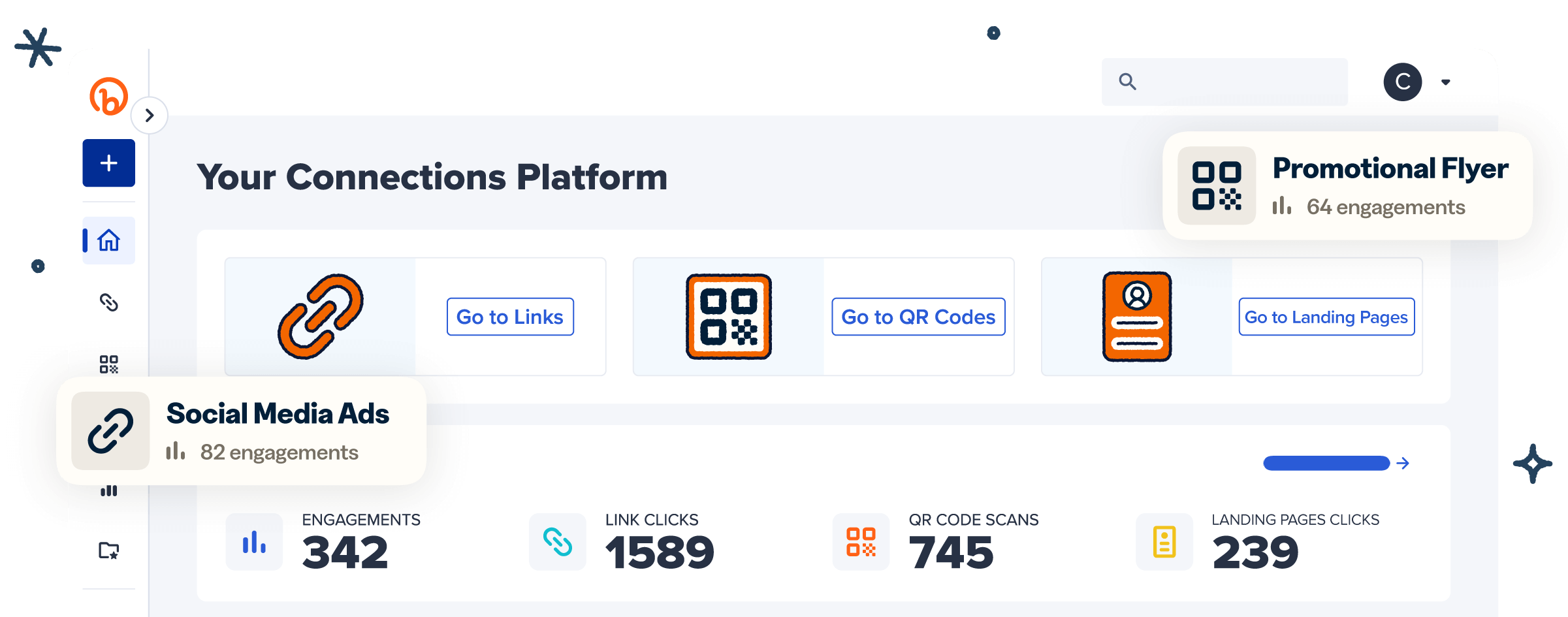
We built the Bitly platform to handle the complexities of multichannel marketing campaigns. The Bitly Campaigns menu centralizes all your campaign links and QR Codes in one place, consolidating performance across social, email, paid ads, and even offline channels.
Instead of digging through different platforms, you get a single, unified view. By assigning unique Bitly Links to each channel (like one for your LinkedIn post, one for your email marketing send, one for your influencer’s bio), you make performance comparisons simple and actionable. You can instantly gather insights like:
- Which channel drives the most engagement for your product launch?
- What content resonates most on social media versus email?
- How do customer journeys vary between your paid and organic initiatives?
To ensure all this data is clean, the menu features a built-in UTM builder that removes manual steps and ensures all your links have standardized, consistent tagging.
Automating campaign data with UTM parameters
UTM parameters are the backbone of campaign tracking. They are the small tags (like utm_source, utm_medium, and utm_campaign) that tell Google Analytics and other tools exactly where your traffic is coming from. This setup is how you get credit for your work and demonstrate attribution.
Manually creating these tags for every link is a classic source of error. Bitly eliminates this problem by automatically applying your UTM tags to your short links.
Setting up campaigns with automatic UTM tagging
You can use Bitly’s auto-tagging tools to generate consistent UTMs for every new campaign. Here’s how:
- Log in to Bitly (or sign up if you don’t yet have an account).
- Select Campaigns in the left-hand menu and then tap or click the Create campaign button on the upper-right.
- Give your campaign a title and add a description if required. Then select tags for the appropriate channels and click Add links (or Save and add links later if you’re not ready to begin adding links yet.)
- Then just add your destination page and select which channels you’d like to track. Bitly handles creating individual links with unique, embedded UTM codes for each.
This simple workflow ensures you tag every link correctly, which simplifies conversion tracking in tools like Google Analytics or HubSpot. As you learn how to use Bitly as a UTM builder, you’ll see that even the largest multi-channel campaigns are easy to analyze and keep under consistent control.
Using Bitly analytics to understand campaign performance
Bitly provides powerful management options and analytics data for every link. You can see clicks, referrer data, geographic location (city/country), device type, and engagement trends over time. This data goes beyond basic metrics, helping your team understand audience behavior and channel effectiveness.
From clicks to conversions
While Bitly shows you who clicked, your CRM or Google Analytics can help show you who converted. Bitly Analytics data combines with these destination tracking tools to give you a complete picture of attribution. By joining Bitly data (the click) with your CRM data (the conversion), you can get rich insights into which touchpoints actually drive revenue. This is the essence of effective click tracking.
CRM integrations: The secret to a single source of truth
There’s a common misconception that Bitly is a standalone URL shortener. In reality, the Bitly platform is designed to integrate with your existing marketing strategy. Our setup is fully compatible with major CRM platforms like HubSpot and Salesforce, with dozens of pre-built integrations ready to roll on our connections marketplace.
These integrations and our open API are the key to setting up a single source of truth. They enrich your CRM records with click and engagement metrics, enabling smarter segmentation and lead scoring. Businesses that integrate their marketing stack with their CRM can see a significant lift in lead-to-conversion rates.
Here’s an example workflow:
- A lead clicks a Bitly link in an email for a new whitepaper.
- The Bitly integration automatically passes that click data into the lead’s HubSpot or Salesforce record.
- This engagement automatically increases their lead score, signaling to your sales team that this person is actively interested.
This automation makes your campaign reporting more accurate and, most importantly, actionable.
Workflow automation: Putting Bitly tracking on autopilot
For true, end-to-end automation, Bitly integrates with workflow tools like Zapier. Interoperability with these tools allows you to trigger actions in thousands of other apps based on link activity. This integration is the heart of a modern marketing automation workflow.
Automating reporting and insights
You can use the Bitly API or Zapier integrations to automate your weekly performance reports. Imagine this:
- Every Monday at 9 AM, a workflow runs, pulls the top-performing Bitly Links from your new campaign, and sends a summary to your team’s Slack channel.
- All click data from your Bitly account is automatically piped into a Google Sheets dashboard, which updates in real-time without you ever opening a spreadsheet.
Streamlining content workflows
You can also automate the creation and distribution of Bitly Links. We offer integrations with content platforms like Canva, social media schedulers like Hootsuite, and email platforms like Mailchimp. When your design team finishes a graphic in Canva, a trackable Bitly Link with the correct UTM parameters generates automatically, ready for your social media team to schedule.
Real-world examples: how marketers automate with Bitly
Here are three practical examples of how marketing teams put Bitly on autopilot:
- A SaaS company: This team integrates Bitly with HubSpot. When a « warm » lead (as defined by their CRM) clicks a Bitly Link in a sales email, HubSpot records the action. This click instantly triggers a task for the sales rep to follow up, prioritizing high-intent leads.
- An e-commerce brand: The marketing manager uses Zapier to connect Bitly to a Google Spreadsheet. Every time a new campaign link passes 1,000 clicks, the automation adds that link to the « Top Performers » tab of their dashboard, saving hours of manual data pulling.
- A social media team: This team connects Bitly with Canva and their scheduling platform. When a designer exports a new graphic from a Canva template, a branded, trackable Bitly Link is auto-generated with the UTM tags utm_source=canva and utm_medium=social. The social team simply copies this link and schedules the post.
The outcomes for all these teams are the same: Massive time savings, improved accuracy, and faster insights.
Taking the manual work out of campaign tracking
Bitly transforms campaign tracking from a manual, repetitive task into an automated, data-rich process. When you put tracking “on autopilot, » you gain consistency, visibility, and confidence in your data. This approach leads to improved attribution, smarter optimization, and better decision-making for your entire marketing strategy.
You can start automating your campaign tracking today. The Bitly Campaigns menu, our analytics, our built-in UTM builder, and our powerful integrations all work together to save you time and deliver the actionable insights you need to grow.
Ready to automate your campaign tracking and cut reporting overhead? Log in to Bitly today and see how you can start creating smart integrations now.