Customers move between channels constantly—from social posts to landing pages, from emails to product demos, and from SMS campaigns to purchases. Short links help connect those touchpoints while generating valuable click data that helps teams understand how customers move through the lifecycle.
But many teams still think about short links too tactically. They treat link management as a campaign utility instead of part of the infrastructure that supports attribution, campaign flexibility, and cross-channel visibility.
The strongest lifecycle strategies rely on branded domains to reinforce trust, dynamic redirects to keep campaigns adaptable, and unified analytics to create a clearer view of customer engagement across touchpoints.
Note: The brands and examples discussed below were found during our online research for this article.
Key takeaways
- Short links are the data layer connecting lifecycle stages, not just campaign add-ons.
- Branded domains can affect deliverability and click-through rates in SMS and email, making them a trust requirement rather than a style choice.
- Managing QR Codes and short links in separate tools can break customer journey visibility in ways that are difficult to fix later.
- Dynamic redirects make lifecycle strategies more durable by allowing campaigns to evolve without rebuilding existing assets.
- Cross-channel attribution works best when every touchpoint feeds into one unified platform instead of disconnected reporting systems.
The data layer most lifecycle strategies are missing
Short links are often treated as an afterthought tacked onto a campaign instead of a strategic part of the customer journey. But when used intentionally, they can build brand awareness, support low-commitment but high-impact customer actions, and create measurable touchpoints across channels. With the right analytics tools, every click becomes something trackable and testable.
That visibility matters because customer journeys rarely happen in one place anymore. Someone might discover your brand through a creator partnership, sign up for emails after clicking a social post, return later through an SMS campaign, and finally convert after clicking a promotional offer. Short links improve omnichannel marketing by helping teams connect those touchpoints instead of treating each interaction separately.
Take a luxury hotel brand as an example. Short links in paid social ads and influencer campaigns can direct audiences to a newsletter sign-up page, moving them from awareness to consideration. Short links in email and SMS marketing can send guests to booking pages, loyalty offers, or room readiness updates before arrival. During their stay, guests might scan QR Codes in their room or at the front desk to order room service, unlock exclusive promotions, or leave reviews.
Because those touchpoints are trackable, marketers can compare engagement across channels, identify where interest is strongest, and spot drop-offs throughout the customer journey. The link itself isn’t the strategy. The visibility it creates across the lifecycle is where the real value comes from.
Why your tool choice is also a data decision
The tools you use to manage short links and QR Codes shape how customer data gets collected, connected, and measured throughout the lifecycle.
When teams rely on free shorteners or manage QR Codes and short links in separate platforms, customer journey data becomes fragmented across multiple systems. Over time, that fragmentation makes attribution harder, limits cross-channel visibility, and forces marketers to stitch together exports instead of working from one unified view.
That’s why branded domains, dynamic redirects, and unified analytics matter so much. They aren’t just convenience features or design preferences. They’re part of the infrastructure that supports a scalable lifecycle strategy and cleaner attribution over time.
Branded domains as deliverability infrastructure
Custom branded domains and personalized URLs are essential for short link campaigns, especially in channels like SMS and email where trust barriers are highest.
Generic shortened URLs from free tools can face more aggressive spam filtering, earn lower click-through rates, and fail to reinforce your brand at the exact moment customers are deciding whether to engage. That’s a risk many teams underestimate, particularly during acquisition and onboarding campaigns where trust is still being established.
Branded short links help create more consistent customer experiences across channels while giving audiences a clearer sense of where a link leads before they click. That added familiarity can be especially valuable in acquisition campaigns where customers may be interacting with your brand for the first time.
That matters because modern inboxes are crowded. The average American has more than 1,000 unread emails. In competitive environments like email and SMS, recognizable branded links can help messages feel more credible and intentional instead of looking like generic redirects competing for attention.
Dynamic redirects as operational durability
If you’re using Static short links and QR Codes rather than Dynamic ones, you’re setting your team up for time-consuming campaign rebuilds in the future. The most versatile short link tools support dynamic redirects, so you can update destinations as campaigns evolve without changing the customer-facing link or code itself.
Lifecycle campaigns rarely stay confined to one channel. Short links get embedded in emails, posted to social platforms, and shared through SMS marketing campaigns. QR Codes get printed on boxes, mailers, stickers, and point-of-sale displays. Once those assets are out in the world, they can’t realistically be recalled or replaced at scale.
If a customer clicks a link or scans a QR Code that leads to an outdated page or expired offer, it creates friction at the moment of engagement. Dynamic redirects help teams avoid that problem by allowing marketers to repoint destinations, refresh seasonal campaigns, and test new strategies without rebuilding existing assets.
This capability helps create a lifecycle strategy that can scale over time instead of getting rebuilt from scratch every quarter.
Unified platform as honest attribution
Short links and QR Codes both play an important role in lifecycle marketing. Short links support digital campaigns across channels like email, social, and SMS, while QR Codes connect physical touchpoints to digital experiences.
But when QR Codes and short links are managed in separate platforms, cross-channel comparison becomes difficult by design. Data ends up scattered across multiple systems, making it harder to understand how touchpoints influence each other throughout the customer journey.
When QR Codes and short links come from different tools with different data sets, you’re stitching together exports instead of working from one unified view. Using a single platform for both makes touchpoint comparison more accurate, reporting more consistent, and customer engagement across the lifecycle easier to understand.
How link configuration should change by lifecycle stage
To make the biggest possible impact, short links and QR Codes should be configured differently depending on where a customer is in the lifecycle. The technology may stay the same, but the intent, destination, and measurement strategy should change at each stage.
At the acquisition stage, focus on creating a low-friction entry point for people discovering your brand for the first time. Short links in SMS marketing, email, and social campaigns should use branded domains and custom back-halves to build trust and reinforce brand recognition. Track click volume and referral sources to understand which channels are generating the most interest.
At the activation stage, measurement becomes more action-oriented. Use short links and QR Codes to track how customers complete key lifecycle actions, such as activating an account, downloading a mobile app, or making a first purchase. At this stage, the goal is to understand which touchpoints are driving meaningful customer actions rather than just clicks.
Once customers have converted, short links and QR Codes can support retention and advocacy through more personalized experiences. Instead of routing everyone to the same destination, marketers can use engagement signals to guide customers toward relevant offers, loyalty programs, referral campaigns, or follow-up content.
For example, a customer who leaves a positive review after purchasing a skincare product could receive an SMS with a short link to an exclusive loyalty offer, refill reminder, or personalized product recommendation. These targeted follow-ups can help increase ecommerce sales and strengthen long-term customer loyalty.
Cross-channel attribution is the strategy, not a reporting bonus
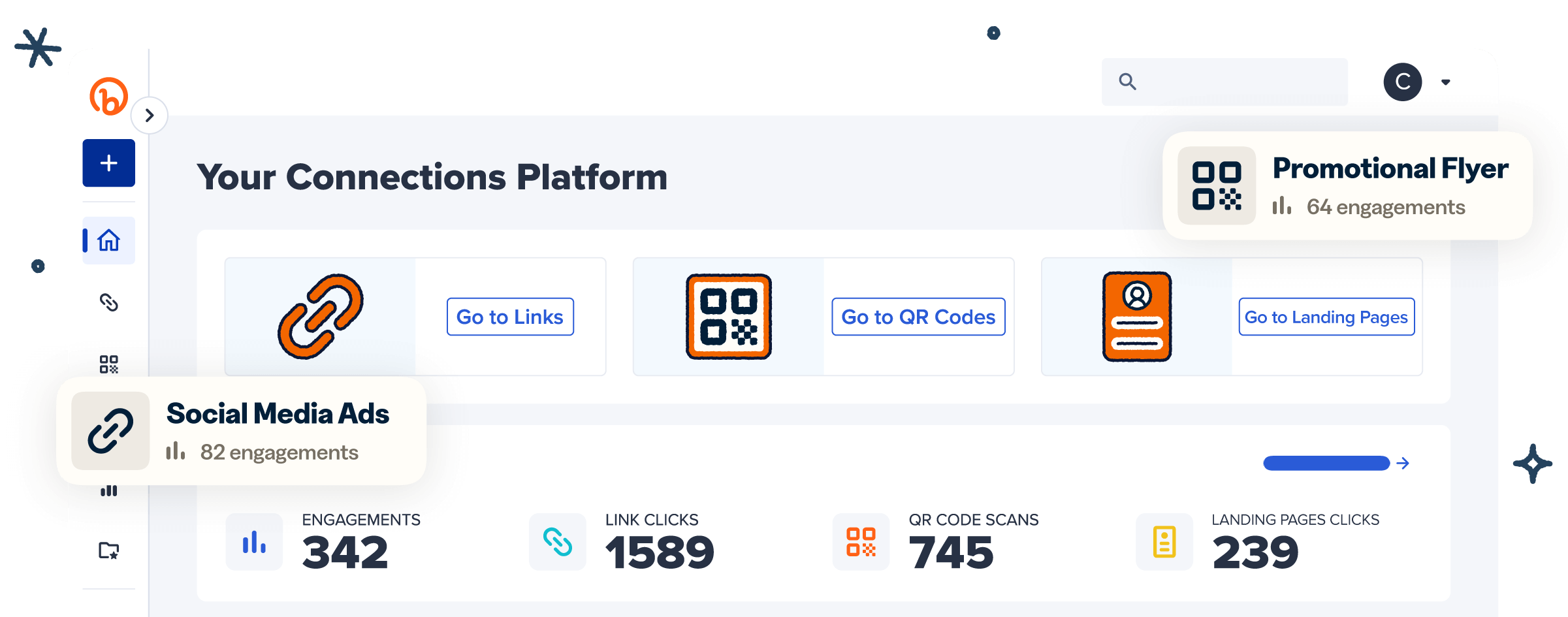
When your short links and QR Code data live in one unified platform, it becomes much easier to compare how customers engage across channels throughout the lifecycle. With tools like Bitly Analytics, teams can evaluate performance across email, SMS, social media, print campaigns, and other touchpoints using one consistent reporting view.
That visibility helps marketers make smarter investment decisions. For example, you might discover that SMS campaigns drive faster response times and more purchases than email, or that QR Codes on product packaging generate more product tutorial views than paid social campaigns. Those insights can help teams refine their attribution strategy, adjust budget allocation, and focus investment on the channels generating the strongest results.
This comparison across touchpoints should be the foundation of your lifecycle strategy, not just a reporting exercise after campaigns end. To support cleaner attribution, use separate short links and QR Codes for each channel instead of reusing the same assets across multiple campaigns.
What a lifecycle-ready link strategy actually looks like
To evaluate whether your current setup supports lifecycle marketing effectively, ask these four questions:
- Are your short link domains branded?
- Are your links and QR Codes Dynamic?
- Are your links and QR Codes managed on the same platform?
- Can you compare touchpoint performance without exporting data?
If the answer to any of those questions is “no,” there may be gaps in how customer engagement and attribution are being measured across the customer journey.
Bitly helps teams manage branded Bitly Links, Bitly Codes, and landing pages within one platform, supporting more consistent customer experiences at every stage. Features like campaign tagging and built-in analytics also help marketers organize campaigns and monitor click and scan activity in real time.
Explore Bitly’s plans and pricing to build a more connected lifecycle marketing strategy.
FAQs
What’s the difference between using a free URL shortener and a branded short link platform for lifecycle marketing?
Free shorteners create links that work, but they hand over your brand identity, limit your analytics, and introduce deliverability risk in channels like SMS and email, where generic domains can get filtered. For a single campaign, that tradeoff might feel acceptable. Across a full customer lifecycle, it means every stage is generating disconnected data in channels where customer trust matters most. A branded short link platform keeps your domain in every touchpoint, your data in one place, and your redirect logic under your control.
Can I get meaningful attribution data from short links without a dedicated analytics platform?
Not reliably. You can get click counts from most shorteners, but click counts alone aren’t attribution. Attribution requires comparing which touchpoints, channels, and lifecycle stages are driving meaningful customer actions. That comparison only works when every link, whether it’s in a paid social post, a direct mail piece, or an SMS flow, feeds the same data source. Stitching exports afterward produces numbers, not insight.
Do dynamic redirects actually matter if we rebuild our campaigns every quarter anyway?
That rebuild cadence is exactly the problem dynamic redirects solve. Every time a destination changes and your links are static, you’re either recalling printed materials, breaking existing links in live channels, or starting from scratch. Dynamic redirects let you repoint a destination, update a seasonal offer, or run a new test without changing the customer-facing link or code itself. Teams that rebuild campaigns every quarter often do so because their tooling forces it, not because the strategy requires it.
How do short links fit into a lifecycle strategy that already uses marketing automation?
Short links function as the measurement layer between your automation triggers and actual customer behavior. Your automation platform handles sequencing and sends, while short links help show what happened after the send, which touchpoint drove the action, and which channel generated meaningful engagement. Without that layer, your automation strategy is limited to the signals it can already see.
Is it worth consolidating QR Code and short link management onto one platform if both are currently performing fine in separate tools?
Individual performance metrics can look fine while cross-channel visibility is still broken. If your QR Codes and short links live in different tools, you can’t compare a direct mail scan against an SMS click or a paid social interaction in one unified view. That comparison is where lifecycle strategy actually becomes actionable. Consolidating platforms isn’t about fixing something that appears broken—it’s about uncovering insights that are currently difficult to see.