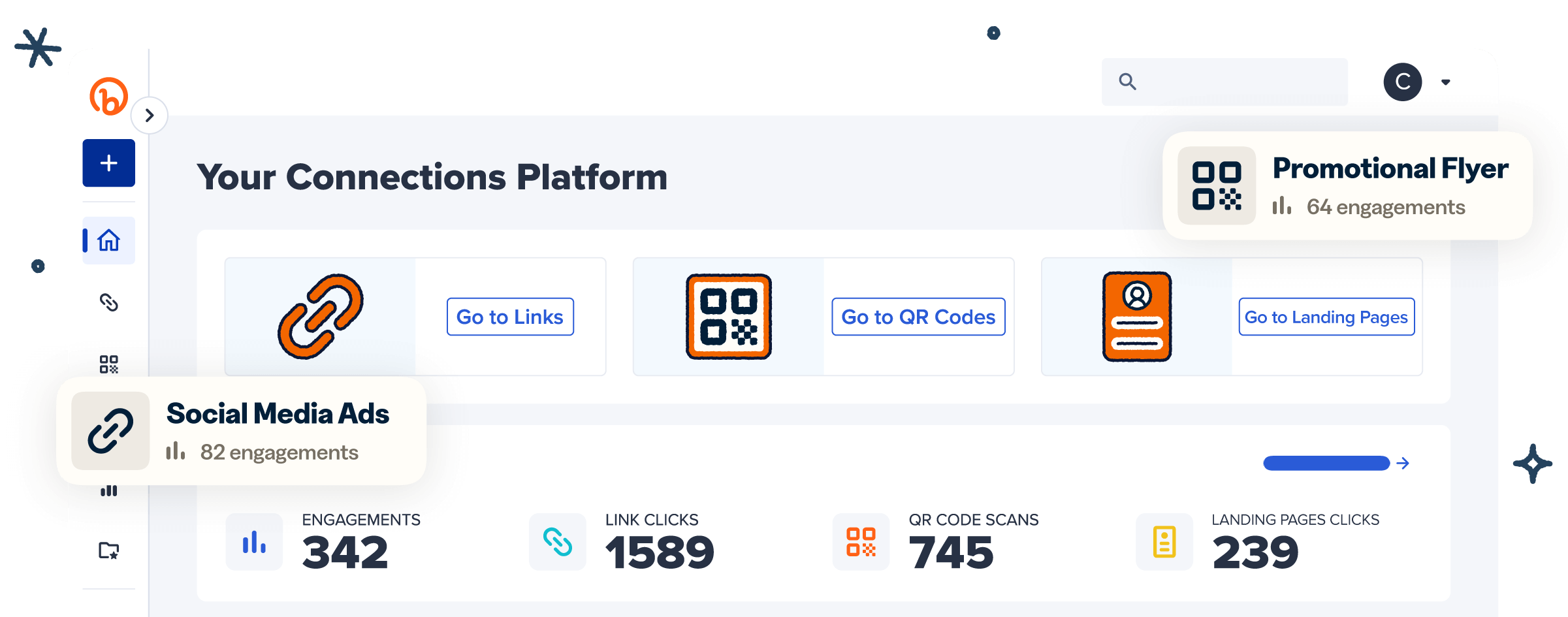

QR Codes can drive engagement from packaging, print campaigns, event signage, and retail displays, but without tracking, it’s difficult to know which placements actually work.
Dynamic QR Codes help solve that problem by turning scans into measurable marketing events. Instead of treating offline campaigns like a black box, marketers can track codes to better understand when, where, and how audiences engage.
With Bitly Codes and Bitly Analytics, you can create trackable QR Codes, monitor scan activity in real time, and connect offline touchpoints to your broader campaign reporting.
Here’s how QR Code scan tracking works and how to use that data to make smarter marketing decisions.
Note: The brands and examples discussed below were found during our online research for this article.
Key takeaways
- Dynamic QR Codes turn scans into measurable campaign data, while Static QR Codes typically leave marketers with little to no visibility.
- Scan metrics like volume, activity over time, location, and device type can provide useful context about when, where, and how audiences engage.
- UTM parameters help connect QR Code scans to web analytics platforms, so campaign return on investment (ROI) doesn’t get buried under direct traffic.
- Using a different QR Code for each placement creates cleaner attribution across packaging, signage, mailers, events, and retail displays.
- Bitly brings QR Code scans, short link clicks, and landing page engagement into one dashboard, helping teams compare performance and optimize campaigns more efficiently.
Why QR Code tracking matters: From black box to measurable channel
When executed well, physical campaigns like print, events, packaging, and out-of-home advertising can influence real customer decisions, but they’ve traditionally been much harder to measure than digital campaigns.
QR Codes turn those offline interactions into measurable engagement signals. Every scan gives marketers more context about how audiences interact with physical touchpoints.
And because consumers are increasingly comfortable scanning QR Codes in everyday settings, tracking that engagement has become much more valuable to marketers. The more you use QR Codes, the more important it becomes to measure their performance.
The cost of untracked physical campaigns
Physical campaigns can play an important role in your marketing strategy. But tying offline spend to meaningful business outcomes is difficult when campaign performance isn’t being monitored.
That creates challenges when budgets shift or leadership teams reevaluate channel spend. Offline initiatives become harder to defend, compare, or improve over time when marketers lack reliable reporting. Trackable QR Codes give teams concrete data they can use to compare placements, identify high-performing campaigns, and make more informed budget decisions.
Why QR Code scans deserve the same measurement rigor as clicks and opens
Not all customer interactions happen online, and many consumers still interact with brands through offline touchpoints. Those touchpoints deserve the same level of measurement as email, social media, and paid campaigns because they directly influence real purchasing decisions.
When you consistently track QR Code scans, you can see which offline channels generate the most engagement and where audiences are most likely to respond. That insight helps teams optimize future campaigns based on performance instead of assumptions.
Static vs. Dynamic QR Codes: The choice that determines whether tracking works
There are two types of QR Codes: Static and Dynamic. While they may look identical to customers, they work very differently on the backend.
That distinction affects whether marketers can collect real-time data, update destinations after launch, and manage campaigns over time. For teams that need reporting and long-term flexibility, Dynamic QR Codes are the better fit.
Why Static QR Codes produce zero scan data
Static QR Codes work by encoding the final destination URL directly into the pattern, which means users aren’t routed through a tracking server when they scan. This also means the destination can’t be edited after the QR Code is created.
When someone scans a Static QR Code, they go straight to the target URL without passing through a redirect layer. Because no scan event is captured, your team has no visibility into when or how often the code is used.
How Dynamic QR Codes make scan tracking possible
Dynamic QR Codes route scanners through a short redirect step before loading the final destination page. That process happens almost instantly, but it allows scan activity to be recorded before the user reaches the destination.
Because the destination URL isn’t built directly into the QR Code itself, teams can update where the code points over time. That flexibility helps protect printed assets like signage, packaging, and mailers from becoming outdated.
How Dynamic QR Code tracking works
After a scan, the key difference is what happens before the destination page opens. With a Dynamic QR Code, that brief step creates a record of the scan while keeping the customer experience simple.
Here’s what happens between the scan and the page load.
The redirect layer as the tracking engine
When someone scans a Dynamic QR Code, the request passes through a redirect step before their intended page loads. Platforms like Bitly use that process to log details like scan activity over time, device type, operating system, and approximate geographic location.
That tracking data then becomes available in Bitly Analytics in real time.
What happens between the scan and the destination
From the customer’s perspective, scanning a Static QR Code feels no different from scanning a Dynamic QR Code. The page loads quickly and the experience remains seamless.
For marketers, that short redirect step creates valuable visibility into audience engagement patterns.
Why tracking works without a pixel, SDK, or extra tagging
Because QR Code tracking happens through Bitly’s redirect layer, there’s no need to install a tracking pixel, configure extra tagging, or involve a complex software development kit (SDK).
That makes Dynamic QR Codes easier for marketing teams to launch and manage without relying heavily on developers or IT support.
What QR Code scan data can tell you
Dynamic QR Codes give marketers access to metrics that support more data-driven decisions, especially when paired with insights from the rest of your marketing stack. Here’s what QR Code scan data can reveal about campaign performance.
Core scan metrics: Volume, time, location, device, and operating system
Here are the core scan metrics you can track with Bitly Analytics (depending on your plan):
- Scan volume: This metric measures the total number of scans a QR Code receives over time. It can help marketers understand whether physical assets are attracting attention and encouraging engagement.
- Scan activity over time: Changes in scan activity can help marketers identify spikes in audience activity during a campaign or after a new placement goes live.
- Scan location: Location data shows the approximate region or city where scans occur. While it isn’t GPS-level precise, it can help brands identify regional engagement trends.
- Operating system (OS) and browser used: Device data helps teams understand whether audiences are scanning with iOS, Android, or other platforms. It can also help surface usability or compatibility issues.
Total scans vs. unique scans
Bitly Analytics helps marketers differentiate between total scans and unique scans. Total scans measure every scan a QR Code receives, while unique scans estimate how many individual users scanned the code.
For example, if one person scans the same QR Code five times, that counts as five total scans and one unique scan.
Viewed together, these metrics paint a clearer picture of campaign reach and repeat interaction. Unique scans indicate approximate audience size, while total scans can reveal continued interest in a placement or offer.
What scan data can and cannot prove on its own
Scan data can show whether physical campaigns are driving audience engagement and response. However, scans alone can’t measure conversion rates.
That’s because a QR Code scan doesn’t always lead to a purchase, newsletter signup, or other revenue-generating action. To connect scans to conversions, marketers need to combine QR Code data with insights from other analytics platforms.
How to create a trackable Dynamic QR Code
Now that you know how Dynamic QR Code tracking works, it’s time to create one for your next campaign. Here’s how to build a trackable Dynamic QR Code with Bitly.
Set the campaign goal and choose a mobile-optimized destination
Start by identifying what you want your physical campaign to accomplish. For example, you might place a QR Code near the checkout counter in a retail store to increase loyalty program signups.
Once you’ve defined your goal, create a landing page that aligns with that action. Since most QR Code scans happen on smartphones, the destination should be optimized for mobile devices.
Tools like Bitly Pages make it easy to create mobile-friendly landing pages without coding experience. And with 64.35% of web traffic now coming from mobile devices, mobile optimization is increasingly important for campaign performance.
Create a branded short link as the redirect layer
Next, create a branded short URL for your landing page. This URL becomes the redirect layer behind your QR Code.
While generic short links technically work, branded links can help build trust with scanners. When someone points their phone at a code, the destination URL often appears before they open the link, making recognizable branding more important.
That added trust matters even more as QR Code phishing scams continue to rise. Microsoft reported a 146% increase in QR Code phishing attacks in Q1 2026 compared to the previous quarter. A branded short URL can help audiences feel more confident that the destination is legitimate and associated with your business.
Generate, design, and test your Bitly Code before launch
Once your short link is ready, you can use it to generate your QR Code. Not every free QR Code generator supports scan tracking, so it’s important to choose a platform like Bitly with built-in analytics.
With Bitly, you can customize your code using brand colors, logos, frames, and pattern styles to create a design that feels recognizable and trustworthy.
For reliable scanning, use colors that contrast clearly with the background and leave enough quiet space around the QR Code so it scans properly. Add a short call-to-action (CTA), like “Scan for today’s specials,” so audiences know what to expect before scanning.
Before launch, test your code thoroughly across iOS and Android devices in different lighting conditions. If the code will appear in multiple print sizes, test each version to confirm it remains easy to scan.
How to use UTMs to connect QR Code scans to web analytics
With QR Code analytics, you can see where scans are coming from and how scan counts change over time. However, scan data can’t show what users do after reaching the destination page, which means conversion rates require additional tools.
UTM parameters help you bridge that gap by making QR Code traffic easier to identify in Google Analytics. Here’s how to set them up.
The UTM gap that makes QR Code traffic look like direct traffic
Without UTM parameters, you may see scan volume in Bitly Analytics while those visits appear as direct traffic in third-party tools like Google Analytics instead of being attributed to QR Code campaigns.
Over time, that reporting gap makes it much harder to measure the ROI of physical marketing efforts accurately.
A practical UTM structure for QR Code campaigns
For more accurate attribution, add UTM parameters to your destination URL before creating the short link and corresponding QR Code in Bitly. Once applied, those parameters make it easier to identify QR traffic in Google Analytics.
For consistency, use the same source and medium values across campaigns, then use campaign and content parameters to distinguish individual promotions and placements. For example, you might use utm_source=qr and utm_medium=offline, alongside values like utm_campaign=springsale and utm_content=storeshelving.
Before launching campaigns, establish naming conventions for regions, stores, channels, and creative variants. Documenting those standards helps keep reporting clean and consistent across teams over time.
Connecting QR Code scans to GA4 conversions, form fills, purchases, and signups
UTM parameters make it easier to generate multi-touch attribution insights from QR Code scans. By connecting QR traffic to GA4, marketers can better understand how offline campaigns contribute to downstream actions like purchases, newsletter signups, and form fills.
Most people don’t convert immediately after scanning a QR Code. They often interact with several channels before taking action, including email, social media, and paid campaigns. Multi-touch attribution models help give those interactions appropriate credit within the customer journey.
The one-code-per-placement discipline
When creating QR Codes, use a different code for each placement instead of reusing the same one across multiple channels. This keeps scan rates and attribution data cleaner while making campaign reporting much easier to manage.
Why reusing one code across placements breaks attribution
Product packaging, event signage, and direct mail campaigns may all use QR Codes, but they often generate very different results. If the same code appears across every placement, there’s no way to tell which channel drove the scans.
That lack of visibility makes attribution less reliable and creates more guesswork when evaluating future campaign performance.
How to name and organize codes for clean reporting
Creating separate QR Codes for each placement requires a little more setup upfront, but it leads to cleaner attribution and more manageable reporting later.
Use consistent naming conventions based on campaign, channel, placement, and date so codes stay easy to search and compare over time. For example, you might use a name like productlaunch-tradeshow-June2026.
With Bitly, you can also apply campaign tags to QR Codes to improve filtering, searchability, and data exports across larger campaigns.
Examples for retail displays, packaging, restaurants, events, and mailers
If you’re using QR Codes in a retail environment, create different codes for product packaging, shelf talkers, checkout signage, and individual store locations. That separation makes it much easier to compare scan rates across placements and identify which assets attract the most engagement.
The same approach applies to events, restaurants, and direct mail campaigns. An event team, for example, may use different codes for booth signage, table tents, and printed handouts to compare how attendees interact with each touchpoint.
How to read QR Code analytics and turn data into decisions
Once your codes are live, QR Code tracking starts generating valuable campaign insights. Over time, those patterns can reveal which placements, locations, and experiences drive the strongest audience response.
Here’s how to interpret your analytics and apply those insights to future campaigns.
Using scan volume and time-of-day trends as campaign timing signals
Tracking scan volume over time can reveal when audiences are most likely to interact with physical marketing materials. Those patterns can help teams decide when to launch promotions, update destinations, or schedule in-person events.
For example, a retailer might notice that in-store QR Codes receive more scans during morning shopping hours than later in the day. That insight could influence when new offers go live or when destination pages are updated to avoid disrupting peak engagement periods.
Using geographic and device data as audience context
Scan location and device data offer additional context about how audiences interact with campaigns across regions and platforms.
For example, one region might respond more strongly to QR Codes on takeout materials or product inserts, while another generates more scans from shelf displays or event collateral. Those patterns can help marketers tailor placements and promotions by location.
Device data also shows which operating systems and browsers audiences use most often when scanning. If scans disproportionately come from one platform, it may signal usability or compatibility issues affecting the experience on others. QR Code tracking helps teams catch those issues earlier.
Using placement intelligence to optimize physical spend
QR Code analytics quickly highlight which placements generate the strongest response and which ones fall short. Those insights can shape future decisions around displays, promotional materials, and campaign investment.
Imagine a retail store using QR Codes across multiple endcaps, checkout displays, and product aisles. If one location consistently receives more scans than the others, there’s likely a reason. Maybe it’s positioned closer to foot traffic or placed where customers naturally pause and browse. That insight can inform future merchandising and promotional decisions.
How to manage Dynamic QR Codes after launch
Because Dynamic QR Codes remain editable after publication, teams can adapt destinations and campaigns over time without replacing printed materials.
Here’s how to manage QR Codes effectively as promotions, offers, and customer needs evolve.
Updating destination URLs without reprinting
Product packaging and direct mailers often require significant upfront investment. Replacing those materials every time a QR Code destination changes can quickly become expensive and time-consuming.
Dynamic QR Codes solve that problem by allowing teams to update target URLs without creating new physical assets. That flexibility helps campaigns stay current even as offers, promotions, and landing pages evolve.
For example, a product package might initially direct customers to a seasonal promotion, then later redirect them to an evergreen landing page after the campaign ends.
How scan data accumulates across destination changes
When a Dynamic QR Code points to a new destination, its existing scan history stays connected to the same code. That continuity makes it possible to review how different promotions, offers, and landing pages perform across the life of a campaign.
For example, a code might generate stronger engagement when linked to a seasonal campaign than when directing visitors to evergreen content. Over time, those patterns can highlight which types of promotions resonate most with audiences.
When to refresh, pause, or redirect a live QR Code
Monitor QR Code engagement metrics regularly so you know when destinations need to be updated. In some cases, that may happen because a promotion ends or website content changes. In others, declining conversion performance in Google Analytics may signal that a landing page or offer needs adjustment.
There are also situations where pausing a QR Code makes more sense than redirecting it elsewhere. For example, unusual scan activity or traffic patterns that don’t align with normal customer behavior could indicate misuse, spam activity, or technical problems that require investigation.
How to scale QR Code tracking across teams and channels
Enterprise marketing teams may manage hundreds or even thousands of QR Codes across campaigns, regions, and channels. At that scale, governance, security, and reporting consistency become much more important.
Here are a few operational considerations to keep in mind as your QR Code tracking efforts grow.
Bulk creation, API access, team management, SSO, and compliance needs
As organizations grow, they need QR Code generation platforms that can support large-scale campaigns while adhering to security, governance, and reporting standards. Here are a few enterprise features worth prioritizing:
- Bulk creation: Teams should be able to generate large batches of QR Codes while maintaining consistent naming conventions and branding elements.
- API access: API access gives developers the flexibility to build custom integrations and automate workflows.
- Single Sign-On (SSO): SSO simplifies access management by allowing employees to log in using existing company credentials.
- Team management: When multiple people handle QR Code creation, role-based permissions can help reduce duplicate assets and improve platform security. Restricting editing and publishing access may also support SOC 2 compliance and broader cybersecurity requirements.
Privacy, IP-based geolocation limits, and data governance
QR Code scan analytics often rely on IP-based geolocation to estimate a scanner’s approximate location. In some regions, IP addresses may be protected under privacy regulations such as the General Data Protection Regulation (GDPR) in the European Union.
Before scaling your QR Code tracking across regions or teams, review local requirements related to data collection, storage, and transparency. Clear internal documentation and governance policies can also help organizations stay prepared for audits and broader compliance reviews.
Security considerations, quishing risks, and anomalous scan patterns
Quishing, or QR Code phishing, happens when a scammer uses a malicious QR Code that redirects users to a fraudulent website. In some cases, attackers may place fake codes over legitimate ones on signage, packaging, or printed materials.
Because quishing is a growing cybersecurity concern, teams should monitor QR Code metrics for unusual scan activity or unexpected engagement changes. If scan patterns suddenly shift, inspect the physical code to confirm it hasn’t been altered or replaced.
Why unified dashboards matter for QR Codes, links, and landing pages
Unified dashboards reduce the amount of time teams spend exporting, combining, and organizing reporting data. They also create a clearer view of engagement across channels and campaigns.
Instead of relying on separate platforms for QR Codes, short links, and landing pages, Bitly allows teams to create and track all three in one place. That centralized visibility can simplify campaign management and improve reporting consistency.
Common mistakes to avoid when tracking QR Code scans
Here are some of the most common mistakes marketing teams make when setting up QR Code tracking for the first time—and how to fix them.
Using a Static QR Code generator for a campaign that needs analytics
When teams first start using QR Codes, Static versions can seem like the simpler option because they’re often free to create. However, Static QR Codes don’t support scan tracking or editable destinations.
For campaigns that require analytics and long-term flexibility, Dynamic Bitly Codes are the better choice because they remain trackable and editable after launch.
Skipping UTMs and losing ROI visibility in web reporting
Without UTM parameters, QR Code campaigns may generate scan data in Bitly Analytics while conversion activity remains disconnected in Google Analytics.
To close that reporting gap, add UTM parameters to the destination URL before generating the QR Code. Then run a few test scans to confirm traffic sources and campaign values appear correctly in Google Analytics before launch.
Measuring scan volume without conversion or landing page context
Scan volume only shows part of campaign performance. To evaluate results more accurately, marketers also need visibility into landing page engagement and conversion activity.
For example, a QR Code may generate a higher number of scans while the landing page experiences poor conversion rates or high bounce rates. Reviewing scans alongside other performance indicators creates a more complete picture of campaign effectiveness.
Because Bitly Analytics doesn’t measure on-page behavior or conversions directly, teams will need additional analytics platforms for that level of reporting.
Treat QR Code scans like a real marketing channel
Physical campaigns shouldn’t operate like a reporting blind spot. With Dynamic QR Codes, marketers can measure how audiences interact with packaging, signage, direct mail, in-store displays, and other offline touchpoints instead of relying on assumptions about what worked.
Bitly brings QR Code creation, branded short links, landing pages, and analytics into one platform, giving teams a centralized way to manage campaigns and monitor scan performance over time. Combined with UTM parameters and web analytics tools like Google Analytics, Bitly provides clearer visibility into how offline engagement contributes to broader marketing outcomes.
Ready to build a more measurable QR Code strategy? Explore Bitly plans and start creating trackable Dynamic QR Codes today.
FAQs
How do you track QR Code scans?
To track QR Code scans, use a Dynamic QR Code that sends scanners through a redirect layer before the final destination. Bitly logs scan activity, including scan volume over time, location, device type, and operating system, before forwarding visitors to the destination page. For the scanner, the experience stays fast and seamless. For marketers, it creates valuable campaign visibility.
Can Static QR codes be tracked?
Static QR Codes cannot provide scan analytics because the destination URL is baked directly into the code pattern. When someone scans the code, no tracking server sits between the scan and the destination, so no scan event data is recorded. For campaigns that require reporting and long-term flexibility, Dynamic QR Codes are the better starting point.
What scan metrics should marketers monitor?
Start with total scans, unique scans, scan activity over time, city or country, device type, and operating system. These metrics can highlight which placements attract attention, where audiences are engaging, and which mobile experiences may need improvement. Scan volume is useful, but conversion context creates a more complete view of campaign performance.
How do UTMs help with QR Code ROI?
UTM parameters help web analytics platforms recognize QR traffic instead of grouping those visits under direct traffic. Use values like source, medium, campaign, and placement to connect scans to form fills, purchases, signups, and other conversion activity. Bitly supports this process by allowing teams to build trackable links before generating a QR Code.
Why create a different QR Code for each placement?
Using one QR Code per placement keeps attribution cleaner across packaging, mailers, retail displays, event signage, and restaurant tables. If the same code appears everywhere, there’s no way to tell which physical touchpoint generated the scan. With Bitly Codes, organized naming conventions and campaign structures make placement-level reporting simpler to compare and analyze.