The customer journey today doesn’t follow a straight line. People research, consume content, and interact with brands across more channels than ever—and they expect something useful at every step. That complexity generates a lot of data. But more dashboards haven’t delivered more clarity. Marketers are under pressure to move faster with less, and the tools they’re using often can’t keep up.
We surveyed over 250 marketers about their biggest measurement and attribution challenges for The Marketing Visibility Report. Then we sat down with Bitly’s Chief Marketing Officer, Tara Robertson, to get her take on what the data is really saying. From what surprised her and where marketers are stuck to how AI is changing the equation and what to do about it, we cover it all.
Tara brings over 20 years of experience scaling SaaS brands globally, with senior marketing leadership roles at Sprout Social, Hotjar, and Teamwork. She’s spent her career connecting customer research to growth strategy—which makes her perspective on the visibility gap anything but theoretical.
Q: Tell us about the report. What was the Bitly team hoping to uncover or explore?
Tara: We went into this research to better understand what we call « the visibility gap,” or the audience insights that marketers are still missing, even with an impressive set of tools at their disposal.
The audience journey has gotten genuinely complex. But the tech stack most marketing teams are working with hasn’t caught up. It doesn’t offer the simple clarity you need to understand what’s actually working. Marketers are overwhelmed, and many are defaulting to decisions based on delayed or incomplete data—not because they want to, but because that’s what’s available. And that challenge is only getting harder. The rise of zero-click search and dark funnel behavior driven by AI search means more of the audience journey is happening in places we simply can’t see yet.
This survey asked marketers directly: where does visibility break down, and what does that cost you? The answers were actually pretty stark. Just 18% of marketers say they have a clear view of what’s working, while nearly half report limited or inconsistent visibility. The visibility gap is real and it’s doing more damage than most people realize.
Q: What surprised you most from the report findings?
Tara: The finding that really stopped me in my tracks was this: a third of respondents said they often or always find out a campaign is underperforming when it’s already too late to do anything about it.
Marketers have always been part scientist, part artist. The ability to iterate, test, learn, and adjust is core to the job. But if a significant portion of marketers are getting the data after the window to act has closed, the business impact is real. Campaigns that could have been course-corrected are running to completion unchanged.
And I can’t help but share one other finding that really stuck with me. It takes marketers an average of five days to act on new performance insights—five days! In a world where audience behavior can shift overnight, that lag isn’t just frustrating, it’s also incredibly costly. That’s the visibility gap showing up in the most concrete way possible.
Q: Why are marketers still struggling with attribution?
Tara: Attribution has been a hard problem for a long time. Figuring out where an audience came from, which channel referred them, where they first encountered the brand. That’s never been clean or simple, and it’s just getting harder.
We’ve had traditional SEO data to understand traffic, third-party cookies for audience signals, and some channels—like out-of-home (OOH) or direct mail—that never had attribution at all. Trackable QR Codes have helped close some of that gap for in-person touchpoints, but a lot of other factors have made attribution more challenging today, not easier.
Here’s the thing: marketers now have more tools than ever. Our research found that, on average, marketers use six different platforms to measure performance—and more than a third use at least seven. More tools doesn’t actually equal more clarity—cross-tool attribution breaks down, data integrity gets harder to maintain, and the picture gets murkier, not sharper.
Layer on fragmented customer journeys, the rise of the dark funnel and a zero-click world that’s getting harder to measure, and disappearing referral data, and you start to see why attribution is still such a struggle!
What marketers actually need is data that gets closer to the moment of decision. When does someone actually decide to buy, share, or act? That’s the piece of the attribution puzzle that’s hardest to find and most valuable to have.
Q: What’s changed about marketing visibility in the AI era?
Tara: What hasn’t changed?! But in all seriousness, AI is fundamentally changing how buyers research solutions, how they build their shortlists, and which tools they trust. Being at the top of a search results page used to be a near-certain path to visibility. AI Overviews have already changed that, driving down click-through rates significantly. More buyers are turning to LLMs for research—platforms that don’t push users to click. So clicks are happening less often, but they carry more weight. A click now signals real intent, which makes measuring them more important than ever.
But AI also brings real opportunity. It’s dramatically improving marketers’ ability to measure their campaigns, analyze performance, and execute faster. The problem is that most teams aren’t using it for that yet. Just 16% of respondents said they use AI as part of their standard measurement workflow. The marketers who are using it report faster access to insights, cleaner data interpretation, and more confidence in their decisions. That gap between the 16% and everyone else is a significant opportunity.
So while the AI age has its fair share of challenges, this tech also brings new tools and capabilities to respond and rise to that occasion.
Q: What are the biggest mistakes teams make when measuring performance?
Tara: One of the biggest mistakes marketers make is going into a campaign without enough margin or flexibility to react to the data.
The number-one barrier that marketers said limits their ability to act on performance insights was that their budget or plans were already locked in. That means they often can’t capitalize on the momentum of a campaign that’s really resonating or experiment with a trend or new channel, even if audience data suggests it’s a good idea. They have no other option but to stick with the original plan. And that doesn’t leave space for the iteration and agility that drives the most impactful marketing programs.
In addition, the data on gut-based decision-making is worth sitting with. 56% of marketers often or always rely on instinct or past experience when making decisions—and I get it. When the data comes in late, it’s incomplete, or it’s hard to trust, you work with what you have. But I think we can do better than defaulting to gut. The visibility gap is real, but it’s not an excuse to stop grounding decisions in data. The opportunity is to get creative: use directional data, set learning goals, design campaigns with built-in hypotheses. Treat every initiative as a chance to close the gap, not work around it.
And when quantitative data genuinely isn’t available, that’s not a dead end—it’s a signal to lean into qualitative. Customer conversations, surveys, anecdotal feedback. That kind of input won’t give you statistical confidence, but it gives you something to work with and something to test against when the numbers do come in.Some of the biggest mistakes aren’t marketers’ faults, but a result of the visibility gap skewing their decision-making. For instance, we found that 56% of marketers often or always rely on their gut instincts or past experiences when making marketing decisions. The problem isn’t that seasoned marketers are drawing on what they know, but they’re going with their gut because the data comes too late, it’s hard to interpret, or it’s incomplete. That’s a visibility problem.
Plus, when they’re in a time crunch, marketers are more than twice as likely to trust their instinct or past experience over quantitative data. Unfortunately, audience preferences and the market are simply moving too fast to assume that things will operate the way they did in the past. When we don’t have access to the data (or don’t feel like we can trust it), then we have no choice but to lean on our instincts. Right now, that’s not enough.
Q: What signals should marketers pay more attention to?
Tara: Marketers need to pay more attention to the interaction-level signals that happen in real time and tell you exactly why someone moved from interest to action. Over half of marketers (56%) make their performance decisions at the overall marketing or campaign level; just 14% evaluate at the interaction or touchpoint level—looking at the page visits, clicks, and QR Code scans that indicate high intent.
As AI completely changes how people research and buy, it’s tempting to panic over the zero-click world. But at this stage, clicks are actually markers of high intent because they tell you who is deeply interested in what you have to say and sell. We need to be paying attention and make decisions based on those data points.
Q: To close things out, what are a few action steps marketers can take in response to the Marketing Visibility Report?
Tara: I would recommend three things. First, tap AI to shore up your performance measurement. AI is, of course, the talk of the town right now for everyone. But the data shows that marketers are most hungry for faster execution and turnaround and higher capacity. AI is built for analysis and measurement, so we should be using it to move more quickly and confidently but treat it as a starting point, not the final word. Always check your data. AI can surface patterns and speed up interpretation, but the judgment call still belongs to you.
Secondly, advocate for budget spend that’s driven by today’s performance, not what everyone else is doing or what you’ve always done. Managing your budget should always be tied to the outcomes you are driving as a business whether that is directly attributable or just overall tied to the health of your overall spend. Whether that is demand, brand performance, or something else, being able to share impact tied to ROI is critical for how to make sure you are investing in the right areas and betting on what you should do more (or less) of. Run small, agile experiments then make budgeting decisions based on performance data as it comes in.
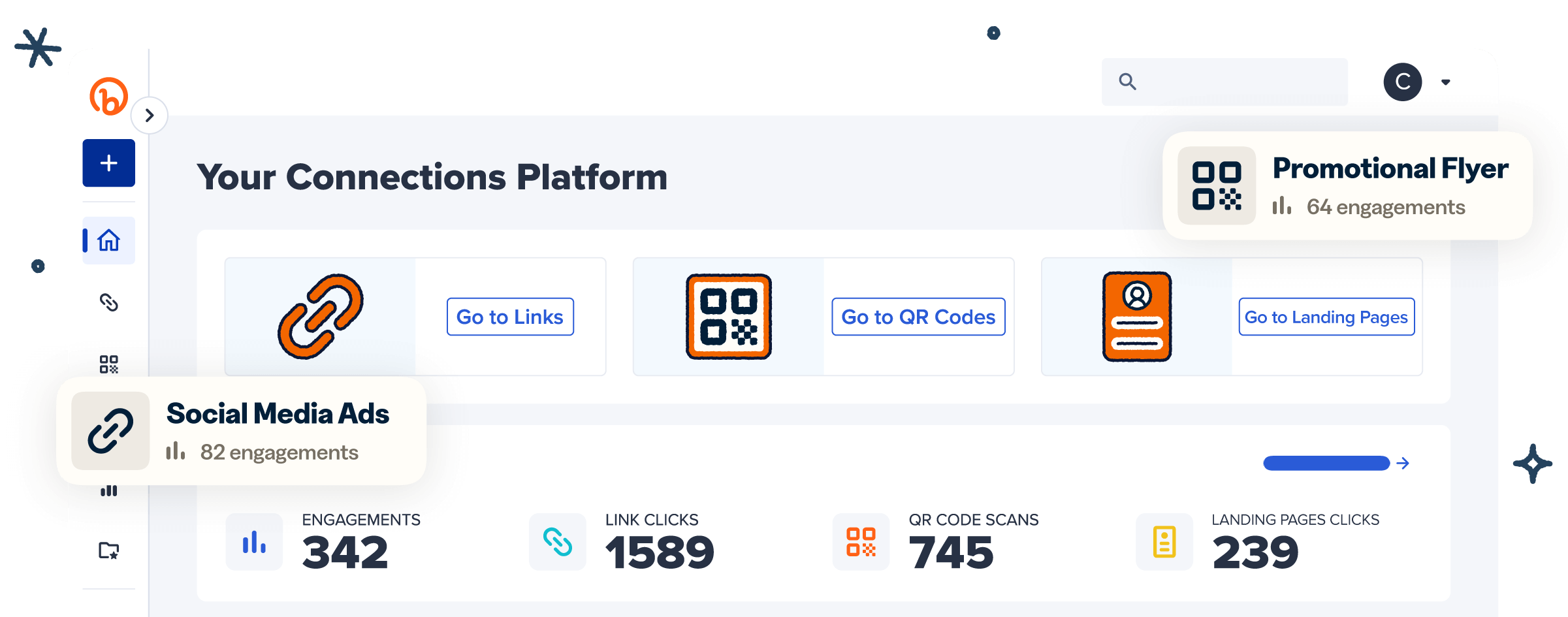
Finally, and most importantly, shift your focus to interaction-level insights—the kind of data you find in your Bitly Analytics dashboard. If you’re currently making decisions based on big-picture performance, start comparing that data to what’s happening at each individual touchpoint. That’s where real visibility starts and ends because it gives you what you need to make sure your performance keeps getting better and better.
About Tara Robertson
Tara Robertson is a marketing leader with over 20 years of experience scaling SaaS brands globally and building award-winning teams. She has held senior marketing leadership roles at Sprout Social, Hotjar, and Teamwork, where she served as CMO. Throughout her career, she has focused on connecting customer research to growth strategy—translating what audiences actually do into marketing decisions that move the business forward.
As CMO at Bitly, Tara leads the company’s full-funnel marketing strategy across brand, demand generation, product marketing, and customer lifecycle. Outside of work, she is committed to building inclusive communities through DEI council participation, mentorship, and local initiatives—bringing the same people-first approach to community that she brings to marketing.