You can change a link name in three ways, depending on whether you mean the display text, the dashboard title, or the public short URL. Cleaner names help people click with confidence across email, docs, and campaigns.
In documents and email, you can edit the words people read before they click. In a link management workflow, you rename an internal title or customize the short URL audiences share. For short links you reuse, Bitly’s URL shortener helps you manage titles and branded links. This article looks at the three different scenarios.
Key takeaways
- Clarify what you want to rename first: Hyperlink display text, a dashboard title, or the public short URL itself.
- Edit document and email hyperlinks through the platform link editor so the destination stays the same while the visible name changes.
- Use short-link titles in Bitly to organize links in your account without changing what audiences see in the live URL.
- Customize the back-half or branded domain whenever you need a public short link name that builds trust and stays memorable.
- Branded links earn a 2.3x increase in clicks compared with unbranded short links when you need recognition at scale.
What “change a link name” actually means
Renaming a link can mean three different things, and mixing them up is why many tutorials feel incomplete.
Display text or anchor text is the visible wording in a document or email (the link text people see before they click).
A short-link title is a label inside a link manager dashboard for your team; audiences will generally never see it in the live URL.
The public short URL is the string people copy and share: The domain plus the back-half (like, bit.ly/example). Branded short links pair your custom domain with a readable ending so the name builds recognition (like yourbrand.co/spring_sale).
| What you want to change | Where it shows up | Does the destination change? | Common tools | Example |
|---|---|---|---|---|
| Display text | Docs, email, slides, websites | No, unless you edit the URL too | Word, Google Docs, Outlook, Gmail | “Spring sale details” instead of a raw URL in your text |
| Dashboard title | Your link manager account | No | Bitly Links | Title: “Q2 email: spring sale” |
| Short URL / back-half | The public short link people share | No, unless you also redirect | Bitly and similar tools | bit.ly/spring_sale |
| Branded short link | Public short link on your domain | No, unless you also redirect | Bitly branded domains | yourbrand.co/spring_sale |
How you change a URL link name depends on whether you mean the on-page title, the internal title, or the short URL. Google Sites page addresses and social profile usernames are both outside the scope of this discussion.
How to change a link name in documents and email
In Word, Google Docs, Outlook, and Gmail, you can rename the visible text through the hyperlink editor while the destination stays intact.
Rename a hyperlink in Microsoft Word
In Word, rename a hyperlink by editing the Text to display field while keeping the destination the same.
- Select the linked text or place the cursor in the link.
- Right-click, then choose Edit Hyperlink or Edit Link.
- Update Text to display with the text you want.
- Select OK.
Microsoft’s guide to creating or editing a hyperlink covers the same path.
If you already pasted a long URL:
- Copy the destination.
- Type friendly display text.
- Apply the link.
- Delete the raw URL.
That is how to rename a link in Word and change a hyperlink name in Word.
Change link text in Google Docs
In Google Docs, rename a link by editing its display text in the link editor.
- Click the link.
- Select the pencil (Edit).
- Update the text and URL fields as needed.
- Select Apply.
Google’s Docs Editors Help covers insert and edit options in more detail. Mobile Docs is more limited, so desktop is the reliable path for an exact display name.
Rename a hyperlink in Outlook
In Outlook, rename a hyperlink by updating the Text to display field.
- Right-click the link.
- Choose Edit Hyperlink.
- Change Text to display.
- Select OK.
Microsoft’s article on customizing hyperlink text in Outlook includes screenshots and version notes.
Rename a link in Gmail
In Gmail, rename a link by editing the display text you’ve already written through the Insert link dialog.
- Highlight the display text you want.
- Open Insert link.
- Paste the destination.
- Select OK.
To rename a link in Gmail later, put the cursor in the link and reopen the link dialog. This same path is used to rename a hyperlink in an email without changing its destination.
Editing only the visible characters without opening the link editor can break the linked range in some apps. When you reuse the same destination across channels, especially when coordinating multiple email campaigns, create a managed short link so one public name stays consistent across your assets.
How to change a short link title and custom URL in Bitly
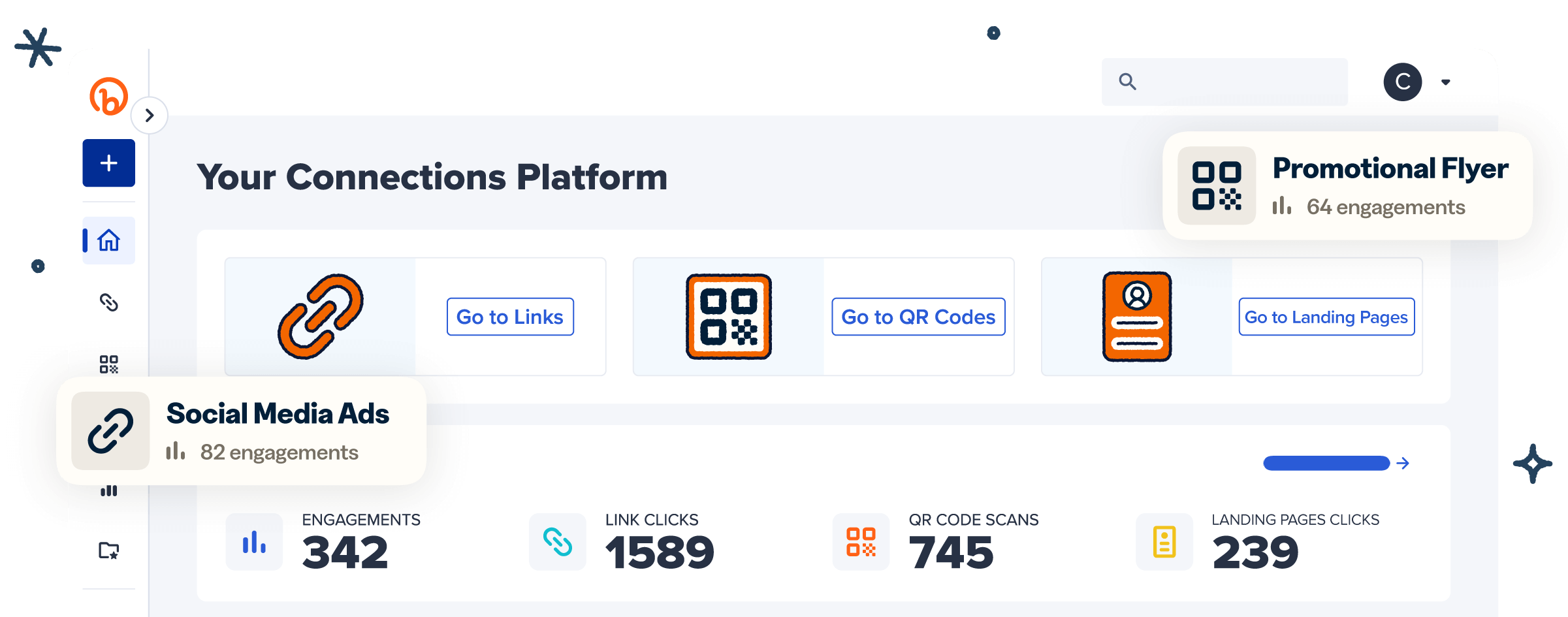
Bitly lets you change a link’s internally tracked title at any time for account organization. On eligible plans, you can also edit the back half of the link or use a branded domain so the public short link name matches the campaign.
Change a link title in Bitly
In Bitly, you can change a link’s title from the link’s edit view.
- Log in to your Bitly account.
- Open Links and find the link (search or filter if needed).
- Select the pencil edit icon.
- Edit the Title field.
- Select Save to save your changes.
Our support article on changing a link’s title clearly describes this path. The assigned title helps your team find the link on our platform; it’s not the live short URL audiences see.
Edit the back-half (public short link name)
In Bitly, you can edit a link’s back-half when you create it, or later in the link’s settings if your plan allows it.
- Log in to your Bitly account.
- Open Links and find the link (search or filter if needed).
- Select the pencil edit icon.
- Edit the back-half (the ending after the domain).
- Save.
Our how to edit a link guide confirms these key rules:
- Previous back-halves still work.
- You can’t reuse the old back-half on the same domain.
- You can’t edit the back-halves of auto-branded links.
- A linked QR Code prompts you to generate a new QR Code after the update.
Use branded links when recognition matters
A branded short link pairs your custom domain with a clear back-half, like yourbrand.co/spring_sale. The public name shows your brand and destination instead of a generic string. It stays memorable in print, SMS (text messages), and spoken mentions. Start with our introductions to what a vanity URL is and how to create a vanity URL if you need a deeper understanding of this domain setup pattern.
Bitly Free includes a limited monthly allowance of custom back-halves. Branded links with a complimentary custom domain start on our Growth tier. Use that custom URL shortener layer when your short URL needs to match your campaign.
See branded redirect links to understand how teams grow a brand with short links.
- Create the short link.
- Set a title and tags.
- Track clicks.
- Update the destination when the offer changes.
Customers note that editable short links and branded links that are not “500 miles long” make sharing easier.
Free and mobile ways to rename a link
Free options exist, but they solve different jobs: Display-text edits are free in native apps, while free short-link naming is limited.
Native Word, Docs, Outlook, and Gmail editors let you change a link name for free because you’re only updating local display text. On Bitly’s Free tier, you get short links, a monthly allowance of custom back-halves, and editable titles, as well as other features like QR Codes and no-code landing pages.
On a phone, mail and docs apps vary. Many mobile flows still need the insert-or-edit link control rather than renaming a pasted raw URL in place. Open that control, set the display text, and confirm the destination. For managed short links, open Bitly in a mobile browser or app workflow. Edit the title or back half there to rename a link on your phone.
Avoid untrustworthy “URL name changer” tools that only mask destinations without controls. Reputable short-link management keeps the public name, destination, and analytics together so you can see what’s working.
Best practices for clear, trustworthy link names
The best link name is specific, scannable, and honest about the destination.
- Lead with the offer or asset people will get.
- Avoid vague labels like “click here.”
- Match the language already used in the campaign.
- Keep back-halves short and readable.
- Use consistent casing across a campaign set.
- Pair Bitly titles and tags when many people manage links.
- Add UTM parameters (campaign tracking codes) for tracking without replacing a human-readable name (see more on what UTM codes are).
- Prefer branded, transparent names when trust matters, and follow vanity URL best practices when people will say the short URL out loud.
| Good link name examples | Weak link name examples |
|---|---|
| Spring sale: free shipping | Click here |
| yourbrand.co/spring-sale | A random 8-character back-half with no context |
| “Download the 2026 media kit” | “Link” or “Website” |
| Title: “Q2 partner email: Media kit” | Title left blank or set to the full raw URL |
Once names are clean, track clicks in Bitly Analytics using short-link tracking to see which labels drive engagement. See how link performance compares across channels.
Choose the right way to rename your next link
Use the app’s hyperlink editor for display text, Bitly titles for organization, and back-halves plus branded domains for public short URLs. Open the channel where the link lives. Apply the matching method to rename a link, then standardize any short links you reuse.
Bitly makes it easy to link your marketing, from initial outreach through to conversion. Properly structured link names are a large part of that toolset, so we make them easy for you to generate and update as needed.
Ready to manage titles and branded public names in one place? Get started for free.
Frequently Asked Questions
These answers cover common ways to rename link text, titles, and short URLs.
Can a link be renamed?
Yes. You can rename the visible text of a hyperlink, the title of a managed short link, or the public short URL back-half. The option depends on the tool you use.
How do I rename a URL link in a document?
Open the hyperlink editor in Word, Google Docs, or your email client. Change the Text to display field. Keep the destination URL the same unless you intend to redirect it.
How do I change a link title in Bitly?
Open Links, select the pencil icon on the link, update the Title field, and save. The title helps you find the link in your account and doesn’t replace the live short URL string.
What is the difference between a link title and a custom back-half?
A title is an internal label. A custom back half is the public ending of a short URL that people see and share.
How do I change a link name on my phone?
Use the insert or edit link control in your mobile mail or docs app to set display text. For short links, open your Bitly account in a mobile browser or app, then edit the title or back half there.
Do branded short links perform better than generic ones?
Yes. Branded short links put your domain and a clear back-half in front of the click. People can recognize the sender before they tap. Brand recognition supports trust when the short URL carries the campaign name in print, SMS, or spoken mentions.