Total scan volume is a valuable QR Code engagement metric, but it doesn’t tell the whole story. The strongest signal isn’t a single spike in scans—it’s whether engagement is growing or shrinking over time across similar audiences and campaigns.
When brands only focus on snapshot metrics, it’s easy to miss broader engagement patterns. Tracking performance over time helps you spot meaningful timing and location trends, understand what’s resonating with your audience, and make smarter campaign decisions.
Here’s how to establish a baseline, compare similar QR Code campaigns, and use engagement data to uncover actionable audience insights over time.
Note: The brands and examples discussed below were found during our online research for this article.
Key takeaways
- Tracking engagement trends across campaigns reveals more than a single scan total.
- Comparing campaigns that reached similar audiences helps validate whether your content is resonating.
- Timing patterns, such as day-of-week engagement shifts, can uncover simple optimization opportunities for QR-driven experiences.
- Geographic scan patterns can reveal distinct audience segments and support smarter personalization strategies.
- A repeatable framework can turn QR metrics into ongoing audience intelligence that improves future campaigns.
Trend over time is the metric that actually proves performance
When tracking QR Code performance, long-term engagement patterns are a stronger indicator of success than one-time scan spikes.
“It’s really about the trends over time,” says Sam Oh, Bitly’s VP of Acquisition. “Do the links and QR Codes you’re sharing show more or less engagement compared to previous ones?”
To measure that accurately, start by establishing a baseline for your target audience. This makes it easier to identify meaningful shifts in engagement and connect them back to variables like timing, placement, or geographic location.
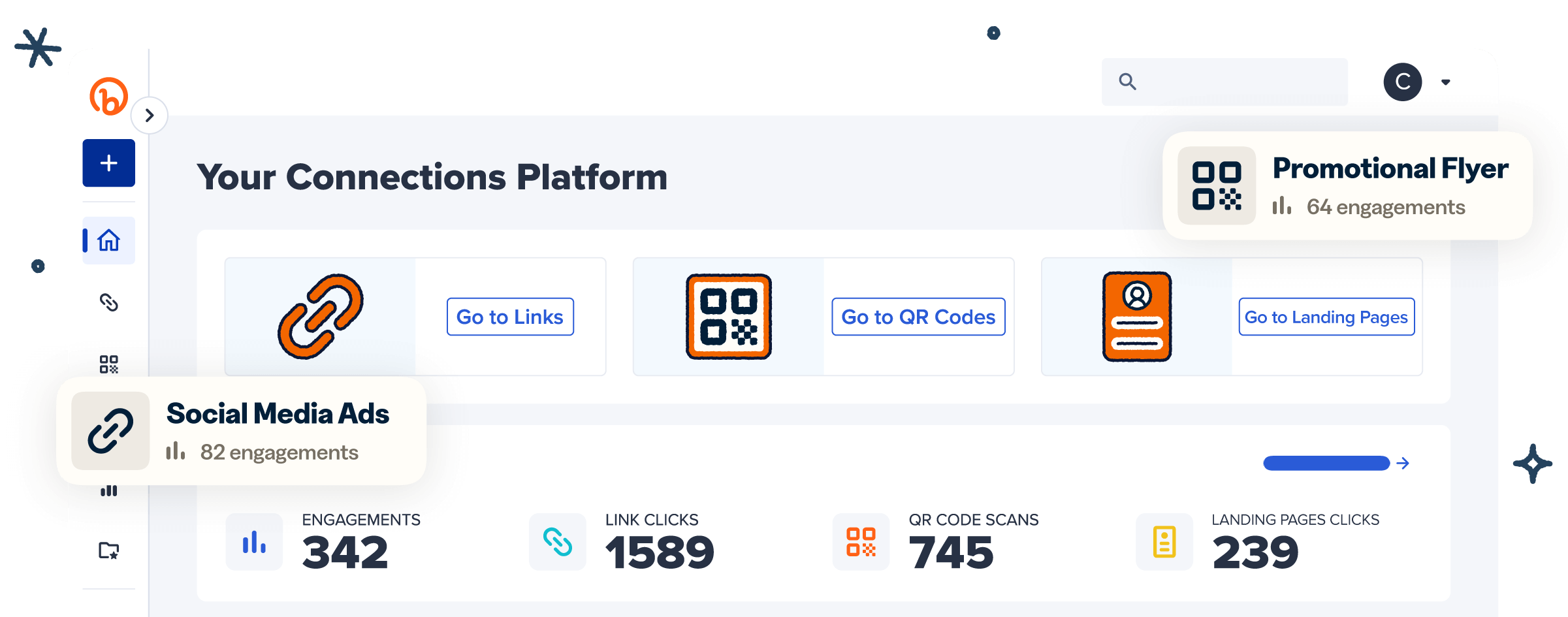
With Bitly Analytics, teams can organize business QR Code campaigns without digging through spreadsheets. Track every Bitly Code and corresponding short URL in one dashboard, then use campaign tagging features to group and compare assets over time.
Build a baseline you can reuse across campaigns
To track QR Code engagement trends, start with consistent baseline data. Choose a set of codes and links used for the same audience in similar contexts, then monitor performance during a defined time window.
Your baseline campaigns should use the same marketing channel, placement type, or audience segment for consistency. For example, a QR Code on a restaurant menu will generate very different scan behavior than QR Codes and short links for a loyalty program at a retail store. These campaign types should be tracked separately to avoid misleading comparisons.
Once you’ve identified which codes to measure, create a campaign in Bitly and apply consistent tags so related assets stay grouped together for easier comparison. Then track scan volume and other key metrics long enough to establish what typical engagement looks like for that audience.
The time frame should be long enough to smooth out one-off spikes that could skew the data set. Depending on your audience and campaign cadence, that could mean tracking performance for two weeks, one month, or longer.
Use the comparative campaign framework to measure true resonance
Once you have a reliable baseline, you can begin testing changes across your QR Code campaigns and comparing the results. These comparisons help reveal what resonates most with your audience.
Start by launching a campaign aimed at a similar audience segment. That could mean in-store shoppers, email subscribers, or event attendees, as long as the distribution context stays consistent. Brands running multiple types of QR Code campaigns should maintain separate baselines for each channel or audience type.
Next, introduce a controlled change. For example, you might test a different promotional offer or move the QR Code to another area of your store.
From there, monitor shifts in engagement and consider what those changes signal about audience behavior. For example, if scan volume increases after moving a code to a different retail placement, the updated location may have been easier to notice or more compelling to interact with.
Over time, these comparisons make it easier to justify future campaign decisions and build more reliable reporting around what’s actually improving performance.
Try using this template in your reports to summarize those insights:
When we shared ____ to ____ audience in ____ channel, engagement trended ____ versus last campaign, which signals ____.
Find patterns in time and place, then turn them into smarter decisions
When reviewing QR Code performance data, there are a few key patterns worth watching closely. Engagement and geographic trends can reveal useful audience signals, helping marketers make smarter decisions about campaign timing, personalization, and placement strategy.
Timing intelligence, when your audience actually engages
Start by reviewing scan and click timing patterns. Are there certain days of the week with consistently higher engagement? As Sam Oh explains, these patterns can provide useful cues about when audiences are most likely to engage.
Bitly’s Weekly Insights section helps identify whether scans regularly spike on specific days. Review those patterns across several weeks to confirm they reflect broader audience behavior rather than isolated anomalies.
These insights can help shape future launch and promotion timing. For example, if in-store engagement regularly peaks on Saturdays, brands can schedule flash promotions or introduce new QR-supported signage during those higher-activity windows. The same timing insights can also improve QR Code CTV ads, email campaigns, and social media posts.
Lower-engagement days can be just as informative. Instead of treating dips as failures, test different placements, offers, or messaging strategies to better understand what drives audience response.
Geographic intelligence, from data to personalization
Geographic engagement patterns can surface valuable audience insights, especially for national or international brands. Ask yourself: do certain countries, states, or cities engage with specific content more than others?
These clues can help identify audience segments worth personalizing for. In fact, 84% of marketers say localization efforts positively impact revenue growth. That makes geographic engagement data especially useful for brands looking to tailor campaigns by region or audience behavior.
Start by identifying which locations over-index on QR Code engagement in specific contexts. For example, a hotel brand might notice that scan activity in certain cities consistently rises later at night compared to its baseline.
That pattern may signal that guests at those locations are more active during evening hours. Future campaigns could then introduce nighttime promotions, location-specific offers, or updated content timed around those engagement windows. Continue monitoring performance to confirm the approach is improving audience response.
Geographic data can also show differences in language preferences, creative performance, or content format engagement. Those insights can help shape more localized experiences and make tools like customer feedback QR Codes even more valuable.
Turn engagement metrics into audience intelligence you can use every week
Tracking scan timing and geographic patterns helps marketers better understand how audiences respond across campaigns. When QR Code performance reviews become part of your weekly routine, each campaign creates new opportunities to refine timing, messaging, and personalization using real audience signals.
Run a 5-minute engagement metrics audit
When reviewing QR Code performance, ask yourself a few key questions:
- Is engagement trending up or down compared to previous campaigns?
- Are there certain days of the week consistently driving stronger or weaker responses?
- Do specific cities, states, or countries engage more with certain types of content?
- What patterns stand out, and what might they signal about audience behavior?
From there, identify one change to test in your next campaign. For example, if you’re exploring different ways to use QR Codes in retail, you might hypothesize that customers engage more with codes placed in dressing rooms or near product displays than at the register.
Then test that assumption in your next campaign and compare results against your baseline.
Make Bitly your system for proving QR results over time
QR Code performance becomes much more useful when you track patterns instead of isolated results. Comparing engagement across campaigns helps teams understand which timing strategies, placements, and audience experiences are actually improving response over time.
Bitly gives teams a centralized way to organize and compare QR Code campaign performance through Bitly Analytics, without relying on spreadsheets or disconnected reporting. Track Bitly Code scan activity over time while monitoring location and device insights, then use those patterns to refine future campaigns with more confidence.
Explore Bitly plans to see how you can track, organize, and optimize QR Code campaigns at scale.
FAQs
What are the most important QR Code engagement metrics to track?
Start with engagement volume like scans and clicks, but don’t stop there. The most useful insight comes from how those metrics change against a consistent baseline over time. Add timing and location analysis so you can spot patterns that explain why engagement rises or falls, then use those signals to decide what to test next.
Why is trend analysis more useful than total scans, and how do I compare QR Code campaigns fairly?
Total scans tell you what happened, but not whether your program is improving. Compare campaigns by keeping the audience and distribution context consistent, changing one variable at a time, and measuring how engagement shifts. That controlled comparison framework turns isolated data into a performance story you can act on and defend.
How can timing data improve QR Code performance?
Engagement often clusters around certain days, and those patterns can reveal when audiences are most likely to act. Once you identify stronger days, you can schedule QR Code-driven promotions, emails, or in-store prompts around higher-intent periods. Weaker days can also support controlled tests to help identify which messaging, placements, or offers need improvement.
What should I do with geographic scan data?
Treat geographic differences as clues about distinct audience needs, not just a reporting line item. If certain cities or regions engage more with specific content, create localized variants of the experience to build on what’s already working there. Then compare results against your baseline to validate whether personalization improved engagement.
How often should I review QR Code analytics?
A quick weekly check is usually enough to spot emerging patterns in engagement, timing, and geography. Pair that lightweight cadence with deeper reviews after major campaign moments, so lessons are still fresh and easier to apply. Consistency matters because repeatable review habits make trend analysis far more useful over time.