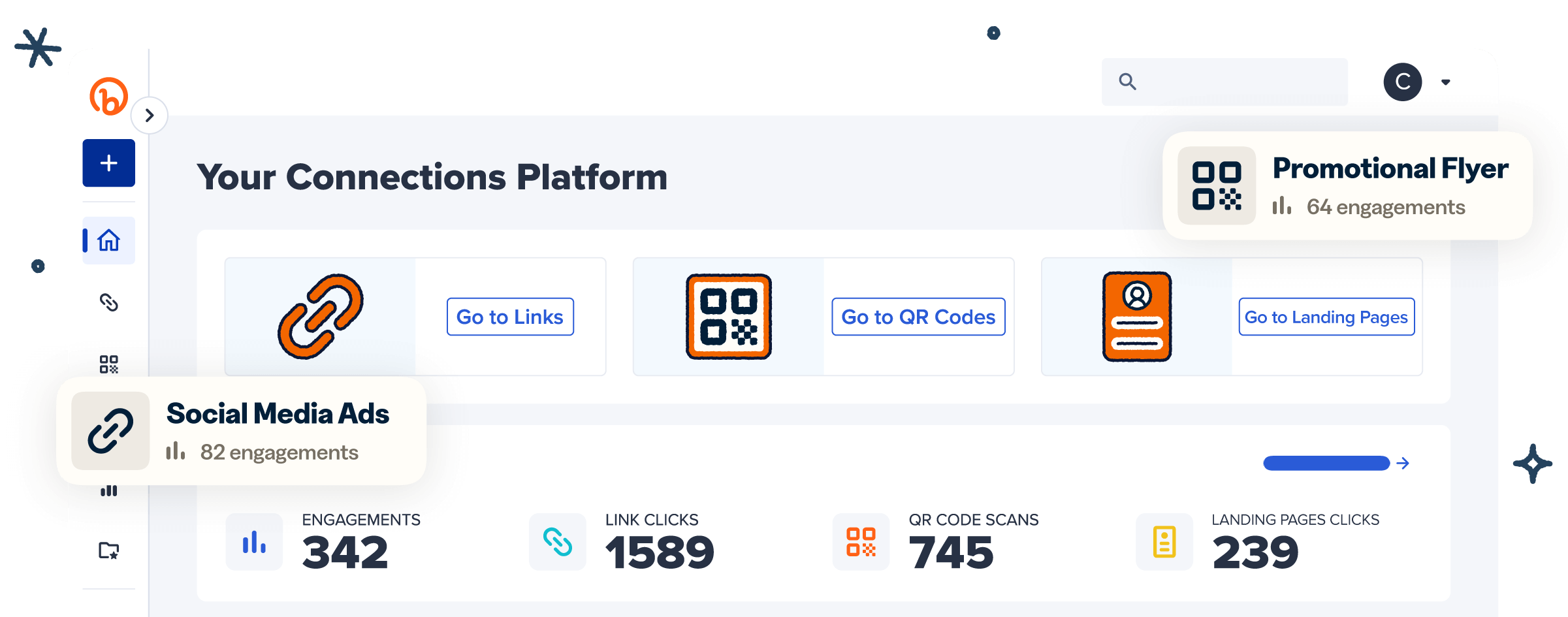

Si vous hésitez entre Bitly et The QR Code Generator, vous ne choisissez pas vraiment entre deux simples outils de création de codes QR. Vous avez le choix entre deux approches différentes pour gérer l’engagement numérique. Bitly vous offre des codes QR, des liens courts, des pages de destination et des outils d’analyse au sein d’une seule et même plateforme intégrée. Le générateur de codes QR est spécialisé dans la création de codes QR, offre une grande flexibilité quant aux types de codes QR, permet une personnalisation poussée et assure le suivi des scans, ce qui en fait un générateur de codes QR gratuit très apprécié par de nombreux utilisateurs.
Cette différence se fait rapidement sentir. Un restaurant qui a besoin d’un menu au format QR a des besoins bien précis. Une équipe marketing qui souhaite disposer de liens personnalisés, de destinations QR modifiables, de pages de destination et de rapports de performance pour les supports imprimés et numériques a trouvé ce qu’il lui faut. Les deux plateformes prennent en charge les codes QR dynamiques, mais elles offrent des fonctionnalités différentes pour résoudre des problèmes spécifiques liés aux flux de travail. Le choix qui s’impose dépend de l’ampleur que vous souhaitez donner à votre stratégie QR une fois le code scanné.
N.B. : les marques et les exemples présentés ci-dessous ont été trouvés lors de nos recherches en ligne pour cet article.
Points à retenir:
- Les deux plateformes prennent en charge les codes QR dynamiques, mais elles s’articulent autour de flux de travail différents ; le choix de la solution la plus adaptée dépend de la manière dont les codes QR s’intègrent au reste de votre écosystème marketing.
- Les codes QR dynamiques vous permettent de mettre à jour une destination sans avoir à réimprimer, mais leur disponibilité varie selon la formule choisie sur les deux plateformes.
- Le générateur de codes QR prend en charge d’emblée un plus large éventail de types de codes QR ; l’atout de Bitly réside dans sa capacité à associer les codes QR à des liens, des pages de destination et des outils d’analyse, le tout en un seul endroit.
- Le suivi des scans fonctionne différemment selon les plateformes ; la disponibilité des données, l’historique et les dimensions des rapports varient selon le niveau.
- Les deux proposent un accès gratuit, mais la différence entre les formules gratuites et payantes est considérable ; déterminez bien vos besoins avant de choisir une formule.
Bitly vs. Le générateur de codes QR en bref
Voici un moyen rapide de voir les différences entre ces plateformes :
| Catégorie | Bitly | Le générateur de codes QR |
| Meilleur pour | Les équipes qui souhaitent disposer à la fois de codes QR, de liens, de pages de destination et d’outils d’analyse. | Les équipes qui souhaitent mettre en place un flux de travail axé sur les codes QR, avec des types de contenu QR flexibles. |
| Priorité accordée à la plateforme principale | Plateforme Connexions pour les codes Bitly, les liens Bitly et les pages Bitly. | Création, modification et personnalisation de codes QR, ainsi que suivi des scans. |
| Points forts de la formule gratuite | 2 codes QR par mois, 5 liens par mois, nombre illimité de clics et de scans. | 2 codes QR dynamiques, un nombre illimité de codes QR statiques, 14 jours de statistiques, 1 utilisateur. |
| Codes QR dynamiques et statiques | Les formules payantes permettent d’accéder aux redirections et à des fonctionnalités avancées liées aux QR codes. | Les options statiques et dynamiques sont incluses de série, avec un suivi des codes dynamiques. |
| Types de contenu QR | Permet de relier des codes QR à des liens Bitly et à des pages Bitly. | URL, PDF, plusieurs URL, contact, texte brut, application, SMS, e-mail et numéro de téléphone. |
| Analytics | Clics, scans et consultations de pages de destination, le tout en un seul endroit. | Analyse des données de lecture des codes dynamiques, y compris les données relatives aux appareils et à la localisation. |
| Image de marque et personnalisation | Couleurs, dégradés, motifs à pois, cadres, coins et logos. | Couleurs, motifs, téléchargement de logo, aperçu en direct. |
| Collaboration au sein de l’équipe | Des contrôles d’équipe renforcés pour les formules supérieures, ainsi que des autorisations d’entreprise et l’authentification unique (SSO). | À partir d’un utilisateur pour les formules d’entrée de gamme ; à partir de 3 utilisateurs pour les formules supérieures. |
| Intégrations | API ouverte dans le forfait gratuit, création en masse dans le forfait Growth et points d’ancrage Web dans le forfait Enterprise. Marché des intégrations. | Les intégrations et l’API de codes QR sont disponibles dans les formules supérieures. |
| Prix d’entrée | L’offre de base est proposée à partir de 10 $ par mois, facturée annuellement. | L’offre Flex est proposée à partir de 5 $ par mois, facturée annuellement. |
Comparaison des fonctionnalités principales entre Bitly et The Code QR Generator
Codes QR dynamiques et statiques
Il est essentiel de bien comprendre la différence entre ces deux types de codes QR, car ce choix détermine tout le reste. Les codes QR statiques renvoient systématiquement vers une seule et même URL. Les codes QR dynamiques vous permettent de modifier la destination ultérieurement et de suivre tous les scans sans avoir besoin d’un code ou d’un logiciel supplémentaire. Cette différence est importante pour les emballages, les prospectus et les cartes de visite, pour lesquels une réimpression coûte du temps et de l’argent. Bitly et TQRCG prennent tous deux en charge les flux de travail dynamiques, mais ils présentent cette fonctionnalité de manière différente.
Bitly intègre les codes QR dynamiques dans un processus plus large de redirection, de gestion de liens et de gestion des campagnes. Les formules gratuites comprennent deux codes QR dynamiques par mois. Avec les formules payantes, vous pouvez rediriger un code Bitly, et Bitly comptabilise cette action dans vos limites de redirection. Cette configuration convient particulièrement aux équipes qui gèrent déjà conjointement les liens, les codes QR et les pages de destination. Si vous souhaitez savoir rapidement dans quels cas il est judicieux d’utiliser des codes modifiables, notre guide « Codes QR statiques vs codes QR dynamiques » vous explique clairement la différence entre ces deux types de codes QR.
TQRCG offre à ses utilisateurs deux codes QR dynamiques gratuits dans le cadre de son essai gratuit de 14 jours, ce qui facilite l’accès aux petites entreprises et aux campagnes de moindre envergure qui ont néanmoins besoin de flexibilité. Cette configuration convient aux équipes qui impriment des menus, des affiches pour des événements, des encarts publicitaires ou des cartes promotionnelles susceptibles d’être mis à jour ultérieurement.
Types de codes QR et options de destination
Le générateur de codes QR offre une grande flexibilité, avec des types de codes QR standard tels que URL, PDF, plusieurs URL, coordonnées ou vCard, texte brut, application, SMS, e-mail et numéro de téléphone. Cette diversité s’avère utile lorsque votre campagne s’articule autour du code QR lui-même plutôt que sur une stratégie de liens plus large. Une agence immobilière pourrait avoir besoin de cartes de visite. Une équipe chargée de l’organisation d’un événement pourrait avoir besoin de documents à distribuer au format PDF. Un commerçant pourrait avoir besoin d’un routage multi-URL.
Bitly adopte une approche différente. Il ne propose pas une longue liste de types de contenu QR. Au contraire, cela permet aux équipes d’associer des codes QR à des liens Bitly et à des pages Bitly, et de gérer ces ressources sur une seule et même plateforme. Cette approche est particulièrement efficace lorsque le scan s’inscrit dans le cadre d’un parcours client plus large, comme une affiche qui redirige les utilisateurs vers une page Bitly contenant des informations sur les produits, des options d’inscription ou des liens vers des campagnes.
Analyse des données et suivi
Bitly se révèle particulièrement utile lorsque vous souhaitez disposer d’un seul outil de reporting couvrant davantage de points de données que les simples scans de codes QR. Bitly Analytics regroupe les clics, les scans et les consultations de pages de destination en un seul endroit, où les utilisateurs peuvent consulter les liens, les codes QR et les pages de destination les plus performants au fil du temps, tandis que les limites de leur forfait déterminent la période d’historique à laquelle ils ont accès. La formule gratuite de Bitly inclut un nombre illimité de scans. Le niveau Core offre 30 jours de données « click-and-scan », tandis que le niveau Growth en propose quatre mois.
L’abonnement Premium comprend un an de conservation des données, ainsi que des données au niveau des villes et par type d’appareil, permettant notamment de distinguer les utilisateurs iOS des utilisateurs Android. Pour mieux comprendre l’importance de la mesure, notre analyse comparative entre Bitly Analytics et les outils d’analyse natifs des réseaux sociaux fournit des éléments de contexte utiles.
TQRCG concentre ses analyses sur les codes QR, en mettant l’accent sur les statistiques détaillées relatives aux scans. Ses pages QR traçables fournissent des informations sur le nombre total de scans, les utilisateurs, l’utilisation des appareils et les données géographiques. La page des tarifs indique une période d’analyse plus courte pour les formules d’entrée de gamme : 14 jours pour la formule Free, 60 jours pour la formule Flex, 90 jours pour la formule Core et 180 jours pour la formule Plus. Cette configuration permet aux équipes chargées des QR codes de suivre facilement le comportement des utilisateurs lors de la lecture des codes, sans avoir à gérer en plus les rapports relatifs aux liens et aux pages de destination.
Options de conception et d’image de marque
Ces deux outils vous permettent de créer quelque chose de plus soigné qu’un simple carré noir et blanc. Bitly propose des options de personnalisation avancées, notamment pour les couleurs, les dégradés, les motifs à pois, les cadres, les motifs de fond, les logos et le texte d’accompagnement. Ce système permet également d’harmoniser ces choix de conception avec la visibilité globale de la marque sur les prospectus, les panneaux d’affichage, les affiches et autres supports publicitaires, grâce à un système de modèles simple. Cette simplicité fait de Bitly un choix tout indiqué pour les marques qui accordent déjà de l’importance à la fiabilité des liens et qui reconnaissent les avantages pour les deux parties dans le débat opposant les liens de marque aux liens génériques.
TQRCG offre également aux utilisateurs un contrôle créatif étendu, se positionnant ainsi comme l’un des meilleurs générateurs pour les projets à forte composante créative. Ses pages mettent en avant les modifications de couleurs, les ajustements de style et de motifs, la prise en charge des logos, l’aperçu en temps réel, ainsi que des modèles à télécharger au format PNG, SVG ou EPS. Cette flexibilité convient particulièrement aux équipes qui souhaitent reproduire fidèlement leurs supports imprimés, par exemple à l’aide d’outils tels que Canva ou Adobe Express, ou qui souhaitent créer rapidement des éléments QR sans avoir à mettre en place au préalable une infrastructure complète de gestion de marque.
Flux de travail, collaboration et richesse de la plateforme
C’est cette catégorie qui établit la distinction la plus nette entre les deux plateformes. Bitly intègre les codes QR dans un vaste écosystème dédié à la gestion de l’engagement numérique. La formule « Growth » inclut des liens personnalisés, un nom de domaine personnalisé offert, la création en masse de liens et de codes QR, ainsi qu’un historique plus complet des données, tandis que la formule « Enterprise » offre la gestion de plusieurs utilisateurs, des autorisations de groupe, une authentification unique (SSO) sécurisée, un accès API à haut débit et des points d’ancrage Web. Si votre équipe prévoit d’étendre l’utilisation des codes QR à l’ensemble des services ou des campagnes, Bitly vous offre davantage de possibilités d’évolution au sein d’un environnement unique.
TQRCG permet une meilleure intégration du produit dans les flux de travail QR. Ses formules Free, Flex et Core sont destinées à un seul utilisateur, tandis que la formule Plus s’adresse à trois utilisateurs ou plus et inclut des intégrations, un accès à l’API, des Linkpages, une extension Chrome et des outils d’analyse plus avancés.
Comparaison des tarifs et de la structure des forfaits
Bitly propose une tarification simple et claire. Son forfait gratuit offre 2 codes QR par mois. L’offre de base coûte 10 $ par mois (facturée annuellement) et comprend 5 codes QR par mois, 30 jours de données, un générateur de codes de suivi UTM, des options avancées de personnalisation des codes QR et des redirections. L’offre « Growth » coûte 29 $ par mois (facturation annuelle) et comprend des liens personnalisés, un nom de domaine personnalisé, la création en masse et 4 mois de conservation des données. L’abonnement Premium coûte 199 $ par mois, facturé annuellement, et comprend une année supplémentaire de conservation des données ainsi que des rapports par ville et par type d’appareil. Il existe également une offre « Enterprise » avec une tarification personnalisée.
Le générateur de codes QR propose une structure tarifaire à plusieurs niveaux. Son essai gratuit de 14 jours comprend 2 codes QR dynamiques avec publicités, ainsi qu’un nombre illimité de codes statiques. L’abonnement Flex pour particuliers est proposé à partir de 5 $ par mois, facturé annuellement, et comprend des codes dynamiques sans publicité, 60 jours d’accès aux statistiques et l’exportation au format CSV. Les formules professionnelles comprennent la formule Core pour un utilisateur, à 49 $ par mois (facturée annuellement), et la formule Plus pour trois utilisateurs, à partir de 99 $ par mois (facturée annuellement), qui inclut davantage de codes dynamiques, des périodes d’analyse plus longues, des Linkpages et des options d’intégration plus avancées. Le niveau Plus vous permet également d’ajouter des licences supplémentaires moyennant un supplément.
Quelle plateforme est la mieux adaptée aux différents besoins des entreprises ?
Optez pour Bitly lorsque vous avez besoin de codes QR intégrés à un processus marketing plus global
Optez pour Bitly lorsque votre équipe souhaite disposer de bien plus qu’une simple destination accessible par QR code. Notre plateforme s’adresse aux marques qui gèrent à la fois des campagnes marketing imprimées et numériques, qui ont besoin de liens personnalisés et de domaines personnalisés, qui souhaitent disposer de pages de destination au sein du même système, ou qui souhaitent comparer les performances entre les liens et les codes QR. Elle convient également aux équipes qui recherchent la création en masse, des autorisations plus strictes, l’authentification unique (SSO) ou des flux de travail et des automatisations basés sur des API.
Optez pour The QR Code Generator si vous recherchez une plateforme axée sur les codes QR
Optez pour TQRCG lorsque le code QR est au cœur même de la tâche. Cette plateforme vous offre davantage de types de contenu QR natifs, des fonctionnalités d’édition dynamique simples, des analyses axées sur les scans et une formule gratuite très accessible. C’est donc la solution idéale pour les menus, les prospectus, les supports événementiels, le partage de coordonnées, les fichiers PDF ou le lancement rapide de campagnes, lorsque vous n’avez pas besoin d’une structure complexe de liens et de pages dès le premier jour.
Adéquation au secteur d’activité et aux cas d’utilisation
Le site TQRCG s’adresse directement à des secteurs tels que le commerce de détail et l’événementiel, et ses exemples s’appliquent également aux restaurants, à l’hôtellerie et aux cas d’utilisation promotionnelle basés sur les QR codes. Bitly convient aux cas d’utilisation où le scan marque le début d’un parcours plus large, comme les campagnes « hors ligne vers en ligne », les emballages de produits renvoyant vers des pages de destination ou le marketing multicanal tirant parti de rapports communs.
Quelle plateforme correspond le mieux à votre flux de travail ?
Le générateur de codes QR vous offre un outil spécialement conçu pour les codes QR, prenant en charge un large éventail de types de codes QR, proposant des options de personnalisation flexibles similaires à celles de QRCode Monkey ou Flowcode, ainsi que des rapports axés sur les codes QR. Bitly vous offre une plateforme plus complète pour les codes QR, les liens courts, les pages de destination et les analyses multicanal. Aucune de ces deux plateformes ne convient de la même manière à toutes les équipes. Le choix le plus judicieux dépend de votre flux de travail : Souhaitez-vous disposer d’un outil dédié aux codes QR, ou préférez-vous que ces codes s’intègrent dans un système plus large d’engagement de marque ?
Êtes-vous prêt à découvrir comment la gamme d’outils élargie de Bitly peut vous aider à développer vos campagnes utilisant des codes QR ? Inscrivez-vous dès aujourd’hui et découvrez comment notre processus vous aide à optimiser le retour sur investissement de vos actions marketing.
FAQ
Quelle plateforme propose le plus grand choix de types de codes QR ?
Le générateur de codes QR propose une gamme plus étendue de types de codes QR, notamment URL, PDF, Multi-URL, Contact, Texte brut, Application, SMS, E-mail et Numéro de téléphone. Bitly s’attache davantage à aider les entreprises à créer des codes QR pour des liens numériques et à les gérer en parallèle avec les liens Bitly, les pages Bitly et l’ensemble des ressources de campagne.
Est-ce que Bitly et The QR Code Generator prennent tous deux en charge les codes QR dynamiques ?
Oui. Les deux plateformes prennent en charge les cas d’utilisation des codes QR dynamiques, mais elles en présentent la valeur sous un angle différent. Le générateur de codes QR met l’accent sur la modification du contenu des codes QR et le suivi des codes QR dynamiques, tandis que Bitly relie les flux de travail liés aux codes QR modifiables à des liens, des pages de destination et des rapports centralisés sur l’engagement.
En quoi Bitly se distingue-t-il d’un outil dédié uniquement aux QR codes ?
Bitly va au-delà de la simple génération de codes QR en associant les codes Bitly aux liens Bitly, aux pages Bitly, aux liens personnalisés et aux outils d’analyse au sein de la Plateforme Connexions de Bitly. Cela en fait une solution particulièrement adaptée aux entreprises qui souhaitent utiliser les codes QR pour soutenir des processus plus larges en matière de marketing, d’attribution et d’engagement numérique.
Bitly suit-il les conversions issues des campagnes utilisant des codes QR ?
Bitly suit les affichages, les clics, les emplacements, les appareils et les comportements d’engagement associés, mais il ne suit pas directement les conversions telles que les achats ou les formulaires remplis. Ces résultats nécessitent généralement des outils supplémentaires d’analyse, de gestion de la relation client (CRM) ou de commerce électronique.
Le générateur de codes QR est-il une bonne solution pour les petites équipes ?
Cette solution peut parfaitement convenir aux petites équipes qui souhaitent mettre en place un flux de travail axé sur les codes QR. Son argumentaire met en avant la création gratuite de codes QR, jusqu’à 2 codes QR dynamiques gratuits, le suivi des scans, la prise en charge d’un large éventail de types de codes QR, ainsi que la possibilité de collaborer avec jusqu’à 5 membres de l’équipe à partir d’un seul tableau de bord.